Friday, June 29, 2018

Have you signed up for the BLOOM e-letter?

By Louise Kinross

Do you receive our BLOOM e-letter in your inbox each month?

It covers our most compelling parenting and disability stories and expert interviews; links to mainstream news about disability; information and events from Holland Bloorview; new books; and "shout outs" to people who are making the world a more inclusive place.

To sign up, click here

Check out our June issue. If you scroll down to our shout outs you can watch two compelling ad campaigns about disability, one American and one Swiss. Or listen to the CBC White Coat, Black Art town hall on youth with complex disabilities aging out of the system. It's the best coverage we've seen to date on the topic.

Wednesday, June 27, 2018

'The tears represent sadness, but sort of a beautiful sadness'

By Louise Kinross

Jessica Chan, 20 (above), made a mask to convey what it’s like to live with a brain injury. At age 17, she had surgery to remove a brain tumour. Today, the University of Toronto student is one of several young adults showing masks they created at an Unmasking Brain Injury workshop at Holland Bloorview. The goal is to increase public understanding of this invisible disability.

BLOOM: Can you tell us about your brain injury?

Jessica Chan:
I had a brain tumour. I was having really bad nausea and headaches and I went to the family doctor multiple times, but they brushed it off as stress related, because it was exam time. They never even considered that it was possibly connected to this. Some of the exams I took, even though I felt like I was going to pass out, and some I couldn’t. That summer, when my vision was getting wonky, I went to the eye doctor to get glasses, and the doctor saw the pressure behind my eyes and sent me to the emergency room at St. Michael’s Hospital. They put me in a scan and saw a pretty big mass, and I didn’t go home for months. I had surgery there and came here for rehab.

BLOOM: How were things different for you after the brain injury?

Jessica Chan:
Before I started noticing differences, I could remember things easily, including big chunks of text. Now the way I absorb material is different, and I have to get the general concept first. Before I could continually work for hours, and now I have to learn to take breaks and hold myself back or I tire myself out. 


Before my diagnosis, people around me said they started to notice that I seemed to take longer to respond, and wasn't as quick to get humour or jokes. They said I seemed more distant.

BLOOM: What about changes after your surgery?

Jessica Chan
: When I first woke up from surgery my right side was completely paralyzed. I had to retrain it, and it’s still not as great, but I’m able to move and be almost as active as I used to. I used to play volleyball and be a cross-country runner, but when I went back to school after rehab they wouldn’t let me back on the volleyball team. That was a big blow. I was also in band and played trombone. I was able to play here in music therapy, and that was something from before that I could still do and that kept me going.

BLOOM: What has been the greatest challenge?

Jessica Chan:
Trying to get back to where I felt like I was before. The summer of my brain injury was before Grade 12 and that was a big year, the year before going to university. When my parents told me I couldn't go back to school in September, that was a big blow. You feel like you had all of these things on your plate, and the plate has toppled over.

BLOOM: I know that some students find the invisible nature of the injury difficult when they go back to school.

Jessica Chan:
When I went back to school people kind of knew what happened, but they didn’t know the extent, because I was walking and talking similar to how I had before. They didn’t notice my issues with right-sided weakness, and they couldn’t see that I had a hard time understanding. They didn’t know I’d had to relearn how to talk again. In our school, no one really talked about disability. I did a TEDx talk to the school to share my story. The theme was mindfulness, and I used my story to share my own experiences and the importance of taking care of your mental health while dealing with a physical injury.


BLOOM: Do you have any practical coping strategies that might help youth who are earlier along in rehab?

Jessica Chan:
Build your support network. Find things and people that help you get through it. Make sure you keep connected with your friends. My family was an important part of my support. I also relied on support from health professionals. When I was in the ICU, a big part was building mini-relationships with the nurses. Don’t be afraid to open up and make connections.

BLOOM: How have you changed?

Jessica Chan:
I had high grades and I’ve always been an over-achiever. I was going to enter a business program, and I put a lot of expectations on myself. I think I cared a lot about what I feel are superficial things now.

When I couldn’t pursue that at the pace I wanted, I had to start looking at other qualities I have to offer—other than my GPA. Through this process I was introduced to health care, and the support I was provided reminded me that that’s more of what I want to do with my life. I’m now at the University of Toronto in a psychological and health sciences program, and hope to specialize in mental health studies.

BLOOM: Can you describe your mask and why you decorated it the way you did?

Jessica Chan:
I designed it on the spot. The red side represents the one-sided weakness and the pain you feel targeted in that area of your head. I feel pain is most closely associated with red. The rest is mostly a lighter, brighter blue, the wellness part and me fighting to make it okay. Blue sky, blue waters, clarity. When you think of those calm words, you think of the colour blue. And when you combine red and blue, you get my favourite colour, purple.

The tears represent sadness, but sort of a beautiful sadness. This experience has given me many opportunities that I wouldn’t have otherwise had, and there’s some beauty in that. I feel like I was pushed forward to get more insight into myself a bit earlier than I would have. The tears are for pain and growth.


The floral arrangement of gems represents the beauty that spontaneously occurs as a result of what I've been through. The new paths, connections and friendships are represented by this colourful, sparkly collection.

BLOOM: What are your hopes for the future?

Jessica Chan: I’d love to be a counsellor, a psychologist. In whatever I choose, my main goal is to be able to help people in a meaningful way.  I was also really inspired by the speech-language pathologist I had here, so that’s another pathway.

BLOOM: What interested you about speech therapy?

Jessica Chan:
It was the testing. I remember there was a picture of a hammock, and I couldn’t for the life of me remember what the word was.

BLOOM: Because of problems with word finding.

Jessica Chan:
I couldn’t find that word. I tried to think about it for a long time and when I finally got it I was amazed—that I’d lost a word I knew my whole life. It hit me how fragile language really is, but also how important it can be. 

Thinking about the rehab process and helping people find words could combine with my interest in psychology and my passion in writing and language. Because I’ve had that experience of not being able to find words, I have insight into what it feels like for the patient. I think that would make me more empathetic.

BLOOM: We just did a story with Dr. Brian Goldman, who said that the best doctors are ones who have been patients. Did you find making the mask valuable?

Jessica Chan:
Yes. Every time I have to do something that involves thinking back, it helps me realize how I’ve grown. While living it, you don’t think about all the little things you’ve accomplished through this process. Having a chance to make my mask and explain my story helps me realize how far I’ve come. I also have a radiation mask that I keep at home, as another reminder. It was starting to look a bit scary, so after doing my mask here I covered it in flowers. Now it’s a decorative piece that isn’t as frightening.

BLOOM: And the flowers are about growth.

Jessica Chan: Yes, the growth part.
It’s not just about the physical symptoms, it’s the whole process that happens to you and the changes, and the emotional impact—especially the little things. There are multiple layers. It’s not exactly being comfortable on the bus telling people you can’t give up your seat, because you will fall over. It’s subtle things that people fail to recognize.

BLOOM: You mentioned emotional impact. Can you talk more about that?

Jessica Chan:
It was hard. It was shocking. It takes a while to really digest and understand all of the subtleties of how you’re impacted. Every time you’re told you can’t do this now, it’s another blow to your self-esteem, your ability level. Or being told you have to do something this way, instead. Before, I could easily serve a ball, but now, after I had to train for it, I still can't do it as well as before. It’s having to work back to the level you were. Everything takes longer to process and do.

BLOOM: It sounds like you would need a lot of self-compassion.

Jessica Chan:
That’s hard for me to get. It’s still hard for me to comprehend why this happened to me. I’m in second year at university, and so many people I know are already ahead, in their final years, and they’ve had co-op positions and jobs that they’ve kept. You can’t help but compare.

BLOOM: But it sounds like you’ve developed in other ways.

Jessica Chan:
Having people tell me about my insight and level of compassion that they don’t have, or can’t really ever get, that was a big realization to me that this might have turned into a different path, but I went along the path just as much as they continued along theirs.

Monday, June 25, 2018

U of T docs say ridicule, yelling, rude emails a part of their world

By Louise Kinross

A new study in Academic Medicine looks at uncivil behaviour among doctors—from eye rolling and open ridicule to yelling, throwing objects, sending unkind e-mails and posting disparaging social media comments. University of Toronto researchers interviewed 49 doctors who are faculty in U of T’s department of medicine and work at six teaching hospitals to describe rude behaviour they see or experience, and look at organizational ways to prevent or stem it. The study references a systematic review that showed almost 60 per cent of medical trainees reported experiencing harassment or discrimination, and another study in which 30 per cent of physicians said they saw rude, dismissive or aggressive behaviour by doctors on a weekly basis. BLOOM interviewed co-investigator Dr. Reena Pattani, who works in internal medicine at St. Michael's Hospital.

BLOOM: Why were you interested in this topic?

Reena Pattani:
I have immense job satisfaction and a lot of meaningful work relationships, but I think there are always ways to improve the culture of a workplace. This project emerged from a collaboration with senior author Sharon Straus, where we looked at data from a 2015 survey that showed that while faculty in our department have many positive, collegial relationships, many had observed, heard about, or been affected by uncivil or unprofessional behaviour.

We wanted to look at how the organization can play a role in responding to incivility, rather than resorting to solutions that focus only on the individuals perpetrating it. We looked at workplace factors that breed stress and burnout, and create heightened emotions that can lead to a toxic environment.

BLOOM: Is kindness a simple definition for civility?

Reena Pattani:
It is. We talked about an obvious moral definition of civility in terms of the Golden Rule: Treat others as you wish to be treated. There are also practical reasons that we need civility in a workplace that has the complexity of medicine. We have people coming together to take care of patients suffering from acute or life-threatening conditions, and incivility may have an impact on patient outcomes.

BLOOM: How did you define rudeness in your study?

Reena Pattani:
We didn’t want to be prescriptive. We asked our participants what they had witnessed in terms of form and content. There were three big categories in terms of form. Furtive behaviours included eye rolling or muttering derogatory comments or exclusion. There were face-to-face incidents like ridicule, a personal attack, interrupting, yelling or throwing an object. The third type was online: not responding to e-mails, or responding in a passive-aggressive way, or posting a disparaging comment on a social media platform.

BLOOM: What was the rudeness about?

Reena Pattani:
There were disagreements about next best steps in a case, or treatment recommendations, collaboration on a publication, negotiations around promotions or remuneration, and workload distribution. There were instances of discrimination based on seniority or sub-specialty or the way scholarly time was being used in an academic centre.

BLOOM: It was interesting that the paper refers to these behaviours as ‘low intensity,’ even though it includes bullying, which probably isn’t perceived as low intensity by the person experiencing it.

Reena Pattani:
I appreciate that feedback. By calling it low intensity we’re not trying to minimize its seriousness or impact. It’s more that these events were perceived as being ‘sub-threshold’ to report. People experienced something unsettling, but there wasn’t a clear pathway to bring it to someone’s attention.

BLOOM: Did anyone identify targeted discrimination based on race or other types of diversity?

Reena Pattani:
We didn’t specifically inquire about that and participants didn’t volunteer that information in their answers. Absolutely that warrants further exploration. The tough thing about studying that is that you need to develop a study that ensures people aren’t identified.

BLOOM: You interviewed each doctor for up to an hour each. Were you surprised by anything you heard?

Reena Pattani:
Yes, absolutely, though I wasn’t involved personally in the interviews. There were a lot of surprises with regards to the types of experiences people had and the egregious nature of their experiences. Also, one of the challenges was respecting their privacy and the confidentiality that is required to undertake a study like this.

BLOOM: I found it interesting that while most interviews were done by phone, a couple of participants asked to do them in person.

Reena Pattani:
Yes, we had an ethics amendment to create safer processes for participants to share their views. Some people felt more comfortable doing the interview in person. We wanted to be really thoughtful about how we respected individuals who participated, and we gave them the opportunity to review their comments. Twenty-five people reviewed their comments, five edited them and one person chose to remove comments.

BLOOM: It shows how cautious and afraid people are. When respondents talked about the negative impact of rudeness on patient care, did they give examples?

Reena Pattani:
The conflicts were around consultations and treatment recommendations. The downstream of that is that people might be less likely to reach out to a terse colleague in the future, so you could see poorer collaboration.

BLOOM: I was so interested in your work because I reported on an Israeli study where they showed in NICU simulations that rude words from a parent or medical colleague impaired individual and team performance.

Reena Pattani:
That was a very impressive study. Those things are harder to study in a natural environment, but a lot of this evidence needs to come together to understand the impact of this lack of professionalism and devise strategies to counter it.

BLOOM: Doctors in your study identified their non-employee status in hospitals as a contributor to rudeness. Does that mean because no one is there to police behaviour, they take advantage?

Reena Pattani:
No, I don’t think they’re taking advantage. This was something specific to the Canadian context. In our academic system in Toronto, physicians are considered self-employed. They're appointed to a hospital or university, but they operate on a fee-for-service basis paid for by the Ministry of Health.

Most physicians in Toronto's academic hospitals don't receive funding from the university or hospital. So it may be hard to know where the jurisdiction is to respond to poor behaviour, whether it’s at the hospital or university level. There’s also a sense that there are only extreme levers to respond to unprofessional behaviour, such as revoking hospital privileges or a university appointment. Our participants felt that there wasn't an obvious way to report these things.

BLOOM: Doctors also identified silos between the hospital and university and within department divisions as contributing to a more impersonal and hostile environment.

Reena Pattani:
They don’t directly make things more hostile, but when the environment is more impersonal, it lowers the threshold to exhibit curt behaviours. You have relative anonymity. If you’re rude to someone, it won’t have a direct impact on you, because it’s not a relationship that you’re cultivating on a daily basis, over time.

BLOOM: Respondents felt that leaders may have encouraged a competitive environment. Are these medical leaders, and does this start in medical school?

Reena Pattani: There are many incredible leaders operating in the hospital and the university. But occasionally, a leader may be promoted for other skills, like excellent long-term vision or strategy, but their skills or ability to recognize and act on incivility isn’t as high.

One of the reasons we wanted to study incivility in an academic centre is the idea of the hidden curriculum in medicine—that there are things that are learned that relate to norms that aren’t found in textbooks, but from apprenticeship and observation and role-modelling. If uncivil behaviours don’t go addressed, it sends a message that this is a social norm that is acceptable.

BLOOM: Doctors in your study referred to a culture of silence.

Reena Pattani:
I think there’s discomfort around reporting. Or there may be a history where something is reported, but the unprofessionalism goes unaddressed, because leaders aren’t equipped with the right training or resources to address it.

BLOOM: So people are less likely to report in future.

Reena Pattani:
There may also be a fear of reprisal or retribution.

BLOOM: I was surprised that the doctors didn’t identify the emotional side of working with patients who are suffering or dying as a contributor to rudeness. You do mention at the end, under root causes, emotional burnout.

Reena Pattani:
 The honest truth is it may reflect the fact that we didn’t specifically ask about that piece. In the conclusion, we talk about root causes, and not necessarily attributing uncivil behaviour to a personality issue, but considering issues like burnout or mental health. In our introduction, we also highlight the existential nature of the work, which involves taking care of patients who are sick, and how it can take a toll on healthcare providers.

BLOOM: We did a narrative group with our inpatient nurses, and they came into the group thinking they were the only ones experiencing emotions like helplessness, grief or regret, and that they had to hide them. Through storytelling, we were able to show that everyone experiences these emotions. That reduced stress, because they didn’t feel like they had to walk around pretending they were invulnerable, and they were more likely to reach out to co-workers proactively to come up with creative solutions to difficult clinical and family situations. I wonder, if you change only organization structures, but you don’t help doctors better cope with suffering, whether rudeness would continue to be an outlet?

Reena Pattani:
There is a growing recognition of the emotional toll of this work, and there's a movement in narrative medicine that's currently being embraced by many physicians. A lot of hospitals and universities are doing local interventions. At St. Michael's Hospital, we hold Reflections on Medicine rounds where some of my colleagues facilitate discussions on topics like making mistakes and end-of-life care. We also have members of the university's department of medicine leadership team who have experience with narrative medicine, and are leading efforts to integrate it into our training programs.

BLOOM: What were the main ways doctors suggested for reducing rudeness in your study?

Reena Pattani:
They were grouped under three headings: prevention, reporting, and addressing incivility. Under prevention, they asked for clear definitions of incivility that included examples. A suggestion was to share examples, while maintaining anonymity, from within our local department, to serve as an education and deterrent tool. Doctors want more transparency around how resources are allocated, not just in terms of remuneration, but also including research and admin support, as this will minimize competitiveness.

In terms of reporting, they suggested anonymous online reporting, having designated individuals within departments who could serve as an ombudsman or advocate, or an external party to ensure complete independence.

They also asked for role clarification to determine whether the hospital or university is the jurisdiction to deal with incivility. There were calls for very clear processes, timelines, and consequences, with an emphasis on fairness and rehabilitation for both the victim and perpetrator.


From a workplace culture perspective, there were suggestions to use citizenship and professionalism as factors in decision-making about who gets awards and who’s promoted, so that there’s a clear expectation that professionalism is an essential skill.

BLOOM: What is the main message you hope hospitals take away from the study?

Reena Pattani:
I think health-care organizations are increasingly appreciating the role they can play in shaping culture and in setting the tone for professionalism. Our participants were able to offer a frontline perspective on some of the organizational factors that contribute to incivility, and also ways organizations can be more proactive in preventing and addressing it. A lot of solutions need to be tested, but the ones that came out in our study are fairly low cost and easy to implement.

Thursday, June 21, 2018

The kindest doctor knows how it feels to be a patient

By Louise Kinross

Two experiences helped Dr. Brian Goldman understand how it felt to be on the receiving end of care, and led to his “journey to find kindness around the world, and to see if I could rediscover it within myself.”

The emergency room doctor was speaking to developmental pediatricians at Holland Bloorview today about his new book The Power of Kindness: Why Empathy Is Essential in Everyday Life.

Brian recalled a time in the ER when he snapped at a family. The family wanted their 68-year-old mother with an end-stage disease admitted, and repeatedly asked in the ER if he’d made the referral, which he had.

Weeks later, after the woman died, her husband wrote Brian a letter “accusing me of being unkind to the patient, family and him,” he said. The husband asked to meet Brian “so we can find out if there’s still a human being lurking under all that brusqueness.” He met with the family and learned about who the woman was “as a mother, partner and worker. At the end, we all had a good cry.”

The other experience that prompted a greater understanding of patients was caring for his own father, who developed congestive heart failure after caring for his mother with Alzheimer’s.

After working a night shift, Brian learned that his father was having bad chest pains. By the time he got to his dad, had him admitted to hospital and got him settled that night, Brian had been up for 40 hours. He kissed his father on the forehead, told him he loved him for the first time, and went home to collapse.

His father died that night. It was back at the hospital, when an internist began to awkwardly explain his death, sensing that Brian might attack him, that Brian said “I understood what the other family was feeling. Health-care providers who have the greatest grasp on what it’s like to be patients have been patients.” What Brian said to the internist was “Thank you very much for looking after Dad.”

Brian noted the difference between sympathy—a somewhat detached gesture of concern when you don’t understand what someone’s feeling—and empathy, which “is the ability to imagine what it would be like to be the other person.”

Affective empathy happens when you feel what the other person is feeling—kind of like catching a contagious emotion, he said. For example, an orthopedic surgeon might feel exactly what a patient who has just undergone a knee replacement would feel. This is not helpful, he said.

Cognitive empathy, which is the ability to imagine someone’s perspective, is “what we want in abundance in health professionals.” Emotional concern is what drives us to take action to help.

Brian referenced a study that showed that empathy drops in medical students year over year, from their first to their fourth year.

He talked about the definition of kindness—“the quality of being friendly, generous and considerate,” and how it’s rooted in the old English word “cynde,” meaning kinship.

“We tend to ascribe kinder qualities to people who we identify as being us,” he said. But this tendency “can change on a dime,” he said, describing a simulation where an adult wears a motion capture suit and sees an avatar of him or herself as a child on a screen. The avatar appears as you “in another cultural group,” he said. If a second character that belongs to the same cultural group is introduced, “you will identify with them.” And if a third character belonging to your own cultural group appears, “you will say 'that is not me.' It’s that superficial,” he said, noting that humans and orangutans share 97.5 per cent of the same genome.

Brian said some medical cultures devalue empathy as a skill. “You’re either compassionate or you’re an excellent provider,” is the message, he said, “but it’s a false dichotomy.” He said medical students enter their program full of compassion “and it gets drummed out of them.”

Contributing factors include “a lack of focus on empathy as something to be prized and appreciated,” he said. He noted that’s while technology is wonderful when it allows clinicians to focus more on the patient, too often, staring at a screen while talking to a patient interferes with rapport. Specialization is a big impediment to kindness and empathy, he said, because people fall through the cracks when a doctor can say “That’s not my part of the body. I don’t deal in that.”

In the ER, time pressures work against kindness. Brian spoke of “the debilitating feeling of apologizing to everyone you’ve seen, eight or nine people in a row.” He noted that with a complex situation, a 10-minute interaction could balloon to 45 minutes.

Brian said adult health care is increasingly managing chronic disease, whereas many med students picture themselves treating acute disease. Burnout—exhaustion, alienation, withdrawal and apathy, “not caring”—is higher in medical students and residents than it used to be. “The higher the burnout, the lower the empathy.”

Brian said humans are hard-wired to be empathetic: newborns cry when their mother cries, and when a baby and mother interact, “the same parts of their brain light up.”

But in a complicated world of competing priorities “empathy is a choice. We’re not compelled to be empathetic,” he said.

Brian shared some personal stories of people with extraordinary empathy. One was Mark Wafer, who bought six Toronto Tim Horton’s stores. The first person Mark hired was a young man with Down syndrome who walked into a store looking for a job. What led Mark to take a chance on the young man was his own experience growing up deaf. “It wasn’t being deaf, it was being discounted, that was his engine of empathy,” Brian said.

We also heard the story of a Jewish girl whose family escaped Nazi Germany. Her father ran a home for the aged and the girl grew up there with its residents. She later became a psychologist and developed a method of validating the behaviours of people with late-stage dementia “as meaningful symbols of unfinished core personal issues,” Brian said.

“Long-buried feelings that are expressed verbally or in behaviour can be resolved when caregivers validate them.
” he said. These are meaningful gestures.” For example, when a patient speaks of their deceased grandfather, “don’t yank them back into the present,” he said, “or lie, or redirect them. Ask ‘What would you say to your grandfather?’” The agitation we often see in people with dementia is how they “work on deep trauma.”

Brian said that people who become health-care providers are “often burdened by more shame than others.”

Brian said we can use our own emotional despair to help others in distress, or embrace errors we’ve made to help those who have made terrible mistakes. “Share openly what you are ashamed of. Be mindful and live in the moment.”

Before sharing bad news, such as a patient’s death, Brian talked about his own practice of centring himself. Because he tends to ruminate on the negative, he said he takes a minute to picture himself watching a parade of floats going by. “This absurd idea of a parade of bad things going by” allows him to release them and “not take ownership of others’ distress.” That means he can be fully present for family members “and acknowledge what they feel. We need to give them permission to feel the way they do.”

Wednesday, June 20, 2018

We celebrate 'a smile, a hand reaching out to say more'

By Louise Kinross

Shawna Perkins loves to play. The art therapist spends her days with babies and young children in Holland Bloorview’s therapeutic playroom. Her little patients may be here for rehab following a painful surgery, to recover from a traumatic brain injury, or because their parents need to learn how to care for their child's ventilator at home. The playroom is a happy place, full of bright toys, comfy mats and art supplies; tables for water play or play dough; and a ball pit and child-sized kitchen. Warm sun streams in through a floor-to-ceiling window. Shawna coordinates the playroom with three therapeutic recreation assistants and up to 70 volunteers a week. No matter what the day, the playroom is a welcome respite from hospital life.

BLOOM: What is the purpose of the therapeutic playroom?

Shawna Perkins:
It’s to provide fun activities in a safe, play-based environment, to help kids cope with hospitalization, and to offer parents breaks as needed. Parents may need to get a meal, take a rest or visit with a social worker, knowing that their child is safe and engaged and happy. We’re also part of the interdisciplinary team working toward a child’s rehab goals, but we do it through play.

BLOOM: How do you help kids cope with being in hospital?

Shawna Perkins:
In the hospital, children don’t have the same choices they have at home. They have to do things they don't want to do. In the playroom, we want to give kids a space they feel is their own. We encourage them to make choices here, and try to give them a sense of control and mastery in what they do.

BLOOM: How did you get into this field?

Shawna Perkins:
I did my master’s in Creative Art Therapies at Concordia University, and my background is as an art therapist. While at school I had the experience of being the inclusion coordinator for the town of Newmarket, overseeing all of the summer camps in the town. When I came back from Montreal I was looking for a place to work where I would be a member of a team, and where I could continue my education. I got my first position as the coordinator of our Ronald McDonald Playroom. I did that for two years, and I’ve been the coordinator of our therapeutic playroom for eight years.

BLOOM: What’s the greatest challenge?

Shawna Perkins:
We see families who have come through many difficult situations and who may be experiencing a sense of loss or grief. If their child has lost mobility, or the way they communicate has changed, parents may be unsure about how to engage their child in play again.

BLOOM: I’m sure some parents must feel in shock.

Shawna Perkins:
They’re often dealing with a lot of trauma. We work really closely with their kids to look for positive responses to what we’re doing, and to foster their participation and instill hope. Even the smallest progression—a smile, a hand reaching out to say more, is something we celebrate together.

Parents are trying to balance many needs with other family members at home and with their child here.

When we invite them into the playroom, we’ll ask questions about what their child has enjoyed in the past, so that we can build on those experiences here. Over time children get to know us and feel safe and comfortable, and that’s when we see them blossom.

BLOOM: Do you ever find parents are so focused on their child’s rehab goals that it’s hard for them to just enjoy their child?

Shawna Perkins:
They do have so many goals and so much ‘homework,’ and we’d like them to know they can leave those things behind in the playroom. We recently started a Baby and Me group with Andrea Lamont in music therapy. The intention of that group is to provide an opportunity for parent and child to enjoy music together, create a special work of art to celebrate the child, and to shift the focus to their relationship and bonding.

BLOOM: What kind of change do you see in kids?

Shawna Perkins:
When kids first come in to the playroom, they may be overwhelmed, and begin pulling everything off the shelf. Our program provides structure and as they learn the routine, they become able to participate in small group activities with children of the same age.

Kids may come in with very limited communication but, over time, they begin expressing themselves through play, by making choices and in their sense of humour. They may enjoy playing silly games and we find out what makes them belly laugh. Or who they are comes out in the art work they make.

BLOOM: What’s the greatest joy of your work?

Shawna Perkins:
Every child is motivated in some way to play, and can be engaged creatively, and that’s an amazing thing to get to do when you come to work every day.

BLOOM: What drew you to art therapy?

Shawna Perkins:
When I was younger I had an opportunity to work at a camp for girls, and I saw the potential to have a positive impact on other people. I’ve always been able to express myself through the arts, and now that I work with the therapeutic recreation team, I see how important it is for children to have a sense of belonging and a sense of community. I think all of those experiences impacted me.

BLOOM: How do you manage the emotions that come with this work?

Shawna Perkins:
As a staff member, we care deeply about our families. We feel their emotions and we feel for them. The work we do can be difficult, and it’s important that staff check in on each other to debrief, to talk about tough situations, and also, to celebrate the joys of our jobs as well. My office is a tight space that I share with five other people, and we become close quickly. We often share similar case loads and similar feelings.

On my second mat leave I started practising mindfulness, and I was so pleased to find out that Anna Marie Batelaan was offering a mindfulness meditation group for staff on Tuesdays at lunch. That gives me an opportunity once a week in the middle of the day to check in with myself and with other colleagues, and to reflect on where I am. How am I doing, what am I noticing? Maybe I can shift things a bit to ground myself better, so I’m better equipped to return to work.

BLOOM: What kind of people volunteer in the playroom?

Shawna Perkins: Everyone from high school and university students to retired people in their 70s. Some hope to develop skills to help them in particular career paths, and others just like playing with the little guys. We have people who work full-time and take time out of their work week to come. Our volunteers are amazing. We have multiple people come in every day, seven days a week, and about 150 in total.

BLOOM: If you could change something in children’s rehab, what would it be?

Shawna Perkins:
I’d like to see us better connect the system, as we talk about in our strategic plan. For example, I refer families to infant development services when they go home, and in the GTA it’s easy to connect them, but the services run differently in each region of Ontario.

BLOOM: So how you access these services isn’t equitable, depending on where you live?

Shawna Perkins:
Yes. As a health-care provider trying to do a good job, it’s challenging. Right now I’m doing some leg work to find out where the programs are in different communities, how they take referrals and what the wait lists are like.

BLOOM: What do you enjoy about working with young children?

Shawna Perkins:
I like talking to families about what their child can do when they go home. We try to expose kids throughout the week to a range of activities, so parents can identify what their child’s interests are. For some families, the way their child plays will look different when they go home.

They have questions: What supports will I need? Is funding available? Can I stay with my child in a program if they need support? Are there programs for children with disabilities? If my child goes to an integrated program, will my child be the only one with a disability? These first steps are so important for a child to be set up for a sense of belonging at home and in their community.

BLOOM: How have you changed as a result of your work here?

Shawna Perkins:
I’m a bigger advocate of inclusion and accessibility outside of work. It’s important that I pass those lessons I’ve learned to my kids, and I want inclusion to be a part of their world as they grow up.

Working here has given me perspective on what really matters. We do come across a lot of suffering, and it puts things in perspective in terms of what’s important in life. We also see a lot of resiliency in the children and families we work with, and a lot of hope. I think we need to acknowledge that there’s a lot of good in this world, and to honour our families.


Monday, June 18, 2018

The care crisis that should shake us all

By Louise Kinross

If you didn't see this CBC White Coat, Black Art town hall on the crisis facing youth with complex disabilities aging out of the services and funding they and their families depend on, it's well worth the listen. It's packed with firsthand stories from parents, a young adult with a disability and experts in children's rehab, education, mental health and law, a couple of whom have siblings with disabilities.


You know how I can tell it's the best thing I've heard on the topic? As a parent, I was shaken after listening to it, and I still am.

It was three years ago that I found myself writing to the deputy minister of Ontario's Ministry of Community and Social Services, our MPP, the ombudsman and all kinds of people within the bureaucracy. My own son was leaving school and we had no funding to support what he would do during the day.

We had registered with Developmental Services Ontario three years earlier, but the person who came out to do the four-hour assessment told us at the end of it that there was no money. The Ministry had frozen new money for Passport funding, which is the main way to access money for a support worker so that your child can volunteer or do a work program or fill their day with a passion. There were no government-funded programs available to us.


At a time when most parents are sending their children off to college, I needed to help my son carve out a good life, while I continued to work outside the home. 

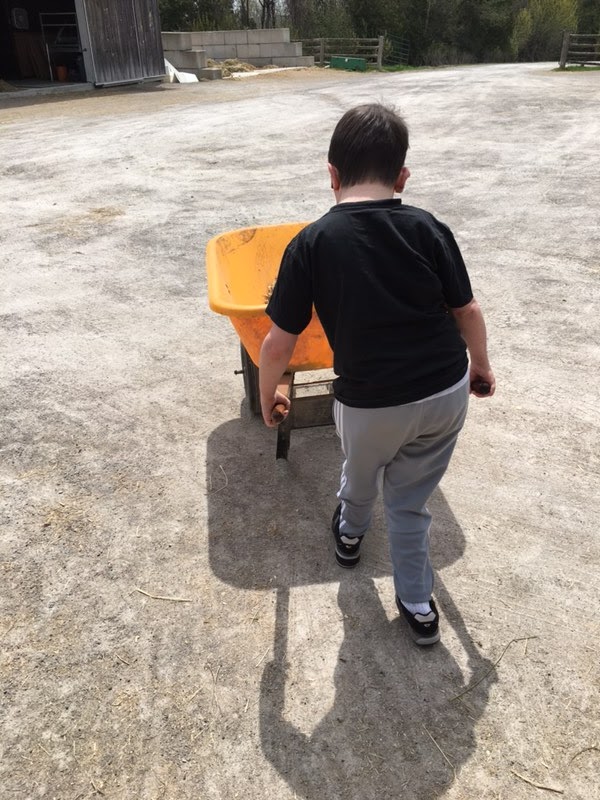
Today, he does farm chores at Windreach Farm on Mondays and Fridays. Horses on Mondays, and chickens on Fridays. On Tuesdays and Wednesdays he cleans at Variety Village. On Thursday he goes to an arts program at L'Arche.

In the fall after my son graduated, after an extraordinary amount of advocacy, the likes of which I'd never needed in the children's system, we received a small amount of Passport funding, certainly nowhere near sufficient to cover our worker hours Monday to Friday.

Remember, I'm someone who's worked in the field since 1999. I have connections. If that was the best I could do, what happens to the parent who doesn't speak English, or isn't able to fit extreme advocacy into their day?
 

Over the next two years I fought to have that funding increased. This year it is at an adequate level, and for that I am very grateful. Actually, it's a mix of guilt and gratitude. I feel guilty that many families have not received this funding. I feel guilty for the numerous times I was told by government gatekeepers that other families had real problemstheir kids were homeless or the parents were dead. Because that's the way the system plays parents off each other. I can't count the number of times a government employee told me that unfortunately, in the adult system, we have to wait for someone to die to open up resources. 

But funding is always tenuous, especially with our new government. And we have no leads on supported housing for our son when we are no longer here.

So when I listened to Rose Canto, above with son Matthew, talk with Dr. Brian Goldman about not knowing how to fill his day when school ends at 21, I felt a familiar sense of panic. I felt wobbly. 


The degree to which this system brings parents to their knees can not be overstated.

Our children are valuable members of society and some of them require similar supports as adults. That many will instead sit at home all day, in front of the TV, with a parent, should shake us all.


Wednesday, June 13, 2018

Green acres is the place for me

By Louise Kinross

In 2014, Maya Wechsler and Greg Masucci made a drastic life change. They moved from a row house off a busy street in Washington, D.C. to a fixer-upper house on 24 acres in Bluemont, Va. They were tired of fighting for a good education for their son Max, now 10, who has autism, and wanted a simpler, safer life for Max and his sister Delilah. It wasn’t part of the initial plan, but since making the move they launched a non-profit called A Farm Less Ordinary, which hires about a dozen adults with intellectual disabilities to grow, harvest and sell organic vegetables and herbs. They hope to expand into producing jams, pickles and pesto. Maya and her husband Greg still work full-time jobs. BLOOM interviewed Maya to learn how the family swings its busy schedule.

BLOOM: I understand your husband was a realtor?

Maya Wechsler: He still is. He’s at a closing right now. I still work too. I telecommute with PricewaterhouseCoopers as a proposal manager.

BLOOM: You both work full-time, in addition to running the farm?

Maya Wechsler:
We do work around the clock, but we have a farm manager this year, which makes life a little more livable. She schedules the employees and about 20 volunteers.

BLOOM: Can you describe your son Max?

Maya Wechsler:
Max is non-verbal, with autism. He’s always looking for sensory input and needs to be running around outside. He needs full-time care and we have someone to do that while we’re working. The farm is for people like him, but I’m not sure if Max will ever be able to work here. I don’t think he has the attention to detail to be harvesting lettuces.

BLOOM: What does he love?

Maya Wechsler:
He loves jumping, screaming, going for walks and hikes in the Blue Ridge Mountain. He loves our animals and we’re thinking of increasing the number of animals we have. He loves music videos and listening to Harry Potter. He’s home-schooled, but not by us.

BLOOM: What was life like when you lived in the city?

Maya Wechsler:
We were fighting non-stop with the public school system. We were fighting to get a private placement for Max. A lot of bad things happened, which I’m not going to talk about. We were going to have to fight again to get more funding, and we couldn’t take it anymore. That’s why we decided to move out here.

BLOOM: How did you figure out when your son was so young that you wanted to make such a big life change? I have an adult son who could benefit greatly from your program, but I haven’t done anything so drastic.

Maya Wechsler:
When we moved to the country, having a non-profit farm wasn’t part of the plan. We just wanted to get out of the city and away from the traffic and fighting with the school. Then when we got here, we thought what a waste of the land. I have a comfortable history of teaching myself stuff—I taught myself photography and ran a photography business. We had always been doing advocacy for people beyond our son, and were politically active, and we didn’t really feel right about giving all of that up. There are so many teens and adults with intellectual disabilities who have a lot of time on their hands and a desperate desire to work.

BLOOM: How does the farm work?

Maya Wechsler:
We grow vegetables and herbs and are working on fruit. We’ve planted some blueberry and strawberry and raspberry plants and our goal is to move to value-added foods like jams and pickles and pesto. We’ll always grow veggies and we have a membership program where we deliver harvest once a week in crop boxes. We also have a contract with a food bank. Today we’re harvesting for a big delivery of fresh produce for low-income people. We also do a farmer’s market and a lot of fundraising, and hope to get more grants.

BLOOM: How many employees do you have?

Maya Wechsler: Twelve. They have intellectual or developmental disabilities or mild mental illness, such as anxiety and obsessive compulsive disorder. We’re not equipped for people with physical disability. Some people can drive themselves here, some people get rides, and one person comes from a group home with his job coach.

BLOOM: Is the work seasonal now?

Maya Wechsler:
We operate from mid-March to the end of October. We’re trying to raise money for a true greenhouse so we can grow through the winter and have people come all winter. We have the employees, if we can just get the funding. We run six days a week
Monday through Saturday. When they’re not working here, our growers have nothing to do all day long. They sit around, watch TV and get bored.

BLOOM: What do they get paid?

Maya Wechsler:
They start at minimum wage and that progresses, with initiative, up a dollar during the season. If they come back next season they get another dollar raise.

BLOOM: What has been the greatest challenge?

Maya Wechsler:
Doing it all while parenting and working day jobs. Your energy really takes a hit. First of all we’re exhausted at the end of the day, but we also have back aches and knee problems, so we’re trying to build this up while we still have the stamina, and then hand it off to someone to manage.

BLOOM: How does it compare to the life you had in the city?

Maya Wechsler:
As a family I’d say it’s busier than what we aimed for. But it’s also satisfying because there’s a cycle to the seasons that is pleasant. We literally slow down during the winter, according to the grain cycle. It’s also very satisfying because the kids can be outside freely—we don’t have to worry about them being kidnapped or hit by a bus.

BLOOM: How has it changed you?

Maya Wechsler:
I’ve become more self-reliant. These country skills that we scoff at as a city person, you realize how valuable they are. We’ve learned to do a whole lot ourselves—from fixing tractors to canning fruit.

BLOOM: I was surprised that you both work and manage the farm.

Maya Wechsler:
Autism costs a lot of money. There’s a lot of therapy, and we can’t afford to home school ourselves. Greg and I don’t even get paid from the farm yet. For anyone considering running a farm like this, at least one person has to work off the farm, especially in the United States, due to our health care system.


This is a fabulous Upworthy video about the family.