Showing posts with label funding. Show all posts

Wednesday, July 3, 2019

When a child has 24-7 needs, mothers bear the costs

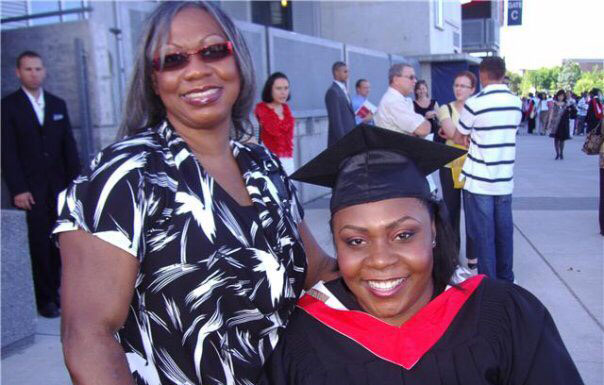
An early photo of two of Sheila Jennings' children

By Louise Kinross

As the mom of a son who had severe asthma and a life-threatening immune condition, Sheila Jennings learned firsthand that it was impossible to work outside the home and tend to her child with complex health needs.

“My interest in the support rights of mothers of severely disabled children began after I got divorced and set up my law practice while caring for three children,” she says. “My son missed about 40 days of school in Grade 7, and a similar amount in Grade 8. He had severe infections, was followed by four clinics, and was frequently in the Emergency Room. One time I was just about to go into the courtroom, and I had a call that something was wrong at school. I called my son’s father, who is an emergency room physician, to ask if he could find out what was going on, and he said: ‘I have someone here with a screwdriver in their head.’ Even when I had a spouse, he didn’t necessarily have the ability to drop everything. I started to get sick myself in 2005, and when I became very ill, I had no choice but to close my practice.’

Sheila recently defended her PhD thesis called The Right To Support: Severely Disabled Children And Their Mothers at Osgoode Hall Law School. “Within complex care, visible and hidden costs have been offloaded onto caregiving mothers by governments,” she writes in the study's abstract. We spoke about her research, and why she believes that the extraordinary demands currently placed on Canadian mothers of children with complex needs might constitute ‘cruel and unusual treatment or punishment’ under section 12 of the Canadian Charter of Rights and Freedoms.

BLOOM: What was the purpose of your research?

Sheila Jennings:
I wanted an answer to the question: ‘What are the legal rights to support for mothers who have severely disabled children, and what should they be?’ I thought it would be a very simple question. But it was anything but.

My project looked at literature, as well as 184 cases, which were mostly Canadian. These were cases where caregiving mothers brought law suits or defended against the actions of others. They took on the Canada Revenue Agency or social benefits, or said they needed more spousal support due to their child’s complex needs. I used cases from every jurisdiction and from an online database, so mothers can easily access them in support of their own complaints.

BLOOM: What did you find?

Sheila Jennings:
It was fairly uniform that if the moms were single and unable to work, they were falling into poverty and struggling, and they were often opposed in cases they brought. There were sympathetic judges, but caregiving mothers’ support needs slid between categories in law, and often couldn’t be helped in court. There was the occasional win, which might take months or years. Litigating mothers became embattled while also providing care. Lawsuits are exhausting and stressful. And each case was usually just one win—there were hardly any systemic wins, where the court said from now on every mother who needs this support will get this amount.

One of the problems is that child support is considered for the average child. You can ask for add-ons, but the cost of respite care and basic nursing care must typically be fought for.

BLOOM: Can you describe one of the cases?

Sheila Jennings:
One public law case was brought by a woman who was divorced and had a six-figure income. She had three children. She came to the Social Benefits Tribunal in Ontario to ask for funding through Assistance for Children with Severe Disabilities (ACSD). ACSD had said no, your income is over the funding cap of $60,000, so you can’t have the amount you say you need. Yet 50 per cent of her income was going to disability-related supports. 


She’s a good example of someone who had a full-time job and a big income, but it still wasn’t enough to make it manageable. The tribunal agreed that she'd made the case for the additional money, but it was on a one-off basis. Three years later, she was back in front of the tribunal when her funding application, over what was, in fact, a discretionary cap, was again refused.

I have so much admiration for these women. They’re living extraordinarily difficult situations with their children, and they’re rolling up their sleeves and taking on the government, or the other parent who doesn’t want to pay. The other parent says it’s the government’s job to pay, and the government says it’s the other parent’s job.

The system for disability supports across Canada is very fractured. It’s not a uniform system, nor can it be easily accessed. The ministries frequently shift people around and change programming. There's rarely an expert in charge with a great deal of knowledge on the file. It’s very hard to get systemic change or sustained change. Much of the work caregiving mothers do is invisible. People can be sympathetic, but they don’t realize how much work is involved and what the implications are. This is a different form of motherhood, and it needs to be supported as such.

BLOOM: I remember when my second child was born without disabilities, being absolutely shocked at how easy her care was.

Sheila Jennings:
Yes. Reflecting back on when my third child, who is athletic and healthy, was born, it highlighted for me that the mothers I was studying were different. The support needed for a child who is playing soccer, has tons of friends, doesn’t get sick often and has no physical issues that land them in hospital, is not comparable.

I think professionals who are going to be working with caregiving mothers should be going into the home for two to three days, to see what’s involved. In my project I decided not to call the mothers 'complex-care moms.' I decided to use a feminist lens and use the term 'maternally complex care.' It’s a different form of motherhood.

Too often, people see a regular mom, and they see the complexity as medical- and hospital- and doctor-centred. That is treatment.

It's the mother who is providing the complex care. 


Maternal complexity, rather than medical complexity, gives status recognition to the woman who's doing the care, and Canadian research shows it’s 97 per cent women. Many have given up jobs to care for a child with additional needs. It's an important role in society that carries a price, and it doesn't come with workers' compensation, pay or a pension.

I'm interested in how these women are seen and treated in our culture. They get sympathy and sometimes pity. Or even admiration. But care of this kind is not recognized as the work it is. I’ve said before, going to court as a lawyer on a difficult file was easier, any day, than dealing with the objective and subjective maternal complex-care issues that would arise with my son. 

Caregiving mothers may be traumatized while providing care, and at the same time you’re also running the house and doing everything else women are socially assigned to do.

My research also showed that it's hard for children with complex-care needs to see their mother's exhaustion from the heavy lifting, so to speak. It's an issue for children too.

BLOOM: Did you come up with any recommendations for change?

Sheila Jennings:
 One recommendation I considered is the treatment of caregiving mothers in light of section 12 of the Charter, which provides that 
Everyone has the right not to be subjected to cruel and unusual treatment or punishment. 

I made preliminary arguments that to have mothers alone held responsible for this care, in the manner it’s currently provided, meets a legal test to show section 12 is violated. 

Mothers’ health is being negatively affected, and not just a little bit. There’s even a study out of Australia about how mothers of complex children have much higher levels of mortality.

BLOOM: There was also a population-based study done by Dr. Eyal Cohen at SickKids that showed an increased risk of early death in mothers of children born with anomalies like heart disease or Down syndrome.

Sheila Jennings:
Right. So we know this correlation is an issue. 


BLOOM: What was the typical outcome of the legal cases you analyzed?

Sheila Jennings: Overall, you can see that the mothers are embattled. For example, there was a 2004 mother with a child with progeria, which causes early and rapid onset of aging. She wanted an increase in night nursing hours, and she wanted the government to subsidize, or pay for, private nurses she had to hire when the CCAC nurses didn’t show up. She also didn’t want CCAC to send her personal support workers who didn’t understand her child’s condition.

BLOOM: I looked at the case you sent, and she also wanted registered practical nurses who did overnight shifts to be paid at the registered nurse rate to better retain them. And she wanted a back-up plan with the hospital, so that CCAC-booked shifts wouldn’t be cancelled.

Sheila Jennings: Yes. Unfortunately, she had no legal leg to stand on. The CCAC client was her child, not her. I address this issue as one of relational rights in my project. She lost her claim. It’s 15 years later, and these home-care failures haven’t gone away. We read about the same problems from parents like Marcy White and Samadhi Mora-Severino. We have another generation dealing with the exact same thing.

BLOOM: How could section 12 be used to create change?

Sheila Jennings:
 Lawyers and mothers doing this kind of care need to get together to list the harms they’ve experienced, and to consider what kind of legal action is possible.

For example, it’s not okay to be on call 24 hours a day, nor to have consistently interrupted sleep for years. This is way outside the gamut of modern day labour standards. A mother interviewed recently by a Montreal newspaper said ‘
What kind of world do we live in, where I’m supposed to be up, day and night, providing heavy physical care?
 There isn't a union or workers' compensation to protect these women when they're injured or become ill. Caregiving mothers bear the risks. That's monstrous, and as a society we can do better.

BLOOM: You mentioned that you looked at how our culture views mothers of children with disabilities.

Sheila Jennings:
Yes, I did, and it's very interesting. The special-needs mother is romanticized, and put on a pedestal, and is portrayed as having a high cultural value. You think of Princess Diana in Pakistan holding a dying child, or Princess Kate landing on the runway in Alberta, and hugging a child who had obviously been in cancer treatment.

But that runs contrary to the way that caregiving mothers, particularly those who provide maternally complex care, are treated at a provincial level. The reality is that they’re often isolated and alone. Donna Thomson’s book The Four Walls of My Freedom alluded to that. There is exclusion, not only of severely disabled children, but of their mothers too.

BLOOM: What are your next steps?

Sheila Jennings:
I hope to teach again this year. I taught last year at the Ontario Tech University, and I was able to bring these issues up in my family law course and also, to a degree, in my human rights course. Students were very interested. I'm also in the midst of writing two papers and preparing a proposal for a book with an academic press.

In addition to her years practising family and child welfare law, and doing her PhD, Sheila Jennings did an MA in critical disability studies. You can follow her on Twitter @SheilaKJennings.

Friday, May 4, 2018

Siblings say depression in disabled adults is their top worry

By Louise Kinross

Concern about the mental health of a brother or sister with a developmental disability was the most pressing issue for over half of 360 Canadian siblings who completed a survey by the Sibling Collaborative released in March. “People with developmental disabilities are three to four times more likely to have depression and anxiety than the typical population,” says co-author Helen Ries. “As life goes on, and they face more adversity—such as the death of their parents, and changing living situations—it’s not lost on their siblings that mental health is an issue, and there are very few resources to support them.” Two years ago, Helen wrote a piece for BLOOM about her own experience having her brother Paul come to live with her and her husband after the death of their parents. We spoke about the findings of the survey.

BLOOM: Do you think siblings identified depression and anxiety in their brother or sister as the top challenge because they know the statistics, or because it’s something they’ve experienced in real life?

Helen Ries: I think they’ve seen it in real life. When you have a brother or sister who has faced discrimination, harassment, and, potentially, even abuse their whole life, you know there’s going to be some kind of negative outcome on mental health.

We asked about 13 different challenges, and we didn’t expect mental health to come out as number one. But I don’t want to forget the mental health of parents. That was rated second. As brothers and sisters, you watch your parents deal with so much over a lifetime. One respondent talked about how her parents were in their 90s and still looking after their adult child.

BLOOM: I know Yona Lunsky at CAMH is studying which interventions reduce depression and anxiety in parents. Almost half of your respondents said getting emotional support for themselves was a challenge.

Helen Ries:
Every sibling journey is different, and it depends on at what juncture they might need that support. For example, in my case I was faced with the death of my parents and transitioning to sudden caregiving. You have your own grief, and you have the added anxiety of trying to learn in two to three months what your parents learned over 40 or 50 years. The expectation is that you will continue to support your brother or sister in the same way your parents did. You go to Developmental Services Ontario and say ‘My brother is alone in the world, what can we do to best support him?’ and that crisis point doesn’t trigger anything. I think we need to be supporting the mental health of siblings early on, and it should be part of programming.

BLOOM: Housing was listed as a top need for 60 per cent of respondents. How can you respond to that when in Ontario, the wait for a group home is over 20 years?

Helen Ries:
Everybody knows that housing and financing paid support are huge issues within the disability community. What’s heart-wrenching is that this is problematic over generations. As part of our survey, we asked ‘Where is your brother or sister living?’ In early adulthood, it’s not a popular choice, which is understandable, because it’s not easy. But we noticed there’s a jump in later years when they are living together—and that speaks to the fact that there really aren’t other options. There comes a point, related to the aging of parents, where housing becomes a potential crisis.

BLOOM: For people who need 24-7 support, everything really falls on the parents to create something.

Helen Ries:
I think it’s because there aren’t a lot of options, and there is a lot of judgment and criticism around different choices. We’ve been criticized for choosing to live with my brother. It’s difficult for families when you face criticism. It can lead to a lot of second-guessing.

BLOOM: In terms of getting information to help them, siblings in your survey said friends and family were their top choice. But you note that in focus groups, you learned parents don’t share information with siblings.

I wanted to comment, as a parent, on why that may happen. I came to Holland Bloorview in 1999, and for the next decade, I went to all of our sibling workshops. The advice we got was to make future plans for the child with disability, independent of siblings, so as not to place anxiety on siblings. But the reality is that with no public housing and funding shortages, it’s impossible to make a plan like that. So in my case, as my son got older, I went silent. I didn’t want to harm my other children by telling them there was no plan, so I just didn’t say anything.


Helen Ries: I don’t think you’re unusual. Parents feel guilty and confused and they don’t have a lot of choices. In our family, my parents wanted me to have my own life. My dad had a plan that I was not involved in creating, but there are very few parts of that plan that still stand today. I think that’s because life is so dynamic and things change. This discussion in families has to happen over a lifetime. It needs to be ongoing and dynamic and include siblings. As a family, what kind of life does my family member want, and how can we support that?

BLOOM: I think there are siblings who naturally want to play a big role, but for others, for many reasons, they may not be able to. What happens when a sibling says no?

Helen Ries:
Well, at least you have the information you need. What you said is really important—for some siblings it comes naturally, and for others it doesn’t, and that’s why every sibling pair is on their own journey.

I know it would be very hard to have these conversations. When parents come to chat with me, I see that instead of enjoying life day-to-day, they’re so worried and stressed about what’s going to happen that a lot of joy 'now' is lost.

PLAN in Vancouver is doing a lot around developing a future planning tool. You may not be able to do all of the parts, but maybe you can do one part. For example, my parents got the RDSP stuff right and the Henson trust stuff right, even though they weren’t able to solve the housing problems for me. That helps me to fill the duty I have now.

BLOOM: Sixty-five per cent of respondents said they’d like an online website with information that could help them.

Helen Ries:
There are some areas in which we can provide support. For example, in helping siblings build resilience, which is the mental-health piece. How do you have a creative mindset to help you with problem-solving? Or maybe in sharing ideas from siblings who have found solutions. Our collective is based on contribution and collaboration and is an asset-based perspective. We want to lend our experiences and ideas to other organizations, to build their capacity around the sibling issue. This doesn’t have to be housed within the disability realm. This is a huge issue. It’s a gender issue—mostly affecting women. It’s a poverty issue. It’s a homelessness or housing issue.

Helen will be discussing key findings of her report with co-author Eric Goll and CAMH psychologist Yona Lunsky in a PRP webinar on May 14. Two recommendations are to create a national survey, as this survey had a majority of respondents from Ontario, and a national conference for Canadian siblings in 2019. The third author on the survey is Becky Rossi. You can join the collaborative on Facebook.

Tuesday, February 20, 2018

Family fund is a lifeline, but demand outstrips supply

By Louise Kinross

Anyone who knows Geoffrey Feldman knows that he's an extraordinary parent.

“I'm not a typical dad,
” he says with a chuckle.

At 76, Geoffrey's raising his 16-year-old daughter Isabelle, who has a rare genetic condition, on his own. 

“Having a special-needs child is extremely expensive,” he says. “If I wasn't working on a contract right now, I'd be finding it hard to make ends meet.”

Since 2011, Geoffrey and Isabelle have benefited from Holland Bloorview's family support fund, which covers items and services that promote child and family wellbeing. 

The donor-supported fund, which has a budget of $250,000 a year, recognizes the extraordinary costs associated with raising a child with a disability.

For Isabelle, it's meant swimming lessons, dance and art classes and being a camper in Spiral Garden, our summer arts program in the ravine behind the hospital.

“Isabelle will need supervision for the rest of her life, so I'm trying to give her these activities that will help her learn to better fend for herself,” Geoffrey says. “These programs
 have given her an amazing amount of confidence. She now has a group of friends that have become her social peer group.”

According to Adva Budin, who administers the family support fund, “equipment, recreation and respite are the most utilized categories. It may be addressing a child’s complex needs with equipment, providing recreational programs to benefit a child’s development, or helping with the cost of respite at home.”

For example, families can apply for a maximum of $1,500 towards equipment like wheelchairs, walkers, commodes and helmets. They can also apply for up to $500 for prescribed medication that isn’t covered by insurance or OHIP +.

A maximum of
 $1,000 is available toward equipment that supports quality of life, such as communication devices and writing and hearing aids. Another $500 can be dedicated to summer camps and swimming, art, music and sports programs.

And parents can get support for their own ”day-to-day coping,” Adva says. Parents can apply for up to $500 to support a respite worker at home or at camp, or a child’s stay at a respite facility.

Another $250 is available to cover TTC passes for families who are not able to access Wheel-Trans.

The fund received 710 applications in the first nine months of this fiscal year, depleting it to the point that new a
pplications are on hold until April 1. 

Holland Bloorview's foundation hopes to raise significantly more dollars to grow the annual fund next year.

“The need is increasing,” Adva says, “especially with President’s Choice Children’s Charity ending its program to support children with disabilities.”

Applications are manually processed by Adva and scored by a group of volunteers. Families need to include a letter of support from a health professional.

Families consistently express gratitude for the program, Adva says. “I frequently hear from families who are purchasing extremely expensive things, like a modified van, and they say every bit of funding they can get is critical. I also hear a lot from families who are fatigued and burned out emotionally, and they need respite. Some people are just so grateful they can put their kids in a swimming program and see them happy and smiling. So it’s the little things, too.

To donate to the program, please click here or call 416-424-3809. Applications for the fund will be available online on April 1.

Thursday, October 12, 2017

Falling asleep on a home-care night shift spurs nurse's research

By Louise Kinross

Krista Keilty is a nurse practitioner and visiting scholar at the Bloorview Research Institute who studies parents who care for children who require a “mini-ICU” at home. These children have complex medical problems, use ventilators, and require round-the-clock observation. Krista has cared for these children and families as a nurse at SickKids—where she taught their parents the skills to transfer home—and as a home-care nurse.

In 2015, Krista published a study that found parents of kids who use ventilators at home risk their own health because they struggle to sleep—even when a nurse is in the home. More recently, she’s interviewed parents and home-care nurses to study the factors that contribute to poor parent sleep. She works at SickKids and Holland Bloorview to improve the care and training families of children with ventilators receive as they move from SickKids to Holland Bloorview, and then home.


BLOOM: How did you get into this field?


Krista Keilty: I came to pediatric nursing straight out of undergrad. It was my favourite clinical placement. At the time, I was living in Fredericton and there were very few jobs in New Brunswick. But SickKids was recruiting across the country and set up in a hotel room in Fredericton. In less than an hour, they had me sign a contract and I agreed to move from Fredericton to Toronto, to a hospital and city I had never visited.


BLOOM: Wow. What was your first job there?


Krista Keilty:
I was a staff nurse on the Ear, Nose and Throat (ENT) floor, which included a constant-care room for children with chronic complex needs—most of whom had a tracheotomy. I became very interested in being one of the primary nurses training families in preparation for their move home. We didn’t have respiratory therapists then, so nursing had a prominent role.


BLOOM: Given it was your first job out of school, were you nervous to be working with children who required such a high degree of care?

Krista Keilty: I don’t remember being nervous about caring for children with traches. I remember my eyes being wide open in a very large organization, with lots happening and so many opportunities in front of me.

I was warmly embraced by a number of really caring, longstanding ENT nurses who mentored me with a lot of enthusiasm. I learned that trache skill-set early in my career. In the day they called us ‘trache-trained,’ and we travelled around the building as needed.

BLOOM: What is your research focused on now?


Krista Keilty: Understanding the experience of families providing comprehensive medical care for their child at home has been the foundation of my career. Fast forward many years, my research focus is building a program that examines the experiences and outcomes of caregivers when children depend on technology and require constant observation. If a machine were not to function, there would be a negative outcome for the child.


BLOOM: Two years ago we did a story about your study showing parents of children who use ventilators at home are sleep-deprived, and this puts them at risk for physical and mental health problems. Did that study lead to any policy changes that enable families to get more nursing hours?


Krista Keilty: Not a lot has changed, except that everything has changed. With the community care access centres (CCAC) moving to the local health integrated networks (LHIN), there is interest in the LHIN looking at new models of integrated care and funding packages for pediatric home care. At least two LHINs, including Toronto Central, have tested self-directed funding, and the evaluations are pending. A recent Ontario announcement suggests there will be movement towards families having more say about their care, but the details are pending.


Not much has changed in access to home-care nursing. Family voices are being heard better, but change to new ways of doing things is slow. Discharges are delayed while families wait for home care to be available, and once home, the amount of care received is often inadequate.


I think that targeting improvements in [parent] sleep and respite remains a priority. We co
ntinue to build evidence to plan an intervention around the sleep disturbance we’ve documented. I’m doing a follow-up study here at Holland Bloorview where we examine the perceptions of family caregivers and home-care nurses about the factors influencing sleep disturbance.

BLOOM: What have you learned?


Krista Keilty: We heard from families about the inability to turn off the switch of worry and vigilance, even when a nurse is in the home to watch the child. Whether we call that insomnia or constant vigilance, that’s one area of work that may lend itself to behaviourally-based interventions.


Another major finding was the use of personal technology to help parents monitor their child or monitor the nurse. Families describe nurses falling asleep often.


Parents may have a baby monitor visible at their bedside with the volume turned on. Or they may ask nurses to text updates on their child throughout the night, from the child’s bedroom to their bedroom.


We know the influence of technology on sleep is a public health concern in the general population, and it’s likely a large source of interference with caregiver sleep.


BLOOM: But if a parent is afraid the nurse may fall asleep, it sounds like there are good reasons to use a monitor.


Krista Keilty: Consistency, continuity and competency in the nurses is important. Nursing agencies have a real challenge filling these shifts.


Right now, the duration of shifts is not well aligned with sleep needs. If you only have six-hour nursing shifts but you need eight hours of sleep, you’re already clipping your sleep to provide the hand over to the nurse.


Another study we’ve submitted for publication examined the use of unregulated caregivers for a longer shift—so hiring nannies, university students and others who are not classically trained for the work.


We studied 20 families who identified and trained a provider around competency and the family’s values about how they would like the care provided. They used some public and some private dollars to pay them. We wanted to know if having an unregulated caregiver who worked a longer duration of shift was an acceptable way of supporting the families.


BLOOM: How did that work out?


Krista Keilty: The families didn’t communicate any safety concerns with unregulated caregiver use. They did speak about a large burden on them to identify, hire and train these caregivers. They didn’t always feel confident that they knew how to do that, and there was no formal support system to help them.


But they also told us they appreciated having them as part of their care team. They often fit in well with the families and, once trained, offered competent and compassionate care.


BLOOM: Can you talk about what it’s like to be a home-care nurse on a night shift?


Krista Keilty: We’ve asked nurses that question in our recent study. They tell us that the nature of the work is very difficult. It can be isolating and lonely. It’s not like working in a busy hospital at night, where you have colleagues who can help you stay awake.

Not only are home-care nurses working in isolation, but one of the instructions from many families is to work in the dark, so they don’t wake the child or the family. But being in the dark is the most major cue for sleep. In a focus group, I asked how many home-care nurses had fallen asleep on the job, and there was a lot of nodding in the room.


BLOOM: Can you tell us about your own experience falling asleep on a shift?


Krista Keilty: Early in my career, when I was working as an ENT nurse at SickKids, I was also employed by a home-care nursing agency. A number of us at SickKids and Holland Bloorview were moonlighting. We did this to support the families as they started to leave the hospitals with medical technology.


One day, I got a call late in the afternoon to do a home-care shift that evening. It wasn’t uncommon to get last-minute calls. That day I hadn’t worked at SickKids, but it was my day off, and I’d been at the beach. I was sunburned and tired and in no frame of mind to be staying up all night. I declined the shift—many, many times.

They kept calling back, and I felt a lot of pressure. Finally, the actual owner of the agency called me, and she wasn’t taking no for an answer. The shift was in Oakville and I’d never travelled outside of Toronto, since I was from New Brunswick. The owner told me to get on the GO train and she’d pick me up in Oakville and drive me to the house at 11 p.m. I’d be working with a family I’d never met, with a child whose care I wasn’t familiar with, in the dark.


The child was on the main floor of a large suburban home. I met the family at the door and they briefly went over the child’s care plan and showed me the equipment. The boy was asleep, non-verbal, and on a ventilator. The parents went off to bed and I did my initial assessment of the child and provided care for a number of hours.


Sometime between the hours of 2 and 4 a.m., which tends to be the witching hour for safety incidents related to sleeping on the job, because it’s the hardest time to stay awake physiologically, I fell asleep. The father woke me up when he heard the kangaroo pump beeping, from a distance, in this large home.


I was forever changed. I realized I’d let him down and put the child at risk by not being available to the child when clearly this was an alarm to be alert to. I failed to hear it. I tried hard to have a conversation with the family the next morning about it, but they dismissed me, and I’m sure they never wanted to see me again.


BLOOM: How did this experience change you?


Krista Keilty: I had to reflect on how the provider-family relationship was structured in such a way that I was postured to be the expert, when clearly, just the fact that I had the title ‘registered nurse,’ didn’t mean I was good enough that night. I was trained on the technical side for this child’s care, but I didn’t know the family and I didn’t have a rapport with them.


I was a caring, hard-working, professional nurse, so I knew I was probably one among many who had let the family down and posed a safety risk. And, importantly—I knew I had threatened that family’s ability to get respite in the future, even when a nurse was in the home.


BLOOM: Because they would be afraid it would happen again.


Krista Keilty: Yes. This was a pivotal story in my career that spurred the idea for my PhD study.


BLOOM: What do parents say is the greatest challenge caring for their child at home?


Krista Keilty: They continue to tell us that it’s the complexity of the health system—that navigating that system takes a lot of their time and energy. In another study, I looked at the ways families spend their time. The ‘case-management’ they did for their child was a large time consumer, and it was also the most stressful part of what they did.


That’s partly why I’m excited to be here in this role. I’m working on a quality improvement project to support the families’ transition from SickKids to Holland Bloorview and then home. I’m trying to smooth those processes, and we have families engaged to tell us what it needs to look like.


BLOOM: In addition to sleep deprivation, I saw a paper you wrote that talked about how having a child with complex needs at home affects the family financially.


Krista Keilty: Yes. We’ve documented that income levels of family caregivers are less than those of a community-based sample with healthy children. Family caregivers of children with medical complexity are under-employed at a time when many would be in their highest, income-earning years.


The burden, for families, has been documented, in terms of negative impact on income, depression and anxiety, and in work by Dr. Eyal Cohen at SickKids and others, even shorter lifespans in mothers due to premature death. These data spur me, and others, on.


BLOOM: What emotions do you experience working with these families?

Krista Keilty: The gamut. I've learned that I'm highly empathic to the emotions of those in my environment. Given families can be sad and angry at times, then I find I can feel this way, too. Providers can be angry, or at least highly frustrated. But instead of feeling downcast, I most often feel happy and excited for what is possible. Families frequently experience uplifts and share their joys and hopes, which I find contagious.

They are very very thankful when their care is compassionate and supportive. Clinical and research colleagues are also energizing. I'm a big believer in the power of sleep. I need a lot of it. And it helps me get up every day with the will and ability to take on new challenges and cope with whatever comes my way. And, of course, a walk in Spiral Garden is always good for the soul.

Wednesday, August 23, 2017

How 'there's a new rule' broke me

By Louise Kinross

Hoops. This is another story about the unnecessary hoops people with disabilities and their families are forced to jump through to get government supports.

A year ago I wrote about the nonsensical, make-work project the Ontario Disability Support Program puts families through to get NEW documentation for long-term disabilities.

At the time, I’d learned that we could get our son’s hearing aid batteries covered through the program.

However, ODSP first required us to take our son to see our family doctor, to get that doctor to write a note saying he had hearing loss.

A family doctor cannot diagnose hearing loss. Only a regulated audiologist can. 

But ODSP would not accept 20 years’ worth of audiology reports documenting my son’s permanent hearing loss.

Instead, ODSP insisted that my husband and son take a morning off to go to the family doctor, to ask the family doctor to write a note saying my son had hearing loss.  

Then—wait for it—ODSP required my husband to hand-deliver the doctor’s note to the distant ODSP office. The government would not accept a faxed or scanned copy of the letter from the doctor’s office.

I had almost forgotten this outrageous and unnecessary run-around.

UNTIL THIS MORNING.

That's when I called our hearing aid provider to tell them we needed a refill on my son’s hearing aid batteries.

These are the batteries approved for coverage by the ODSP. How difficult could this task be?

"I'm afraid there's a new rule," the provider said. 

Heart drop. Why did I even entertain the idea that I could accomplish this task with one call?

"We used to be able to e-mail a request for the batteries to ODSP," she continued. "But now ODSP stipulates that we e-mail the request to the family, and the family needs to physically take the paper request to their ODSP worker for approval."

What? What?

We are ALREADY approved for the batteries.

The "request" that I could drive over to the ODSP office is the same one that the hearing aid provider could e-mail.

Why must I take time off from work to take a piece of paper to the far-away ODSP office for an item that has already been approved, for a disability that has been documented for over 20 years? A disability that doesn’t change over time (unless it gets worse).

Why must an adult with a disability, and possibly a mobility problem, have to take time from their day to go to an ODSP office to get an item covered that has already been approved?

Why are we wasting the time of people with disabilities, their families and family doctors, as well as the time of the ODSP worker who has to entertain these visits, rather than accepting documentation from an audiologist that a person has a hearing loss?

Why? 

Then, the provider added: "Just so you know, even if you take this sheet of paper over to the ODSP worker, it may not be approved right away."

That's when I reached breaking point.


Why do I need to get an in-person approval for something that is ALREADY APPROVED?

I got out my Visa card and told the provider to charge us the $50 for the hearing aid batteries and to put them in the express post.

Then, I came in to work and wrote this article. Because I want everyone to understand how a population that is already marginalized is being disadvantaged by the very government that purports to serve it. And how our dollars are being wasted.

Monday, July 17, 2017

Foundation helps disabled students 'just like me'

By Louise Kinross

After a skiing accident that injured her spine and shoulder, Tamara (Tammy) Gordon had to learn to write with her opposite hand and get around in a wheelchair.

While studying at York University, her mom Marcia attended class with her to take notes.

That’s where the pair noticed how hard it was for other students with disabilities to manage the extra expenses they had at school.

“Some of them were in school for years, because they had to take breaks between courses because they didn’t have enough funding,” Tammy says. “Others had to drop out because of the costs of taxis, tutoring or special equipment that would put them on an even playing field with other students. My mom and I thought ‘Why not start a foundation in my name to help other students just like me?’”

In 2013, The Tamara Gordon Foundation received charitable status. Each year it offers grants from $750 to $3,000 to university or college students with physical disabilities in Ontario.

“My advice to students with disabilities is don’t give up and continue your education because that’s the key to life,” Tammy says. “Work hard, get your high school credits and pursue post-secondary education.”

That’s what Tammy, now 31, did.

At 16, she was an elite basketball player who was being scouted by American universities. Then she became partially paralyzed as a result of a skiing accident.

She lived as in inpatient at Lyndhurst for five months. “It was very long and very hard,” she says. “Before my accident I was left-handed, but I sustained a brachial plexus injury to my left shoulder and lost the use of my dominant hand. So I had to learn how to use my right hand.


Tammy continued with school onsite and her mom decorated her room “so it looked just like my room at my house,” she says. “I had teddy bears and cards from classmates and teammates, and I even used my own special blanket from home on the bed.”

Daily pain was the biggest challenge, she says. “I definitely wasn’t used to that. Pain medication didn’t really help me, so I’d just try to fight through the pain. After a 12-hour surgery, I had to wear a special back brace for a good while that was very uncomfortable. The process of learning to sit up again and transfer to a chair was long and tedious.”

Something that helped Tammy adapt was talking to other patients who were further on in their rehab journey. “I definitely think it changed me as a person,” she says. “Although I played sports before the accident, I was really shy. The accident really brought me out of my shell. Although I wasn’t among people my age, I was able to talk to the other inpatients at Lyndhurst and learn from their experiences. Later on I got into motivational speaking where I talk about my experiences and encourage others, no matter what they face in life, don’t give up. Even if something like this happens to you, you can still achieve your dreams.”

After her rehab, Tammy tried to return to her old high school, but it didn’t have an elevator large enough to fit her wheelchair “and being around my old friends was tough. It was too hard for them to see me in a wheelchair. Some of them almost took pity on me and felt sorry for me. And others couldn’t make eye contact with me. That was even worse.”

She transferred to an accessible school but then became ill and had to finish her high school through a home program. “I still managed to finish on time with my graduating class.”

Today Tammy works at her foundation as well as being a customer relations coordinator for TD Bank. “I love working at TD because I’m treated like everyone else,” she says. “ Yes, I do need some accommodations in regards to my work station and personal assistance. TD is an awesome company to work for and I’ve been there 11 years.

Tammy says recipients of her foundation’s grants are chosen based on community service and grades. The foundation is holding its first fundraising gala on July 29.

She says her mom played a big role in her recovery after her accident. “Parents, be strong, because we feed off your energy,” she says. “Stay positive and be encouraging. Whatever dreams your child has, let them know it’s possible to achieve. It might take longer or be a harder struggle, but they can get there with the right support and encouragement.”

Tuesday, September 27, 2016

Make work? Families still face too much of it

By Louise Kinross

A couple of weeks ago a story with this headline appeared in The Toronto Star: Easier path to cash for adults, kids with disabilities.

It kind of gives one the image of a limitless pot of gold at the end of the rainbow, doesn’t it?

The story is about how people apply for Special Services at Home funding and the Ontario Disability Support Program—and cumbersome red tape that made them prove their disability again and again.

SSAH is funding that enables families to hire a worker to help a child develop skills and participate in the community while giving the family respite.

In the past, families had to reapply every year—filling out numerous forms each time—even though in most cases the disability didn’t change.

It was a gigantic make-work project—for families and program administrators alike.

It’s reminiscent of stories we’ve read about Canadian war veterans who had to “prove” that they still had no legs
on an annual basis.

The changes to SSAH came after the provincial ombudsman’s scathing report on disability services last month. I’m not sure that what The Star calls “an easier path to cash” merits congratulations.

Perhaps “I’m sorry we’ve been putting SSAH families through this unnecessarily for decades” from a government spokesperson would be more appropriate.

There was no exchange of “cash” in the SSAH program in the way the headline implies. Workers invoice parents, who then pay them. Parents then send those invoices in to the government, and receive a cheque or deposit to compensate them, up to their funded amount.

The Toronto Star story also notes another change. Once a person with disability has met the criteria for adult services, they don’t have to prove their disability again to apply for ODSP. The ODSP covers basic needs like food, clothing and shelter and some health benefits.

That's good, but the story doesn't mention that you may have to get new documentation of old disabilities after you're on the program.

Recent case in point: I was told that hearing-aid batteries are covered through ODSP, but I'd never followed up on this.

My son’s hearing loss has been documented since he was 18 months old. In fact, I’m sure it was included in our application to ODSP in the first place.

Imagine my surprise, then, when I asked our hearing aid provider about how to get batteries covered through ODSP, and I was told that due to a new regulation, we would have to take our son to see our family doctor, and get that doctor to write a note saying he had hearing loss.

Now, our hearing aid provider has decades of hearing tests on hand for our son. They could have easily sent these to ODSP, but apparently that wasn’t sufficient.

No, it would require two members of our family meeting with a family doctor who isn’t an expert in hearing loss to meet the new regulation. Other than seeing that my son was wearing hearing aids, the doctor couldn’t assess his hearing loss on the spot. Yes, she too would have had all of his hearing tests in her file.

But why, when his hearing loss has been documented for more than 20 years, was it necessary to get a new doctor to document it? Why weren’t the audiology tests that the hearing aid provider had sufficient evidence? Audiologists are regulated professionals are they not?

Then, after making the doctor’s visit with my son, my husband had to physically take the document to the hearing aid provider. We were told the government wouldn’t accept a faxed or scanned copy from the doctor.

Why?

And to top it off, my husband was told he’d have to do the same thing next year.


How does this benefit anyonefamilies, doctors or program administratorsin the system? 

Are there really people out there scamming the government for hearing aid batteries they don't need?

Monday, February 1, 2016

How difficult could caregiving be? This sister found out

By Louise Kinross

I caught part of this excellent interview on CBC's The Current this morning.

It's about Helen Ries's journey as an Ottawa woman who took over care of her adult brother Paul, who has Down syndrome. Paul, who works delivering mail at Canada Mortgage and Housing Corp., moved in with Helen and her husband after their mother died in January 2015.

Helen's built this amazing website aimed at developing a community of friends and family around her brother so that he can lead a rich life.

She documents her first year as his primary caregiver here in what she calls a failure report.

"I assumed that if I could take a few months off of my full-time work to organize supports, I could sort out our finances and apply to increase my brother's government funding, then hire a few people to help out," she writes. "Everything would be sorted out and I could get back to life as it was in about a year."

A year later, this MBA grad decided she had to resign from her job with the Ontario government. "As one other sister told me, it took her YEARS, yes that is right, years to right herself after becoming the sole caregiver of her brother."

On CBC, Helen talked about how damaging the assessment for supports was to Paul, two days focused on "what Paul cannot do" that led him to self-harm.

She also noted that money her parents had set aside in a Henson Trust can't be accessed because of limits imposed by the Ontario Disability Support Program.

Meanwhile, Paul hasn't been able to get an increase in Passport funding through Ontario's Ministry of Community and Social Services.

"I thought given his situation was truly a crisis he would qualify for some additional Passport funds so I could hire people to support Paul in his daily life," she told CBC.


Take a listen. Or send Helen a tweet

Friday, October 4, 2013

Simple questions that go unanswered


In May 2012 my son was approved for funding for a laptop at school. The desktop computer he previously had at school was so old that it didn't have functions he needed for computer science class.

I followed up about this computer but kept being told it was in the "system," which I understood to be going through some kind of government checks to ensure money isn't wasted.

Two days ago I met with some therapists who were going in to Ben's school on another matter. "I'm embarrassed to say that I don't know if he ever got the laptop he was approved for," I told them in advance.

Years ago we had a situation where Ben waited over a year for a computer he was approved for, and I e-mailed the superintendent of special education and everyone else I could think of for months, and followed up with calls, and stamped my feet, with zero effect.

The therapists who went into Ben's school yesterday confirmed that he does not have the laptop -- the one he was approved for 18 months ago. Apparently sometimes requests get "lost" in the system.

It seems to me that the process of funding and delivering computers to students with disabilities needs an audit. What is the average wait time for delivery of these computers?

Could any business operate by delivering products 18 months AFTER the request was made? And wait. We don't have delivery yet, and we don't even have an estimated time of arrival.

What is the point of approving a computer that is going to take more than 1 1/2 years to get into the classroom? Couldn't a child's needs change over that amount of time?

And during that 1 1/2 years, what happens to the dollars that were supposedly allocated to its purchase?

Simple questions, really. But ones that parents like me are too busy or too tired to keep asking.

Wednesday, December 2, 2009

The politics of funding


By Louise Kinross


I was putting together the science roundup for the December issue of BLOOM magazine and couldn’t help noticing that six of eight recently published research studies about childhood disability focused on autism.

Given autism affects one in every 150 children, it wasn’t surprising that a large chunk of research dollars would be invested in treating this disorder. But I wondered whether funding to develop treatments for, or improve quality of life in, other conditions reflected how commonly they occurred in children.

I recalled a fascinating fact sheet from the Cerebral Palsy International Research Foundation (CPIRF) earlier this year that compared the prevalence of well-known childhood disorders with the amount of research funding they received from U.S. federal government and private sources.

For example, muscular dystrophy affects one in 8,000 children but received $47 million in federal funding this year. Cerebral palsy affects one in 278, but received only $16 million. Autism, at one in 150, received $105 million.

On the private side, muscular dystrophy research drew $310 million, autism $15 million and cerebral palsy $2 million.

I asked Dr. Mindy Aisen, medical director of the CPIRF, to explain the disparity.

“It’s a matter of access to media and funds for lobbying politicians,” Dr. Aisen said. “At the end of the day, research funding does not equate to prevalence. It’s political, and politics is influenced by the media and lobbying. Cerebral palsy is terribly underfunded proportional to its enormous prevalence – which has gone up dramatically in the last decade as a result of the rise in multiple births associated with fertility treatments and our ability to save premature babies.”

Dr. Aisen noted that Jerry Lewis was a media champion for muscular dystrophy research and “autism exploded on the scene with a huge media campaign by Autism Speaks. They’ve done a phenomenal job of making autism a political issue and God bless them.”

Unfortunately, cerebral palsy doesn’t have high-profile celebrities to take its message to the masses and the CPIRF board chooses to put its money into research rather than lobbying.

Dr. Aisen noted that raising research dollars for autism may better capture the public’s imagination because it’s a disability that isn’t apparent at birth. “Children with autism start out looking great and everyone has the expectation that this delicious toddler will be totally functional – and then at age three parents lose that hope. With cerebral palsy, problems are usually apparent from the beginning. There’s still a huge stigma attached to physical impairment. People see a wheelchair and look away – especially if it’s a child in a wheelchair.”

The marketing of high-functioning autism and Asperger’s is also reflected in the recent spate of movie characters with the conditions. “There’s something very appealing about children who are extremely intelligent, mathematical and computer savvy and the sense that if only we could overcome this problem, they could contribute so much.”

Disparity in research funding also exists between disabling childhood and adult conditions. “In large part children’s conditions are far less well funded than any adult condition,” Dr. Aisen says. “Children don’t have a voice. In the end, people fight for what’s most relevant to them.”

That may explain the explosion of stem-cell research funding for end-of-life conditions like Parkinson’s, Alzheimer’s and stroke, but the lack of a single stem-cell clinical trial for the treatment of cerebral palsy. “Imagine how stem cells might be even more powerful in the highly plastic brain of a baby,” she says. “The lack of stem-cell research for cerebral palsy is mind-boggling.”

Dr. Aisen says we’ve never been closer to scientific discoveries that can benefit children with cerebral palsy. “We have such powerful pilot data and ideas and research talent, we just don’t have the funding for clinical trials.”

Constraint-induced movement therapy (CIMT) – based on the premise that new motor pathways can be laid if a child with one-sided weakness is motivated to use the weak limb by casting the strong one and developing engaging virtual-reality and robotic applications that give the weak side a repeated workout – shows great promise, she says.

“We have the technologies and techniques that we know make an impact and if we just had a bit more research we could really explore how much, when, and what combination of things works best. The National Institutes of Health and National Institute of Neurological Disorders have supported work into CIMT, but it hasn’t reached level-one evidence, which means double-blind, randomized control trials, which are expensive. No one is funding those studies. We need level-one evidence to convince policy-makers and insurers so that this therapy is offered in schools and paid for by Medicaid.”

Dr. Aisen says research into autism and cerebral palsy takes place in unnecessary silos. “We have two major developmental disorders of the brain that have overlaps. Many with autism have seizures and motor disorders (tics, lack of coordination and decreased muscle tone) and a meaningful number of people with cerebral palsy have symptoms that place them on the autism spectrum. We need to talk and exchange techniques and technologies and leverage resources.”

Other childhood disabilities face different funding challenges. Parents of children with Down syndrome worry that if cases continue to decline as a result of better prenatal diagnostic tools and higher abortion rates, funding to study the condition will dry up.

And then there are rare conditions – like that of my son Ben. When he was born, there were only 60 reported cases of Langer-Giedion syndrome in the world. Rare syndromes have no political leverage unless their study can be shown to shed light on more common diseases. For example, one of two genes deleted in Langer-Giedion syndrome is a tumour suppressor – which has made it of interest to cancer researchers.