Showing posts with label university. Show all posts

Wednesday, February 28, 2018

How 'I became more than the kid in the wheelchair'

By Louise Kinross

Max Setka, 21, is in his second year studying journalism and history at Trent University in Peterborough, Ont. Max has a long history with Holland Bloorview as he was part of our integrated kindergarten program. We spoke about what it was like for him to transition to university with a physical disability.

BLOOM: What is your disability and how does it affect you?

Max Setka:
I have arthrogryposis, and it mainly affects my legs. I wear ankle-foot orthoses every day to stand, and depending on the weather and how I’m feeling, sometimes I use a wheelchair. I used the wheelchair a lot last year when I was in residence. This year I’m often walking.

The campus isn’t completely accessible because everything was built in 1964. But all of the classroom levels are flat and there are elevators in all buildings except for two—and one of those doesn’t have classes in it. I managed relatively easily using the wheelchair last year.

BLOOM: What was the greatest challenge of moving from high school to university?

Max Setka: For me personally, it was discovering how to adapt to everything. I obviously was very excited, but then it was like ‘Okay, how do I get to this place or all these different places?’ There was also some general anxiety about being away from home. But I’ve gone to Camp Awakening for 10 years, so I was used to being away. It was basically: ‘How am I going to manage 11 months of figuring out how to get to places?’

BLOOM: Is speed an issue?

Max Setka:
It is sometimes. I try to give myself a certain amount of time and not rush places. I’ve had a few times where I’ve come into classes late and I’ve apologized at the end and said ‘I’m not the fastest person,’ and that it might happen occasionally.

The big issue for me in residence was leaving myself time to plan ahead for what I needed for three classes, so that I didn’t need to rush back to my room in between classes.

BLOOM: Do you have any accommodations in class?

Max Setka:
I get note-takers. I can type, but my hands aren’t the greatest at speed and coordination. In the first class the professor will ask if anyone is willing to type or write out their notes and submit to an online system. Having someone else’s notes at the end of the class or day is one of my accommodations.

BLOOM: Did you work with an accessibility office on campus?

Max Setka:
Yes. They have an accessibility services office. You go to an orientation in July with them, before school starts, and they explain that you’ll be assigned an advisor who will help figure out what you need. Then at the beginning of September you meet with the advisor. My other accommodations are extra time for exams and I can use my computer for all exams.

BLOOM: Did you feel supported in your accommodations?


Max Setka:
The support is less hands-on than in high school. But if I need anything, I just shoot my advisor an e-mail. All of my professors have experience dealing with things like this. Unfortunately, I’ve got one class where the person who volunteered to take notes stopped after the first two weeks. Luckily, with this class, my professor posts literally his entire lecture, so it’s not affected me as much.

BLOOM: Was it hard or easy to make friends in your first year?


Max Setka: It was fairly easy. You meet a lot of people in residence. Trent is very passionate about connecting people, so we did a lot of floor meetings and activities together. I didn’t have the greatest roommate. I don’t know if my disability was a factor in that.

BLOOM: Were there other students with disabilities on campus?


Max Setka:
I noticed my first year that I was one of the few people in a wheelchair. But having gone to orientations at accessibility services, I found there were quite a few people who maybe didn’t have physical disability, but had invisible disabilities or learning issues. So I didn’t feel completely alone.

BLOOM: I guess Trent can’t advertise itself as being full accessible?


Max Setka: No. They’ve got some building that can’t be retrofitted because they’re so old. But they do advertise as the first university in Canada to have an MV1 van. It’s a small wheelchair accessible van you can book and it will come and take you from one building to the other.

BLOOM: What was accessibility like in residence?

Max Setka:
I was in the one residence that has elevators. My room was slightly wider than average. One of the things that was an issue in the first week was pushing open the door and closing and locking it. They’re very heavy fire doors. So the school attached an automatic opener to the door and gave me a small key fob.

This year I’m off campus, and I started using Peterborough’s Handi-Van, which is like Wheel-Trans. Otherwise I have to take two public buses and they're not reliable.

BLOOM: I understand you’ve been quite involved in extra-curricular activities.

Max Setka:
Last year when I was in residence I ran, and was elected, to the student government in my building. Our job was to get people involved and help them feel that they were a part of the college even if they’d moved out.

We met every other Sunday and had to do required office hours. I think personally for me it made me noticed, because I was always around, and people would say ‘Hey, you’re that guy, right?’ I became more than the kid in the wheelchair.

BLOOM: This year you’re reporting the university's hockey games.

Max Setka:
Yeah. I’ve always been a great hockey fan and because I can’t skate with a disability, I always looked for different ways to be involved.

BLOOM: How often do they play?

Max Setka:
Right now it’s Thursdays and Saturdays every week. I do the full recap, so I have to be at the game and watching every move so I can write it down. I take notes on my computer. The idea is that by the end of the game the recap is out so that if you didn’t see the game, you know what happened before the newspapers publish it in the morning. Anyone can go on the team’s website to read it.

BLOOM: Isn’t it hard to get everything down as the game is happening?

Max Setka:
No. I’ve become really proficient with typing. I take my little laptop and type as the game’s going. Typing has really helped my hands to be able to do more.

BLOOM: Are you interested in sports journalism in the future?

Max Setka:
Yes, this is exactly what I want to go into. I love anything related to hockey.

BLOOM: What advice would you offer a high school student with a disability who plans on going to university?

Max Setka: I’d say don’t let your disability define what you think you can do. If you want to do something, go for it. In my first two weeks in residence I was writing applications for student government, and putting up posters and campaigning.

The other thing is to keep good communications with your school’s office of disability or accessibility.

BLOOM: Have you faced any ignorant attitudes about disability at Trent?

Max Setka:
I haven’t. University is a different place from high school. People admire that you’re there and you’re doing what you’re doing. In high school, you may have an assistant with you, and there’s ‘a special room’ for students with disabilities. In high school there’s the perception ‘He’s from the special room, he’s always got this person with him.’ Coming to university I’ve been able to find out, and be, the kind of person I want to be.

BLOOM: Do you feel you’ve changed a lot?

Max Setka:
 I think I've found myself. I’ve gone through rejections and acceptances when trying to do different things. For example, I applied to be an orientation week leader this past September, but I didn’t get accepted. But that didn’t stop me from trying out for other things, like applying for this position with the hockey team.
Monday, July 17, 2017

Foundation helps disabled students 'just like me'

By Louise Kinross

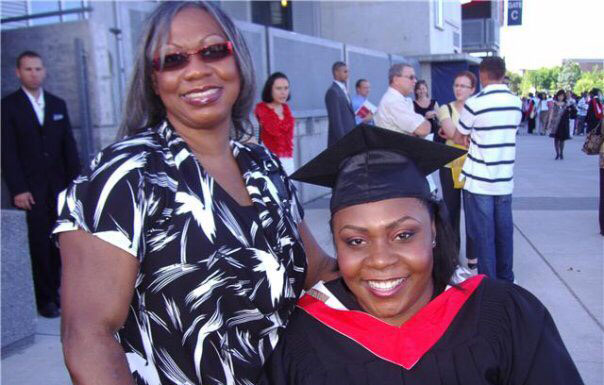
After a skiing accident that injured her spine and shoulder, Tamara (Tammy) Gordon had to learn to write with her opposite hand and get around in a wheelchair.

While studying at York University, her mom Marcia attended class with her to take notes.

That’s where the pair noticed how hard it was for other students with disabilities to manage the extra expenses they had at school.

“Some of them were in school for years, because they had to take breaks between courses because they didn’t have enough funding,” Tammy says. “Others had to drop out because of the costs of taxis, tutoring or special equipment that would put them on an even playing field with other students. My mom and I thought ‘Why not start a foundation in my name to help other students just like me?’”

In 2013, The Tamara Gordon Foundation received charitable status. Each year it offers grants from $750 to $3,000 to university or college students with physical disabilities in Ontario.

“My advice to students with disabilities is don’t give up and continue your education because that’s the key to life,” Tammy says. “Work hard, get your high school credits and pursue post-secondary education.”

That’s what Tammy, now 31, did.

At 16, she was an elite basketball player who was being scouted by American universities. Then she became partially paralyzed as a result of a skiing accident.

She lived as in inpatient at Lyndhurst for five months. “It was very long and very hard,” she says. “Before my accident I was left-handed, but I sustained a brachial plexus injury to my left shoulder and lost the use of my dominant hand. So I had to learn how to use my right hand.


Tammy continued with school onsite and her mom decorated her room “so it looked just like my room at my house,” she says. “I had teddy bears and cards from classmates and teammates, and I even used my own special blanket from home on the bed.”

Daily pain was the biggest challenge, she says. “I definitely wasn’t used to that. Pain medication didn’t really help me, so I’d just try to fight through the pain. After a 12-hour surgery, I had to wear a special back brace for a good while that was very uncomfortable. The process of learning to sit up again and transfer to a chair was long and tedious.”

Something that helped Tammy adapt was talking to other patients who were further on in their rehab journey. “I definitely think it changed me as a person,” she says. “Although I played sports before the accident, I was really shy. The accident really brought me out of my shell. Although I wasn’t among people my age, I was able to talk to the other inpatients at Lyndhurst and learn from their experiences. Later on I got into motivational speaking where I talk about my experiences and encourage others, no matter what they face in life, don’t give up. Even if something like this happens to you, you can still achieve your dreams.”

After her rehab, Tammy tried to return to her old high school, but it didn’t have an elevator large enough to fit her wheelchair “and being around my old friends was tough. It was too hard for them to see me in a wheelchair. Some of them almost took pity on me and felt sorry for me. And others couldn’t make eye contact with me. That was even worse.”

She transferred to an accessible school but then became ill and had to finish her high school through a home program. “I still managed to finish on time with my graduating class.”

Today Tammy works at her foundation as well as being a customer relations coordinator for TD Bank. “I love working at TD because I’m treated like everyone else,” she says. “ Yes, I do need some accommodations in regards to my work station and personal assistance. TD is an awesome company to work for and I’ve been there 11 years.

Tammy says recipients of her foundation’s grants are chosen based on community service and grades. The foundation is holding its first fundraising gala on July 29.

She says her mom played a big role in her recovery after her accident. “Parents, be strong, because we feed off your energy,” she says. “Stay positive and be encouraging. Whatever dreams your child has, let them know it’s possible to achieve. It might take longer or be a harder struggle, but they can get there with the right support and encouragement.”

Tuesday, April 18, 2017

Rana finds her voice in advocacy

By Rana Nasrazadani

“You’re not ready for university.”

A staff member said this to me in high school, in front of the whole class. These words, from a person whose job was to guide and support students, had a profound impact on me. Sometimes, they still linger.

It wasn’t these words alone that affected me. Staff had discouraged me from pursuing post-secondary education throughout high school. I believe they had a limit about how far I would go. When I pushed the limit, they made it more difficult. I was walking on eggshells. I felt like I had tougher expectations put on me than my peers. The pressure to live up to these standards increased each year, but without the supports I needed. It seemed like no matter what I did, it was never enough.

As a teen with a disability, my life was already quite stressful: appointments, physical therapy and surgeries were not out of the ordinary. I was also on a competitive swim team, practising multiple times each week. On top of this, I was a student with a clear plan to graduate in four years and continue my education.

When the staff member said I wasn’t ready for university, I didn’t say anything. In high school, I didn’t want to show any vulnerability. At the time, I felt I needed to manage the extra pressures related to my disability while making everything look effortless. But in reality, I was struggling.

I started to doubt myself. I had no reason to worry, as I was meeting the requirements to go on to university. But discouragement plays with your self-confidence. I worried about other people’s approval, and more so, their disapproval of my decisions. I began to question whether I should apply to university.

Then I asked myself “Why am I letting this happen?” Far too often, people with disabilities are seen as incapable, before being given a chance to participate as an equal in society. I didn’t need the approval of school staff to go to university.

I had a strong support system of family and friends and their encouragement to reach my goals outweighed those that discouraged me. Without telling school staff, I applied and got accepted to university.

I’m now a student at York University, studying towards a future in human rights law. As a former ambassador for Holland Bloorview, I always knew that I had an advocate in me. More recently, I got involved on the youth advisory committee of the Office of the Provincial Advocate for Children and Youth. I was part of­­­­ the We Have Something to Say Project, which brought together the voices of youth with disabilities from across Ontario to work towards a barrier-free future. I shared my story about some of the obstacles I faced in high school (p. 64).

Four years ago, if you’d asked me if I’d be where I am today, I would have had a hard time believing it. Opening up about these experiences has been very difficult. It took a while for me to gain enough confidence to tell my story on an open platform, but once I was ready, it was like a weight was taken off me.

Over time, I’ve learned that many students go through similar experiences. They feel the need to “cover up” their struggles because of social pressures and ideals. It can feel like no matter what you do, it will never be enough.

To those reading who are going through a similar situation, there’s nothing wrong with saying you’re struggling. Don’t bottle it up. I encourage people to talk about it. Right now it may be hard to see the positives, and it might feel like your situation isn’t getting better, but have confidence in yourself, trust your judgment and keep pushing towards your goals.

Sunday, May 11, 2014

Chronic pain on campus: 'It's a silent, daily battle'

By Louise Kinross

Judy Sookehan Woo is a part-time student studying sociology, linguistics and women’s studies at a university in Western Canada. Judy has fibromyalgia and chronic fatigue. Fibromyalgia causes constant musculoskeletal pain and problems with sleep, fatigue, memory and mood. “If someone comes up and gives me a hug, it hurts,” Judy says. “Every day is unpredictable.” Chronic fatigue is a condition where the person feels exhausted no matter how well rested. “My illnesses are invisible and it’s a silent, daily battle,” Judy says. As a woman of colour with invisible disabilities, Judy has experienced what she describes as ableism and racism on campus. Follow her @Woo_Judy on Twitter.

BLOOM: What’s the biggest challenge you’ve faced with an invisible disability?

Judy Sookehan Woo: Negative reactions from professors who assume I’m healthy and able-bodied and treat me like I’m cheating because one of my accommodations is extensions on when papers are due. One professor, when students were in the room, told me she had ‘looked up and down’ the school policies and there was no mention of extensions.

This is a documented accommodation for me that is sent in a letter to the teacher by the Disability Resource Centre through interoffice mail. Usually, during the first week of class, everything's fine. Then, I can tell when the professor receives the letter about my accommodations because of the way they react to me.

It’s like they expect me to be the model minority student and they’re in a state of shock when I’m not, and then I’m treated awfully in class. They had it really rough when they went through their degrees and I appear okay so I shouldn’t use this letter as a way to manipulate the system. 

BLOOM: What did you do after that professor made that inaccurate remark?

Judy Sookehan Woo: I complained to the school’s Disability Resource Centre but they didn’t know what to do. There wasn’t a form for me to fill out or any kind of process to address this. There was no ‘I’m sorry this is happening to you.’ I asked if I should go to the Human Rights and Equity office and they dumped me over to that department. It was up to me to go to a different department I didn’t know to explore what I could do.

BLOOM: Have you found any administrator on campus helpful in resolving issues when your accommodations aren’t recognized?

Judy Sookehan Woo: Yes, the ombudsperson. There have been times when I e-mail a teacher to say I’m sick and I’ve missed a midterm and how can they accommodate me? And the professor doesn’t respond. Nothing. So going to the ombudsperson is the only thing I’ve found helpful. They’re neutral, but when they’re involved, professors are more likely to communicate.

BLOOM: Was there a group for students with disabilities on campus?

Judy Sookehan Woo: Yes, but it was an advocacy group that was more interested in politics than supporting people. It was like a popularity contest. They weren’t helpful when I came to them for advice and support.

BLOOM: Do most of the people in the group for students with disabilities have physical disabilities?

Judy Sookehan Woo: No, all of them had invisible disabilities. But except for two other women, they were all men and all white. I was the only person of colour who was transparent about my illness. It was very alienating.

BLOOM: Besides negative reactions about accommodations from professors, are there other challenges for you on campus?

Judy Sookehan Woo. Yes. There’s a lack of designated lockers for students with disabilities. I carry a big heavy knapsack and I try to find a locker assigned to people with disabilities that’s close to the class I have, but they’re scattered across the campus and the ones they have are usually already taken. There’s a similar problem in the main library where there are about 100 computers, but only one set up for people with disabilities that’s accessible. If I need it I have to kick that person off.

BLOOM: You mentioned there are designated rooms in the library with accessible computers. What are they like?

Judy Sookehan Woo: The computers in the designated rooms are very old compared to the computers available in the main library. They are constantly being fixed, so they’re not always there. There are two tiny rooms with four computers so it’s very cramped. There was never a working printer or access to the USB drive in the computer. If a person was in a wheelchair there’s no way to plug in their stick, unless they lift the equipment and plug it into an outlet in the wall.

BLOOM: What advice would you give a student with an invisible disability who’s just starting on campus?

Judy Sookehan Woo: Surround yourself with a supportive network of people and administrators.

BLOOM: How do students find supportive people? Like in your case, you didn’t find the group for students with disabilities helpful?

Judy Sookehan Woo: If you can find even a core of two to three people it’s important. When school policies change, a lot of the time students like us find out through word of mouth. I went to three clubs before finding a couple of people I consider friends. 

One of the clubs I went to was the students of colour collective. It took me a long time to find out who was a really good friend and who wasn’t. The people who work at the student loan department are very familiar with people with disabilities and grants and funding, and they can be a good source of support. They can help explain what the criteria is to get different kinds of funding.

BLOOM: What are other tips you’d give?

Judy Sookehan Woo: Have your accommodations written down for the professors. Do not compare yourself to other students and recognize how hard you have worked. 

It’s a full-time job to take care of yourself and keep up with classes. If you find yourself just coping, but not managing your illness, don’t be afraid to drop a course and regroup. To me, coping is like treading water and it’s not very healthy. You can end up burning out. 

Because school is stressful, be aware of your emotional and physical triggers. For example, I can’t drink coffee because it triggers my anxiety and school is already high anxiety as it is. Reward yourself every time you accomplish a goal. It’s not easy having a disability and going to school at the same time.

BLOOM: What would you like to do in the future?

Judy Sookehan Woo: I’d like to use new media to educate others as a woman of colour in the social sciences. Whether it’s Twitter, or filmmaking or using other social media, I’m interested in digital sociology.

Monday, February 28, 2011

Education and intellectual disability

It's interesting to see how divergent approaches are to teaching students with intellectual disability.

Here in Toronto, we've found the emphasis is on life skills -- even if the child is perfectly capable of doing academic work at their own level.

I'm told that most high school students with intellectual disabilities don't get high-school diplomas. I'm not sure if that's because they're directed into non-credit life-skills programs in Grade 9, before they're given a chance.

One of the students who did beat the odds is Ashif Jaffer. But the Toronto student with Down syndrome is now in danger of losing his first semester at York University. The university won't allow a teaching assistant to attend exams with him -- an accommodation he had at high school. See School denies access: student.

Meanwhile, U.S. dollars are being invested in college programs specifically for students with intellectual disabilities: College uses federal grant to encourage students with intellectual disabilities to attend college.