Showing posts with label poetry. Show all posts

Monday, November 6, 2017

Stares at the mall

Many of you know Sue Robins as the author behind The invisible mom, one of our most read posts about social isolation among families of children with disabilities. Sue recently took a poetry class and wrote this piece, which she says is fiction, based on her experiences raising her son with Down syndrome, and stories other families like hers have shared with her. Louise

Stares at the mall

By Sue Robins

Always the caboose
He’s minding the gap
At the back of the line.

Invisible but visible
Is a puzzling way to be
Stared at, all but ignored.

How old is he
The nurse asks his mom
He’s standing right there
A teenager, not a ghost.

I hate my face
He announces one hot July day
Sits on the bench, arms crossed, opting out of the moments.

I was asked
Many times by other moms
Do people stare at you in the mall?
Why yes, yes they do.

First they stare at my boy.
Then they stare at me.
They finish up by staring at my boy again. 

I see their heads turn
To and fro
As if we are a tennis match.
Marked by pity, not love.

This is how you stop making eye contact
Begin walking with your head down
And don’t leave the house.

We are not contagious we cry
But nobody hears us.
Instead they shush us to be quiet
And demand that he inspires them.

Our circle becomes smaller and smaller
Until we collapse into the tiny dot of our four walls
Passing the time by gently and together
Placing a fence of sticks
Against our respective hearts.

Tuesday, May 27, 2014

The trove of other mothers

Sandra Stein’s life was upended when her healthy toddler fell ill with an autoimmune encephalitis, a condition in which the immune system attacks the brain, and was hospitalized for 15 months. In this poem, Sandra invokes and honours the many other mothers she has met in hospitals and in cyberspace who every day are caring for children with complex medical needs.


The trove of other mothers
By Sandra Joy Stein

I.
Cradling her son
As his body thrashed
Legs like iron rods.

Try to bend them, honey,
Tell your legs what to do,
They’re your legs.


It will pass,
she said, again.
It always passes.

After minutes or hours—she was never sure,
He calmed. Curled. Gazed into the void.


She gazed too.

A giant tear startled her, when it fell on her arm.

Was that his tear or hers?
She preferred not to cry while holding him.

Then another tear, this time most definitely hers
And another.
And another.

He was limp, motionless, breathing, heavy in her arms.

She surrendered.

More tears. Her arm now wet.

He fell asleep. So peaceful. So beautiful. If you didn’t know, you wouldn’t know, she thought. She loved to stare at him while sleeping.

Rest, she said, her palm to his cheek. You rest.

She called out—no, not to some doctor or deity—she called out to the trove of other mothers who at this very moment were, like her, cradling sick babies, and grown babies, and limp and lifeless but very much alive babies.


II.
From behind shadows and tucked away spaces and homes-made-hospitals and hospitals-made-homes
Their forms emerged
Weathered hands, kinked necks, crooked backs, heavy eyes, furrowed brows.
They looked right at her in a way that no one had since…


We see you.
We feel you.
We know you.
We are you.


Like a somber gospel choir they swayed and sang,

No, sister, you have not failed
No, sister, this is not fair
No, sister, you are not alone
Never alone. Never alone.


III.
She blinked back to her sleeping son.
Her arm, now dry, she dug
deeper, yet again.

Thursday, January 17, 2013

Words that heal


Words that heal

“If you could be anyone using that ‘I am,’ who or what would you be?” asked John Fox, a poet and poetry therapist.

John was at the bedside of an 11-year-old boy at Blythedale Children’s Hospital in Valhalla, New York. The boy was lying down, with a breathing tube attached to a surgical opening in his neck that gave him an airway. He couldn't talk. When John and the hospital’s certified child life specialist first approached the boy, they asked him to raise his hand if he’d like to try some writing.

He did, so John read him a poem about metaphors that began:

When I was a baby my heart / was a tiny fish swimming / in a gargantuan sea of things to come.

When I was a toddler my heart / was a trout in a large lake of / thoughts and feeling.

Now my heart is becoming / a salmon ready to go to the sea / of the troubles I will have to face…

(from Heart of Water by Orion Misciagna)

John then passed the boy a yellow pad of paper, which he balanced against his leg, and a pen. In silence, the boy wrote:

If I was a book
I feel happy, caring
a story for people to read like an adventure

As people turn my
pages I feel glad
that they enjoy my
story as they rush
one page to another
I feel the wind
and the reader as emotion

And to the last page
the reader take his
last turn to my story
through the whole adventure
and emotion the reader
shuts the book and
I feel glad that someone
enjoys my story, my adventure.

“That just blew me away,” says John, who has worked with inpatients at Blythedale four times, for several days at a time. John, whose childhood included many hospitalizations and a surgery to amputate one leg below the knee, found writing therapeutic. He later trained to use poetry as a healing intervention with children and adults facing a range of health issues. In 2005 he founded The Institute for Poetic Medicine in Mountain View, Calif, a non-profit that funds projects and offers training and resources.

“One of the main things we want to do is honour a child’s voice and really let them know that their voice matters and is important, particularly in a setting like a hospital, where they could feel disempowered,” John says.

John works with children aged seven to 18—one-on-one or in groups of about seven.

He tailors his work to the needs of individual children and follows their lead, trying to inject a sense of playfulness and fun into the stressful hospital environment. John might ask a group “What are some of your favourite words?” then write them down on a board and work with the kids to make a group poem using these words.

“My tendency is not to go at things head on but through the creative process to allow things to unfold. Once that safety and trust is built, we get to the grittier issues the children are facing.”

A theme that often emerges is “I’m more than what you see,” he says. “The process is like a window opening up onto somebody” to reveal a rich, whole person that may be obscured by regimented days of treatment and therapy that focuses on what a child struggles to do.

“I remember one profound moment when a teenager with a degenerative illness who was on a gurney used an adapted keyboard to comment on a poem we were reading. Another young man said: ’I didn’t know you were so smart.’ He woke up to her being a real person with ideas he didn’t expect. These two teenagers were learning to listen to and respect each other.”

Even young children write in a revealing way. In a poem 7-year-old Madison writes:

Some hospitals tell me I can’t do something
After they tell me I can!
Then I feel BLUE.

A teenager with a painful condition that limits her movement wrote this poem after doing upper-body and arm dance-movements with a dance therapist mirroring her.

When we dance it feels like it’s a dream
I feel like I’m floating on a cloud
I forget about the pain.

“The cloud and dream are transcendent and a clinical person might say they’re good distractions,” John says. “But from a creative point of view they’re powerful images that can hold that experience of being free.”

Lisa Levinson, child-life coordinator at Blythedale, and her colleagues draw on these images to support patients through the rehab process. “We’re often able to support connections between our patients and images in ways that can bolster them mentally through treatment," Lisa says. "The brain focuses best on one thing at a time, so if we can help a pediatric patient connect with an image, this distractive element can affect their perception of pain, acting as an effective pain-management tool.”

John says a critical part of his work is follow-up over time by certified child-life specialists who work with youth on themes generated in their poetry. “It’s a gift to be able to work with child-life specialists because they know the kids so well and their trust in me helps the kids to have trust. I need to build a relationship centred on the child and let the child be empowered to guide it.”

John tries to make poetry accessible to all children, including those who can’t speak. “Often they have a way of indicating letters or a picture board or a voice device. But we try not to struggle too much. ‘What poem would you like to hear?’ Maybe there’s a poem we can read and that the young person can enjoy hearing. The idea is that each of us is creative and important and to respect and appreciate that.”

John says many adults would be surprised “by the powerful things that children have to say.”

In addition to working with children, John says poetry is a powerful medium for health-care students. He recalls reading medical residents a poem written by a doctor, about to retire, to his psychiatrist, after he had recovered from a bout of depression. Part of the poem goes:

…I credit half our success
To pear trees blossoming white
Beyond your left shoulder,

To the wisteria—
its pink flowers hanging
lush and fragrant
over the portico,
To the warmth of your hand.

(From Therapy, John Wright)

“One student raised her hand and said ‘What does that last line mean? That seems a bit extreme,’ with a real sense of consternation and confusion in her voice,” John says.

He explained that it referred to the psychiatrist touching the patient’s hand in a gesture of kindness and reassurance. “They’re not taught that those things matter,” he says.

“I try to get medical students to see a human being as a whole person, not just as Alex with cerebral palsy. To see that there can be a lot of surprises within someone, and to help them get out of the rut of seeing that person merely from a medical definition.”

John also works with parents of children with disabilities who are hospitalized. “So much of their concern and energy and focus is going to their child but they also are really in need of self-care and their voice is just as important. Sometimes I try to have them write about an experience where they take time out and recharge—maybe taking a walk in nature. I have to encourage them, letting them know that writing about what they really like won’t hurt their child.”

Some common themes that emerge in parent writing include “heartbreaking concern for their child, weariness, and a real deep faith in their child or in their love for their child,” John says.

Resources:

Poetic Medicine, 2002, John Fox

You Hear Me? Poems and Writing by Teenage Boys, 2001, Edited by Betsy Franco

Things I Have to Tell You: Poems and Writing by Teenage Girls, 2001, Edited by Betsy Franco

Chill and Spill, A Place to Put it Down and Work it Out, 2005, Steffanie Lorig, Jeanean Jacobs

My Words Consume Me: An Anthology of Youth Speaks Poets, 2003

Rip the Page: Adventures in Creative Writing, 2010, Karen Benke

(all of these books are available on Amazon)

Read Lisa Levinson discuss the impact of poetic medicine from a child-life perspective: Bringing poetry as healer to Blythedale (scroll down to story)

John and children from a children’s hospital in Florida were included in this PBS documentary called Healing Words: Poetry and Medicine

Saturday, August 20, 2011

When Somebody Loved Me


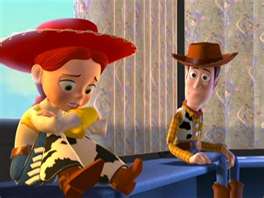
I know I mentioned that Ben loves Jessie, the cowgirl from Toy Story.

If left to his own devices, he'll surf the internet to listen to her soulful song, When Somebody Loved Me, over and over and over again.

We may hear it in English, or Spanish or Portuguese.

He will proclaim his love for Jessie (I love Jessie, he'll sign).

Why was Ben so drawn to this song, I wondered. But listening to the lyrics, I think it's somewhat of  a metaphor for Ben's life.


When somebody loved me,
Everything was beautiful
Every hour we spent together lives within my heart
And when she was sad,
I was there to dry her tears
And when she was happy,
So was I
When she loved me

...
So the years went by
I stayed the same
But she began to drift away
I was left alone
Still I waited for the day
When she'd say I will always love you

Lonely and forgotten...


I wonder if, like Jessie in the song, Ben feels the ache of staying largely 'the same,' while everyone around him grows up and drifts away.

He had friends at the elementary school he went to. But they've all progressed at an amazing pace and he wasn't able to keep up.

If only Ben could live in a world where the rules were simpler and no one got left behind.

Thursday, April 22, 2010

'Thank you' will never be enough


In 2008, Ontario gymnast Taylor Lindsay-Noel was on track to compete with the Canadian team in the 2012 Olympics when she broke her neck while attempting a difficult dismount. Taylor, now 16 above, spent 18 months in rehabilitation at Bloorview Kids Rehab and recently wrote and read this tribute to the nurses who worked with her as a goodbye gift. It speaks to the invaluable role our nurses play! Thank you Taylor for sharing with us and congratulations on being home!

The words 'thank you' will never be enough
By Taylor Lindsay-Noel

Somewhere down Kilgour, there is a little place called Bloorview,
I’ve been there 18 months and I have sure enjoyed the view.

I have met a lot of people, some nicer than the rest,
but there is one thing I can say, their staff is by far the best.

The nurses of this hospital have seen me grow and mature,
and it is hard to say goodbye, I’ll miss them for sure.

But enough with the sappy stuff, it’s time to lighten up,
let’s discuss all of those nurses I’ve grown to love so much.

First comes Danielle, that funny energetic gal,
she’s so fun to be around, and she’ll always be my pal.

Diane, oh Diane, we bonded in the kitchen,
we laughed and joked and she showed me she’s still a spring chicken.

Bev, what to say, she’s one of the most down to earth people I know,
when it comes to enjoying life, she is definitely a pro.

Who could forget the infamous Grandma Josie,
she’s always willing to lend a hand and to make you feel cozy.

Next we have Anna, we never got into a scuffle,
I’ll miss her good manners and I’ll miss her Asian Shuffle.

Vee, Virpal Gill, she’s kind, thoughtful and slim,
and she’ll be the perfect nurse when she decides to hit the gym.

Let’s see who’s next, Nasteho of course,
she’s amazing, fun to hang with, and she’s as strong as a horse.

Then comes Michelle, you’ll never catch her in a quarrel,
but if you want to see her mad, just ask her to say SQUIRREL!

Bola, Bola, Bola, Bloorview’s African Beauty,
loved by all and missed when not on duty.

Glenn, O-M-G, that loveable teddy bear,
one of his funniest moments is when he tried combing my hair.

Who's next, of course Sarah who I have most on nights,
she is a pleasure to be around and she’ll make your day bright.

Luz so gentle, so warm, so polite,
she is definitely one to go to when you need good advice.

Auntie Glennis comes next, Bloorview’s residential mom,
she’s loving, huggable, and knows how to keep people calm.

Shawna, she’s spunky, she’s unique and she’s loveable,
her personality is envied by most and she has proven that she is noble.

Melissa is one of those nurses who is guaranteed to make you smile,
she is a person you want as a friend, a nurse you can definitely trust with a child.

All of these nurses who I adore, nonetheless,
but let’s get on with this poem and see who comes next.

Jhanina, oh Jhanina, a water-pusher some patients might say,
I was so deprived from her loving when she was so far away.

Hilary, that girl is a big ball of fun,
she is a pleasure to hang out with, and I’ll miss her a ton.

Carolynn that sweetheart never sees work as a chore,
she’s hardworking, creative and I wish I saw her more.

Lindsay is funny, vigorous, and an overall delight,
and when she’s around you, you won’t want her to leave your sight.

Then comes our singer, her name is Lisa,
she gets a kick out of scaring me, but boy I am going to miss yah!

Tina, my lord how she could make people laugh,
with her on the staff, this place is first class.

Romayne, Romayne I love her so dear,
but the nurses will never forgive her for creating those damn bunny ears!

Next we have Joy, she is a fun-loving character,
she always told me right from wrong and loved playing with my straightener.

Cheryl, she is so out-going, fun and fiery,
and we both enjoy watching our ‘fave’ show V Diaries.
Tracey that jokester knows how to keep the fun flowing,
she’s spontaneous, amazing and no matter what she is always glowing.

Charlotte, she’s a nurse I’ll keep close to my heart,
and when it’s time so goodbye, it’ll be hard for us to part.

Through the hard times, the good times and all in between,
these nurses have proved they are far above supreme.

Their love, their spirit and all of their dedication,
have made it so hard for me to leave this location.

Through my time here at Bloorview I’ve made a lot of friends,
and I am so sad that my time here has come to an end.

To the nurses the words thank-you will never be enough,
and it’s time for me to say goodbye, although it’s so tough.