Showing posts with label spinal cord injury. Show all posts

Monday, July 17, 2017

Foundation helps disabled students 'just like me'

By Louise Kinross

After a skiing accident that injured her spine and shoulder, Tamara (Tammy) Gordon had to learn to write with her opposite hand and get around in a wheelchair.

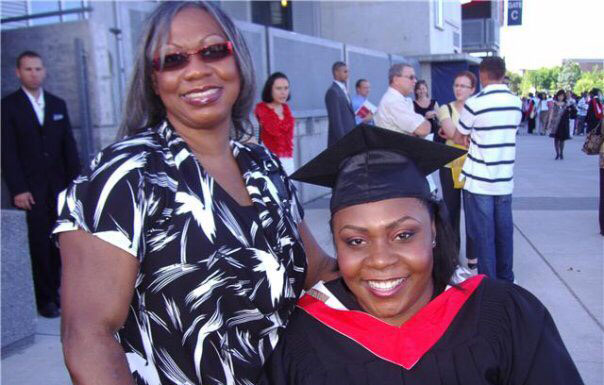
While studying at York University, her mom Marcia attended class with her to take notes.

That’s where the pair noticed how hard it was for other students with disabilities to manage the extra expenses they had at school.

“Some of them were in school for years, because they had to take breaks between courses because they didn’t have enough funding,” Tammy says. “Others had to drop out because of the costs of taxis, tutoring or special equipment that would put them on an even playing field with other students. My mom and I thought ‘Why not start a foundation in my name to help other students just like me?’”

In 2013, The Tamara Gordon Foundation received charitable status. Each year it offers grants from $750 to $3,000 to university or college students with physical disabilities in Ontario.

“My advice to students with disabilities is don’t give up and continue your education because that’s the key to life,” Tammy says. “Work hard, get your high school credits and pursue post-secondary education.”

That’s what Tammy, now 31, did.

At 16, she was an elite basketball player who was being scouted by American universities. Then she became partially paralyzed as a result of a skiing accident.

She lived as in inpatient at Lyndhurst for five months. “It was very long and very hard,” she says. “Before my accident I was left-handed, but I sustained a brachial plexus injury to my left shoulder and lost the use of my dominant hand. So I had to learn how to use my right hand.


Tammy continued with school onsite and her mom decorated her room “so it looked just like my room at my house,” she says. “I had teddy bears and cards from classmates and teammates, and I even used my own special blanket from home on the bed.”

Daily pain was the biggest challenge, she says. “I definitely wasn’t used to that. Pain medication didn’t really help me, so I’d just try to fight through the pain. After a 12-hour surgery, I had to wear a special back brace for a good while that was very uncomfortable. The process of learning to sit up again and transfer to a chair was long and tedious.”

Something that helped Tammy adapt was talking to other patients who were further on in their rehab journey. “I definitely think it changed me as a person,” she says. “Although I played sports before the accident, I was really shy. The accident really brought me out of my shell. Although I wasn’t among people my age, I was able to talk to the other inpatients at Lyndhurst and learn from their experiences. Later on I got into motivational speaking where I talk about my experiences and encourage others, no matter what they face in life, don’t give up. Even if something like this happens to you, you can still achieve your dreams.”

After her rehab, Tammy tried to return to her old high school, but it didn’t have an elevator large enough to fit her wheelchair “and being around my old friends was tough. It was too hard for them to see me in a wheelchair. Some of them almost took pity on me and felt sorry for me. And others couldn’t make eye contact with me. That was even worse.”

She transferred to an accessible school but then became ill and had to finish her high school through a home program. “I still managed to finish on time with my graduating class.”

Today Tammy works at her foundation as well as being a customer relations coordinator for TD Bank. “I love working at TD because I’m treated like everyone else,” she says. “ Yes, I do need some accommodations in regards to my work station and personal assistance. TD is an awesome company to work for and I’ve been there 11 years.

Tammy says recipients of her foundation’s grants are chosen based on community service and grades. The foundation is holding its first fundraising gala on July 29.

She says her mom played a big role in her recovery after her accident. “Parents, be strong, because we feed off your energy,” she says. “Stay positive and be encouraging. Whatever dreams your child has, let them know it’s possible to achieve. It might take longer or be a harder struggle, but they can get there with the right support and encouragement.”

Wednesday, January 25, 2017

A mother wishes her son's cancer 'never comes back'

By Louise Kinross

Noah, 1, has blonde hair that stands up in exuberant spikes on his head. He loves to smile. When his dog licks his head, he giggles. If his mom Ivona Novak tells him not to go near an electrical outlet, he laughs and moves faster. He takes great joy in eating croissants, which he calls ‘Cru Cru.’ Only his mini-wheelchair hints at the cancer he was diagnosed with at less than three months.

Noah was successfully treated with chemotherapy. But the cancer came back in his spine, and he had to be treated again. He now has a spinal cord injury. “The doctors said they’d never seen a case of neuroblastoma like this in a kid under 18 months,” Ivona says. Recently Noah received physical, occupational and speech therapy for three months in Holland Bloorview’s day program. We talked about their journey.

BLOOM: What are Noah’s favourite things?

Ivona Novak: He likes to army crawl. He’ll take a car and hit it and then chase after it all over the house. He loves coming here. He loves attention and when people talk to him he’s all giggly and smiley. He loves Keith.

BLOOM: You mean Keith Adamson?

Ivona Novak:
Yes, he always plays with him.

BLOOM: How is Noah doing now?


Ivona Novak: He’s in remission. He has an incomplete spinal cord injury from a tumour. His chest and up is functional and he has use of his arms, but he has no functional use of his legs. Before he came to Holland Bloorview he couldn’t sit on his own, move from lying to sitting, or army crawl. He was fully dependent on me. The therapists here were fantastic at using toys to try to get him to do different things, and he’s made remarkable improvement. It’s incredible how much strength he has in his upper arms. That’s made my life easier and made him so much happier.

BLOOM: You mentioned you liked our therapeutic playroom
.

Ivona Novak:
It helped him become more comfortable with people. He was scared of adults because of the poking and prodding in the intensive care unit and wouldn’t let anyone else pick him up. Having adults who were just going to play with him helped him be more confident and mobile. He was able to make friends with kids who are more like him. I had been worried about how other parents and children in the community might respond to him. The playroom was a safe environment without any judgment. That experience gave me the confidence to take him to our Early Years Centre.

BLOOM: That's great. Did you have any experience with serious illness prior to Noah’s birth?


Ivona Novak: No experience. It was such a huge learning curve. I used Google so much.

One thing I learned is a parent’s intuition is better than a doctor’s. Before we knew cancer had come back, I kept saying something was off. The oncology unit said they couldn’t see anything and thought he was teething. I took him to emergency and they sent us home that night. The next morning he hadn’t moved from the position I put him in and he hadn’t peed overnight. We went back to emergency and I said ‘Something is terribly wrong, he’s not moving his legs.’ Finally that night they did an MRI and said there appears to be a tumour blocking his spine.

BLOOM: How did you cope with such drastic swings in Noah’s condition?

Ivona Novak: Your baby is in ICU, and you know not everyone gets out of ICU. We were a crying, giant mess. I needed to sleep, but when I lay down, I couldn’t. We called our doctor for sleeping pills and my husband was on his drugs and I was on my drugs—to survive.

BLOOM: What advice would you give other parents in similar situations?

Ivona Novak: You have to take it day by day, which is hard. We got big pieces of paper and whenever there was an improvement, or he did something good, we’d write it down and hang it up. So there was a room full of hanging papers to track progress and help us feel better. The other thing I'd suggest is to really advocate for your child if you’re not satisfied with an answer, or with what someone’s doing. No doctor or nurse was offended when I came with more questions or did my own research.

BLOOM: Did anything else help?

Ivona Novak: I used to meet with Val Lusted, the social worker here, once a week. She was fantastic. It was nice to have an hour where Noah is not with me. It was nice to rant and put my thoughts on the table.

I follow a very active spinal cord injury forum called the CareCure Community. There aren’t many people with kids with spinal cord injury. This is a forum of mostly adults that’s hosted at a university and there’s a nurse that joins in on discussions. I heard about a Shriner’s program in Chicago on this forum. They’ve seen some kids as young as Noah and we’re going there for two to three weeks in March. It’s a non-profit and they will cover the costs and our airfare. They have equipment there—like the Lokomat—for kids Noah’s size.

The more I’m immersed in this community, the more I realize you have to do your own research. Every person has a piece, but they don’t have the whole picture.

BLOOM: Were you generally happy with Noah’s medical care?

Ivona Novak: Yes. The only thing that was hard was the way we were given information when Noah was in the ICU. We had a team lead from each unit—neurology, neurosurgery and oncology—coming in. They would give different information, which was confusing. It would have been better to have a funnel where all of them spoke to one person, who then communicated to us.

BLOOM: So right now Noah is in remission?

Ivona Novak. Yes. As long as the cancer never comes back, no matter what happens, I’m happy that he’s alive. We always get nervous around exam days—like when he has to get an MRI. We haven’t stopped thinking about the cancer.

No one can give us an answer on how the spinal cord injury will affect Noah. Every spinal cord injury is different. It’s hard to accept not knowing what his outcome is going to be. I’ve asked every doctor and physiotherapist ‘What do you think the chances are that he’ll walk?’

Getting a wheelchair was a huge step to realizing he has a disability. You see a kid in a stroller and you see a cute kid. You see a kid in a wheelchair and people stare and wonder what’s wrong. That transition between having an image of a normal-style family to accepting that we have a kid with a disability, regardless of how much function he gains or doesn’t—is hard. But we have to live in the now.


Monday, June 15, 2015

The trouble with rehab 'miracles?' They ignore luck

BLOOM is always looking for parents and professionals to write for us or be interviewed. This piece by occupational therapist Veronika Lukacs came to us because Tom Nantais, a former Holland Bloorview researcher, told me she'd have great insights to share. Thanks Tom and Happy Birthday! Veronika (above) with Russell Winkelaar helped build 62 StopGap ramps to improve access to stores in London, Ont. this weekend. Woo hoo! Louise

By Veronika Lukacs

Every so often I read a local news story about someone's experience in rehab following a devastating physical injury. Nine times out of 10, the story makes me angry.

I'm a newly graduated occupational therapist in a happy relationship with a handsome man named Russell Winkelaar, who sustained a T6 spinal-cord injury at the age of four from a head-on collision with a drunk driver. Russell is paralyzed from the armpits down and uses a manual wheelchair to get around.


Prior to studying OT and meeting Russell, I spent two years looking at the effects of mass media through a master of arts degree at Western University. People are surprised to learn about my media background, but I think it complements occupational therapy practice well.

A person's cultural environment can be a barrier to meeting rehab goals, and it can also shape what kinds of goals a client wishes to pursue. What we see in the mediabe it a news article or fictional TV programgives us clues about the meaning our culture ascribes to life with disability. It also tells us what rehab outcomes the mainstream considers successful. Many of the stories I read are similar and have become cliché.

One popular one goes like this: Young, athletic man in his early 20s breaks his back pursuing an extreme sport. He sustains a spinal cord injury, and doctors tell him his chances of walking again are non-existent to slim. The young man goes through gruelling and intense rehab sessions. Through hard work, personal strength, and perseverance, the young man defies all odds, proves the medical team wrong, and walks again.

I call this the "miracle story." The miracle story often features a person with spinal cord injury, but there are variations that focus on people with congenital disabilities or other acquired disabilities.


The miracle story bothers me because "success" or "overcoming disability" is always attributed to personal strength and willpower. That's great for the person who walks again, but what does it say about the person who doesn't? The miracle story burdens people by making them feel like it's their fault if they don't recover. It suggests that people control their rehab outcome through positive thinking.

The miracle story is misleading. It's usually vague about the type of injury the person sustained. Often times, the individual had better chances of walking again, but the story conveniently left this out.  


Yes, rehab can improve one's chances of re-gaining mobility, but there's also a great deal of luck involved, depending on the type of injury or disability. People don't like acknowledging the luck factor in rehab outcomes. And the reality is that no two people's situations are the same

Unfortunately, I've seen people in rehab programs read these stories, compare their progress and feel they didn't measure up.

In addition to demoralizing patients who won't walk again, the miracle story influences how loved ones support the person. Family members ask me about these stories and share them in hopes of raising the client's spirits and motivation. When this happens, the person who doesn't make a full recovery not only feels their own disappointment, but that they've somehow let their family down.

The miracle story serves as a reminder that our culture sees wheelchair use as undesirable. Walking is the ultimate goal, even though for many people it isn't attainable.


"Everyone wants what's best for their child, but we're stuck in the mentality that getting back to the way you were before is best, as opposed to learning how to adjust," my partner Russell says. "Instead of waiting for the child to walk again, and being depressed for a few years or in denial, parents need to build their child a ramp."

I'd like to see more varied news coverage of the rehab process to balance out the negative effects of the miracle story. Why is this story held up as the ultimate success? What about the person who never walks again, but explores new passions and contributes to their community?


While "being positive" has its place in rehab, a distant hope of returning to an old life may not be beneficial. Full recovery and walking need not be the only goals, and people in rehab need constant reminders that people with disabilities can lead happy, fulfilling lives.

As an occupational therapist, it's difficult to advocate for changes to how the media covers rehab. It's also challenging to balance inspiring hope in clients while remaining realistic about the likely outcomes. In fact, it's often impossible to know for sure what rehab outcomes are realistic!


What we can do is address the problems with these stories with clients and families. We can explain why the experience of one person in a news article is just that—the experience of one person.

Russell says that changing society's views from the ground up is essential. "If close family members won't accept that their loved one won't walk, how is society supposed to?"

People need strategies to help shift their perspective on what it means to live with a disability. That's why peer support from those who have gone through it, and counselling programs that address psychosocial need, are invaluable.


I'd like to see future programs directed specifically at assisting family and friends in how to best support their loved one.  "Disability is always going to exist," Russell says.  "It can happen to anyone and no one wants to talk about it. That's why it's so terrifying. If people could see that having a disability isn't the end of life, they'd be a lot less afraid of it."

Please send your story ideas to lkinross@hollandbloorview.ca

Don't forget to fill out our BLOOM survey for parents, professionals and other readers.

Sunday, March 8, 2015

Red, green, blue? Every store wants one


By Louise Kinross

When Luke Anderson graduated as a civil engineer in 2002 he moved from Ontario to British Columbia to pursue his passion: mountain biking. “I was in Rossland, the most coveted mountain-biking area of Canada,” Luke says. “It was a dream come true to live there among like-minded people and be part of that scene.”

But in the fall of that year Luke's life changed forever when he rode off a platform to jump a 25-foot gap and came up short. “I crashed hard, flew over the handlebars, landed head first, broke two vertebrae in my upper spine, and left my life as I knew it,” he says. He was able to talk his friend—who'd been filming his jump—through a 911 call and was airlifted to Vancouver General Hospital. After an eight-hour surgery, five weeks in intensive care and five months in rehab, “I was introduced to a world that's not well suited for a wheelchair user.”

Today, Luke's on leave from his job as a structural engineer to mastermind StopGap—a project that aims to dot Toronto's single-step storefronts with red, yellow, green and blue ramps.

“It's an effort to get the conversation started about barriers in communities that prevent people from accessing spaces,” he says. “The single-step storefront exists all across Canada so we thought why don't we paint simple plywood ramps in bright colours and offer them to businesses for free? We get volunteers to build the ramps and hardware stores donate the materials.”

Luke says the stepped storefronts are a relic from a time when streets weren't paved and customers used the step to knock the dirt and mud off their boots.

“The ramps aren't perfect, that's why we call it StopGap,” Luke says. “They provide a springboard to thinking about really great permanent solutions.”

StopGap has placed almost 400 ramps in Toronto and its how-to manual is sparking similar movements in other cities in Canada and the U.S.

Luke rates Toronto a 4 out of 10 for accessibility. Stockholm, on the other hand, is an 8 or 9. ”The Scandinavians are really progressive and think about everyone when they design stuff.” Vancouver is a 7.5.

Moving from a life filled with extreme outdoor sports to one where he had just enough movement in his arms to feed himself was tough, Luke says.

“I went from being a back-country skier and someone who loved climbing rock faces and ice climbing, to being someone who can't get into a restaurant. My world was now an inaccessible space.”

Luke recalls arriving at a Toronto concert venue he'd been assured was accessible to find 15 steps up. “The bouncer met me and said 'Okay, just hang out here for a second' and I figured he'd be back to show me the back entrance. But he came back with four of his bigger bouncer buddies and their idea of access was to lift me up those 15 steps. I'm wondering if I should put my life in the hands of these complete strangers or do I disappoint all of my friends and pull the cord on going to the show. I chose to get lifted up, but it was a situation that shouldn't have happened. I kept coming across situations like that and realized something needs to be done.”

StopGap began in 2011 when Luke enlisted friends to help build ramps on weekends. So far the group has targeted 12 Toronto neighbourhoods. “We knock on doors and talk to business owners, educating them about the need for a ramped storefront,” Luke says. “You'd be amazed that most people don't quite get it until we shine a light on the problem. Unless you've been touched by disability, it's not something you'd ever think of.”

Ontario's government has committed to making the province “barrier free” by 2025, but with 10 years to go, “we're not even halfway there yet,” Luke says. Municipal bylaws aren't helping. “If you want a permanent ramp you have to apply for a variance that would allow you to encroach on city property,” Luke says. “No mom and pop café can afford that.” Still, “the city is recognizing there's an issue,” he says, “and we've had meetings with bylaw enforcement and right-of-way committees.”

StopGap is organizing a silent auction May 29 and a crowd-funding campaign to support a summer tour that will bring ramps to 12 more communities across Ontario.

Since the province hasn't reached out to partner in any way, Luke hopes the project will appeal to private donors.

“It needs to be on people's radar that we're all going to need barrier-free amenities at some point in our lives,” he says.

Luke admits he never gave a moment of thought to accessibility before his accident. “In the early days it was a really tough mental battle coming to realize that this was a completely different way of life. I had heard stories about people walking out of rehab, but I knew that wasn't going to happen for me. For me, independence meant learning how to have others be a part of my daily routine—brushing my teeth, showering. I've got a stream of helpers that come and go and some are great and super helpful and others not so much.”

A painful part of his recovery was watching friends retreat when he couldn't return to his physically active lifestyle.

“I've grown apart from a group of buddies I considered my best friends. That was hard. I still have a hard time with it. When I go to bed at night I don't think of myself as someone with a disability. In my dreams I'm not disabled, I race my bike. But I don't live for the chance to be physically able again. That's not a useful way to go about life. There are many different ways to lead a fulfilling life and I feel I've been given a gift and a real opportunity to see a larger piece of the pie. I try to recognize difficult situations as an opportunity and embrace change.

Wednesday, June 12, 2013

A circus performer adapts to life with paralysis


Carolyn Pioro talks candidly about the physical and social aspects of adapting to quadriplegia. Carolyn mesmerized everyone with her honesty and grace. Thank you Carolyn! Louise

Thursday, September 13, 2012

After a disaster, outcomes split on gender lines


What happens to people disabled by disasters like the 2005 Pakistan earthquake?

That depends if you're a man or a woman.

A University of Alberta study finds most paraplegic women three years after the Pakistan earthquake were abandoned by spouses and families, while men with the same disabilities were not. The study was published in the July issue of the journal Disasters.

A survey of 73 adults in six remote villages in Kashmir found that of 30 women married at the time of the quake and still hospitalized, 24 had been abandoned by their husbands, who had also abandoned their children. A physician noted that some women deliberately caused bed sores because they feared neglect and abuse if discharged home.

"Everybody has walked away from these women—forgotten about them completely,” said researcher Zubia Mumtaz, an assistant professor in the School of Public Health who studies gender inequality. “Society did not want them. They were just abandoned.”

In contrast, the wives of men with spinal-cord injuries lived with their husbands in hospital over the three years -- so that they could attend to all their needs, and the men were actively supported by their parents and other relatives.

While women's families initially rallied round them, researchers said, the support evaporated.

Most husbands of women with paraplegia had remarried—or were agitating to do so. No wives of men with paraplegia had left their husbands.

"The primary rationale given for remarriage was that a woman was required to undertake the domestic tasks that a paraplegic wife could no longer accomplish—child-rearing, farming and retrieving water and wood."

Monthly stipends were given to the spinal-cord victims. Men received about $70 a month while women got $30. The income would have been significant for the women, who were previously dependent. But it was often appropriated by husbands who, after leaving them for new families, made a monthly trek to the hospital to pick it up.

The researchers note that gender differences meant more women than men were disabled in the Pakistan quake. “The earthquake was unique in that it took place at about 9 o’clock in the morning, when the women were at home but the men were out in the fields," Mumtaz says. "When the homes crashed, when the roofs collapsed, those that weren’t killed were pinned by the steel roof beams." Sixty-five to 74 per cent of people diagnosed with spinal-cord injury were women.