By Louise Kinross
Former Holland Bloorview social worker Stephanie Willison (now Deaken) has an unusual work partner.
She’s a 10-month old black pig with white fur stockings.
“Penelope” is a therapy pig on Stephanie’s therapeutic farm located in Mono, Ont.
Stephanie and her husband Darryl purchased the farm to offer programs to children and young adults with a variety of disabilities and their families. BLOOM interviewed Stephanie about Fiddlehead Care Farm, which is named for the fiddlehead plants that cover the property.
BLOOM: What was your role at Holland Bloorview?
Stephanie Willison: I worked with children and families as a social worker on our inpatient complex continuing care unit as well as with the brain injury rehab team and the child development program serving families with children with autism.
BLOOM: How did you initially get interested in working with kids with disabilities?
Stephanie Willison: My older sister Rhonda has Down syndrome, so I’ve worked with people with special needs since I was really little. At a young age I was a babysitter for children with special needs and before Holland Bloorview I worked as a deaf-blind intervenor.
BLOOM: What was it like to have an older sister with a disability?
Stephanie Willison: Overall it was extremely positive. My sister is such a positive, happy person. She was involved in Special Olympics and was a world champion figure skater, so we were always going to events and involved in the special-needs community. As a sibling you learn things like acceptance and maturity a lot faster.
BLOOM: Was there anything you struggled with?
Stephanie Willison: As my sister got older my brother and I went away to university and she was like ‘What about me? What do I get to do?’ I think my parents had pictured building a suite in the house and having Rhonda live there forever, but she didn’t want to. So they found her a group home placement in Collingwood and she works in a daycare and is very happy there. But seeing her move away from us, and always worrying about whether she’s going to be okay, is stressful. Even though she’s my older sister, I always had a protective role with her.
BLOOM: What is Fiddlehead Care Farm?
Stephanie Willison: Care farming is something that’s quite popular in Europe. It’s the use of farming and the outdoors for therapeutic purposes—for promoting physical or mental health and overall wellbeing. It’s a combination of what could be called horticultural therapy, or gardening, and animal-assisted therapy. Being outside with the farm animals and in the garden is therapeutic for the mind, body and soul.
BLOOM: Who is the farm targeted to?
Stephanie Willison: Children and young adults with a variety of disabilities and mental-health needs.
BLOOM: What programs do you offer?
Stephanie Willison: I offer individual counselling for children and their families. That includes nature-assisted therapy and animal-assisted therapy with Penelope, who’s our therapeutic pig. We’re usually outside and what we do is activity-based or play-based. We may do different games, work in the garden, or go on nature trails for talk therapy, but while we’re talking we’re in the woods.
We want to offer a school program for special-needs classrooms tailored to whatever the teacher wants. It could be a farm-to table program that teaches where our food comes from and healthy eating, or a program that involves nature or our animals.
I have a background in brain injury and family intervention and the Triple P parenting programs so whatever parents and families and classrooms want, I want to be able to provide that.
BLOOM: What about young adults with disabilities?
Stephanie Willison: We’re thinking about work placements where they could work in the garden or feed Penelope or maintain some of the trails or plants. We’re also open to having an adult come to the farm with a care worker to work on life skills.
BLOOM: Are you farmers?
Stephanie Willison: My husband Darryl is a farmer. He grew up on a dairy farm. I’ve always worked with people with special needs and for many years we talked about combining our passions and having some type of farm for kids and adults with special needs.
We came across the idea of care farming and spent over a year looking for properties. This one, which was a therapeutic riding centre, magically came up. It’s built for horses and we have a stable and a whole inside riding arena that is fully accessible. We don’t have horses yet and probably won’t get into that for a few years.
We raise organic chickens and taught the kids that some are for eggs and some for meat. We have cows here from Darryl’s family farm. Other than that we harvest the land and we have lots of vegetables and organic hay.
BLOOM: What was it like to move from a hospital setting to a rural setting?
Stephanie Willison: It’s been amazing. I was able to build all of this while I was on maternity leave with my son Brady, who is one. It’s nice to be in an area where he can grow up and around nature.
BLOOM: What’s been the biggest challenge?
Stephanie Willison: It’s a much-needed service and when I talk to people they’re very excited about it and word-of-mouth is getting out. But for people to take the next step and make an appointment or come out to visit has been very limited. Right now I have three clients, which I’m happy with. But I have to figure out how to help families have the time and energy and courage to make that call to say we need help.
BLOOM: Where are you located?
Stephanie Willison: We’re about 15 minutes north of Orangeville. So from downtown Toronto, or Holland Bloorview, it’s an hour for sure.
BLOOM: What are some of the benefits you see from working with children in nature and with animals?
Stephanie Willison: For some kids there’s a sort of magic in being around animals. They feel comforted and they feel okay about talking about things that they might not otherwise. For example, at our open house a mom and three boys came. The parents are going through a tough divorce. We sat down outside and I introduced Penelope and she was walking around us. They began petting her. One of the boys spontaneously started talking about his dad and the mom’s jaw just dropped. She listened, and Penelope listened, and the mom said “he’s never said anything like that to me or anyone.”
I read Last Child in the Woods, and the whole concept is how kids need to be taught to play outside again and how to have free exploration: ‘There’s the woods, go and play.’ They don’t know how to do that anymore because they only have structured activities.
So having the space for children and families to explore together—whether it’s picking up leaves or picking blackberries—brings people together.
To learn more, call Stephanie at 647-624-8421 or visit Fiddlehead.
By Louise Kinross
“Paying attention to stories makes us better doctors, nurses and healers and is also good for patients, clients and survivors,” said Dr. Allan Peterkin a professor of psychiatry and head of the Program in Health, Arts and Humanities at the University of Toronto.
Dr. Peterkin was kicking off the Art Heals Health symposium yesterday that brought together clinicians, artists and educators to talk about how art can be used to improve healthcare and vice versa.
Dr. Peterkin’s talk looked at the healing power of stories.
Medicine has tended to “take the story of the provider and the person out,” Dr. Peterkin noted, and to distil to a few diagnostic words the patient experience “in a way that doesn’t do justice to it.”
This is a response to evidence-based medicine, he said.
In contrast, stories are about “what’s unique and particular” to a person, and care is improved by the clinician’s ability to listen to, tell, and make meaning out of stories over time.
Methods for doing this include reading and discussing medical fiction or illness stories by lay people and writing in response to a prompt that helps clinicians reflect on their work.
Clinicians "almost always write about things that have troubled them,” Dr. Peterkin said. Reading and discussing texts and writing about their experiences makes clinicians better able to communicate and connect with patients and families.
Dr. Peterkin noted that research shows that reading poetry and novels increases the level of empathy in any reader because it helps us imagine being in another person’s shoes. “Your worldview is being stretched by characters that are different from you. To try to understand them you need empathy.”
Dr. Peterkin noted that stories engage both the left and right sides of our brain and make us pay attention to detail and words. “One word in a poem can have 10 different meanings to 10 readers.” This leads to “narrative humility” in clinicians. “We may think we know what patients are saying, but we may not be on the same page.”
“Write about a mistake” or “Write about a goodbye” are examples of prompts for clinicians or healthcare students.
In narrative groups clinicians are asked to: “write about something that matters to them, or is unprocessed; include a beginning, middle and end; write as if you were telling a friend; and show what happened and how you feel about it.”
The act of organizing the story on the page “reorganizes the way we look at things and challenges our pre-assumptions about a story,” Dr. Peterkin said. We can revisit stories and slowly, at our own pace, make meaning out of them.
The other health workers who listen to a piece being read aloud in a narrative group can be “helpful editors as opposed to critics,” Dr. Peterkin said. They're often able to point things out that the author may not have seen in his or her writing.
A new four-day workshop on narrative healthcare is being offered by Mount Sinai Hospital and the University of Toronto in June 2016. Check out Narrative Healthcare Atelier & Certificate Program.
By Louise Kinross
Last year we reported that children with disabilities are two to four times more likely to be overweight, and two to four times less likely to be physically active, than their peers.
The numbers were shared at a consensus-building workshop at Holland Bloorview that brought international experts and families together to address weight management.
Canadian Living has an excellent piece on this topic in its November magazine: Staying fit when disabled.
Many of you will recognize Joanna Miedzik, who's interviewed in the feature about her own struggles with weight growing up with spina bifida. Joanna is one of Holland Bloorview's amazing receptionists.
The story includes research from scientist Amy McPherson in the Bloorview Research Institute and commentary from Lorry Chen, one of our clinical dietitians.
Most important are four tips to help your child with disabilities stay active. Click on the link above.
By Karin Melberg Schwier
We think about my eldest son Jim’s happiness. A lot. What turns, straightaways, twists to take, what unexpected adventures there might be.
I get the same feeling this time of year when we drive out to the Rosthern Youth Farm corn maze on a Sunday afternoon. So much fun and so many possibilities. They give clues and you hunt for prizes.
Sometimes we hit a dead end. You never know what might be around the next corner. One time we even discovered an escaped pot bellied pig! Even so, there’s always the worry. What if we get lost along the way? What if we aren’t doing enough?
Happiness. Sure, I think about our youngest son Ben’s and daughter Erin’s well being, too. They’re all adults. Ben and Erin have their own spouses—Julia and Michael, respectively. Erin and Michael have a nine-year-old. So I think about the in-law kids, and grandson Alexander, too.
Our son Jim has Down syndrome. Helping him discover and nurture those things that will give him a rich batch of fun and adventure falls largely to us.
We take some paths. Many good. Others bottom out. Sometimes we get stuck. So the question of whether or not Jim is enjoying his life has set up full time residence in our heads.
Snuggled right up to that question are many others along the lines of “Are we helping him live a good life? What could we do better?” And every now and then, the old chestnut: “Why do we suck so bad as parents?” That doesn’t happen too often, but a tough one to chew on when it does.
Jim is 41. Green eyes. Killer smile. Blonde hair that now gets buzzed down by Aziz at JR’s Barbershop. Jim likes his hair “prickly.” He’s got a sly, dry sense of humour, but also loves good slapstick.
He used to talk to the point where we’d beg him to give us a break, but as he’s gotten older, he’s become more stoic and quiet. He wears two hearing aids and his right ear is pretty well shot, so speech is difficult. He just won’t if he doesn’t have to, or if he’s not motivated. However, “May I have a glass of chardonnay, please?” seems to come out very clearly at The Yard and Flagon pub.
Jim is a veteran volunteer at the Saskatoon YMCA; he’s been working in the laundry and maintaining the pool deck for 20 years now. It’s his solid base. We help staff tweak Jim’s routine now and then if things get a little stale, or if new staff need a little orientation on how best to work with Jim.
One of his coworkers, Heather, is a faithful advocate, always quick to get in touch when things are going well for Jim and on the days where he’s feeling a bit off. Since Jim was little, he’s always loved basketball (probably a genetic condition due to his birth in Indiana). Heather convinces Jim a few times a week to shoot some hoops with her in the Y gym so they both get a little fun break from the routine.
But while Jim has a solid job, which he looks forward to and enjoys most days, that’s just the baseline. We know it’s up to us to help Jim discover interesting, fun and enriching experiences. The colourful, spicy parts of life. It’s an ongoing pursuit. And that pursuit doesn’t lend itself to nice neatly defined goals.
Jim used to love drumming. When the theme music to Star Trek would come on, he’d leap up, race to his room for his snare drum, roar back to the TV room and pound out the beat. He loved Star Trek, too. These days, not so much. He’ll say, “Did that already” and that heralds the passing of the interest.
At first we fretted about that. But how many of us are still enraptured by the fascinations we had as prepubescents? (Not counting my lifetime commitment to Bobby Sherman, obviously.)
We try to help Jim make his own choices (tough when he’s pretty silent) while encouraging and, yes, sometimes insisting that he try something or participate when we are pretty sure he’ll enjoy it. Pitch in to volunteer at the community garden. Volunteer with us at the Friendship Inn. Usher at church with Dad. Write a “feel better” note to an old family friend in hospital. Let’s try watercolour painting. Ask a friend’s son to play badminton.
Jim’s got a few other things on the go. We travel a lot. When we’re home, Jim has enjoyed a lot of matches made through the University’s Best Buddies chapter; some good, some really great.
For several years, we hired a young man to meet up with Jim two or three times a month to do “guy stuff” like gokarting, shooting pool, going to the pub, trying a new restaurant. Jim helped Ryan out with home projects, volunteer jobs, and a drama group for at-risk adolescents.
Ryan and Jim often took Ryan’s toddler son Jack to the biology museum or for ice cream. But the relationship slowly petered out as Ryan’s own young family grew. We miss that one; Jack always looked forward to seeing “Uncle Jim.” It doesn’t mean it failed, but we have to try another path.
An important piece in this pursuit of happiness is finding other people. While we fret over the new things Jim might find joy in, we remind ourselves to relax and celebrate the good connections he does have.
We’re lucky to be in a position where I work at home so can be the one to take Jim to work, pick him up, go to appointments. Rick recently retired from the University, though he’s still teaching some.
We’re reinventing our roles with Jim. Not everyone can do that. We’re the conductors, but we don’t want to be “everything” in Jim’s orchestra. He needs other people who like him, people he will feel connected to and comfortable with. What we’re really after is to add a few more fun people to his life. It’s the tricky part. And we have to get past the fear of rejection if we ask and someone says no.
Back to that corn maze. If you’ve ever done one, you’ll recognize the journey. I think the trick is to keep looking around the next corner. We expose our children to things we think might spark even a tiny glimmer of interest and see where it goes.
If I can throw in another metaphor, Jim’s life is like a patchwork quilt in progress. A piece of this, a little of that, stitch that together here, this piece works with that but not with this one. We try to set aside the panic and frustration that it’s not all coming together fast (or even slowly!) and just try to enjoy the adventure.
Every couple of months, we email a little update about Jim to Jim’s siblings and nephew in California, and far-flung friends and family all over the world. Collecting a few photos and describing what Jim’s been up lately helps us have a good look at his life on a regular basis. Not only does it maintain Jim’s connection to a wide network of people, as we sort through photos and decide what to send, we’re reminded of what he really enjoys doing, what worked out, what we can build on.
Part of Jim's future happiness depends on what we do now to build those connections for him. There will come a day when one or both of us won't be around. We've written wills, designed a trust, established an RDSP. We've had many wonderful discussions with Jim's brother and sister, who both say they “have Jim's back.” They understand what a good life looks like for Jim and because they're an ongoing part of it (even though they live far away), we hope the transition won't be too gut-wrenching. Different, obviously, but a good life will go on for Jim with Ben, Erin and their families taking over. Their networks of friends know Jim, so those connections have already begun.
Sometimes we need to consciously remind ourselves to enjoy each other while all this searching for a good life is going on. We all stop and have a glass of wine on the back deck and play a game of Go Fish together.
Or we light the chimenea and ruin some marshmallows. We laugh. A lot. I probably suck at being Jim’s stepmom a lot of the time. But when he’s making a joke during Go Fish, or gives me a big smooch while my marshmallow goes up in flames, I think he feels his life is pretty okay.
And who knows? The more things we try, the better the chance of having an interesting, joyful life. Maybe we’ll even find another potbellied pig!
Karin Melberg Schwier is the author of several books. Her most recent is Flourish: People with Disabilities Living Life with Passion, available in Holland Bloorview's library. She co-authored Sexuality: Your Sons and Daughters with Intellectual Disabilities with Dave Hingsburger, and it's been translated into German, Italian and Korean. She also co-authored Breaking Bread, Nourishing Connections: Mealtimes for People with and without Disabilities with Erin Schwier Stewart. Click on her byline at the top to visit her website and find out about purchasing the latter two books. Photo by Richard Schwier.
By Tracey McGillivray
The day I started my job at Bloorview Children’s Hospital over 20 years ago, I read Welcome to Holland by Emily Perl Kingsley, who has a son with Down syndrome.
In it, she writes about the journey of parents raising a child with disabilities, comparing it to an exciting trip to Italy that is unexpectedly re-routed. She describes the shock, the disorientation and ultimately, the acceptance that follows.
It galvanized me. As director of public relations and fundraising for the hospital I listened to families’ stories and reveled in the fact that I could help make a difference. I wrote about their issues and helped fundraise for new and improved programs. I admired the dedicated and skilled staff members on the frontline. We were all trying to make things better.
We were showing families how to thrive in “Holland.”
Ten years later, I was a stay-at-home mom with two dogs and two kids born 18 months apart. Our youngest, Thomas, is on the autism spectrum. We were moving, and as I cleared out the filing cabinet I came across a piece of paper I hadn’t seen in a long time.
“After you've been there for a while and you catch your breath, you look around... and you begin to notice that Holland has windmills... and Holland has tulips. Holland even has Rembrandts.”
I sat on the floor, re-reading the words that had so inspired me when I worked in children’s rehab. I slipped the fragile, yellowed paper out of its protective plastic sheet and held it in my hands.
Then I ripped it into tiny pieces.
I was upset with that past version of me, the naïve 25-year-old who thought she understood something of what it was like to parent a child with special needs.
I remembered parents at the hospital telling me: “We are so tired. We haven’t slept in years.”
I thought I “got it” when I worked there, but there’s nothing like being a special needs parent to awaken you for real.
When he was little, Thomas was a runner, a climber of third-floor banisters, an un-locker of front doors and child-proofed drawers. Each morning I whispered, Please let me keep him alive today. And each night in my dreams I’d see him charging onto the road in front of a car. I’d wake with a pounding heart, fingers clutching air.
I knew I was tired. But until I found that essay, I hadn’t realized how angry I was. Angry that the issues I’d written about, and thought we were working to improve, were the exact same issues I encountered a decade later as I tried to find the right therapists, to get Thomas a developmental assessment and to cope.
I thought I'd understood what parents were telling me, but really I hadn't.
Our kids are more than a diagnosis or a compilation of medical needs, they said. “Treat the whole person, not just the problem.” As the head of public relations, I nodded and wrote down that catchy phrase. Of course, I thought. That makes total sense. Why would anyone do anything else?
Then I had my own experience with health workers who didn’t treat Thomas as a real person, who took away our power.
When he was four, Thomas needed surgery to correct a minor birth defect. The day of his pre-operation bloodwork, he had a total meltdown. He thrashed and hollered as three staff members held him on a bed. Get the legs, one of them instructed me.
“Don’t worry, boy. The vein is good!” the woman drawing blood started yelling over Thomas’s crying. She said it several times, as if it would reassure him. “Boy! The vein is good!”
Shut up, I implored in my head. Just shut up.
Then it was over. We collected ourselves, blew our noses, and left. I was too shaken to drive, so Thomas and I sat side-by-side on the steps of the hospital, sharing a bag of Cheesies. That day I didn’t care about empty calories or orange dye. People streamed past us in both directions as if we were invisible.
How did I just let that happen? I wondered. How did I let them hold my son down? How did I let that nurse call him “boy?”
When I wrote stories about families at Bloorview, parents told me: “We live with a constant level of stress. Disaster is never more than one step away.”
I heard what they said, but I didn’t get it till I lived it with my own son.
One hot summer day, as we waited to turn left onto the street where the speech therapist worked, a tiny helicopter whizzed by my head and out the car window. “Harold fly!” exclaimed Thomas, whose lack of impulse control had just gotten the better of him. His beloved toy landed on the road in front of oncoming traffic. The first of many cars ran over it. Rumble rumble thwack.
Thomas had unclipped his car seat (he was a whiz at getting out of any intended restraint) and was trying to climb out the half-open window. “Harold!” he called as I shouted in panic, “Oh no, sit down. No!”
I put the car in park and pulled him back in. By now, people in the cars behind us were leaning on their horns. I wrestled him into his seat. Somehow we made our way to the parking lot. By then he’d cried himself to sleep.
The speech therapist looked at my face, then at the passed-out, tear-stained kid in my arms. I was trying to rouse him, desperate not to waste a minute of therapy despite all that had just happened.
“Let him sleep,” she said. “Tell me what happened.”
Everything came pouring out that day. It was the first time I revealed what a mess I was. How every time someone told me what a great parent I was, my stomach twisted in dissenting knots.
Years before, the parents I worked with had explained this feeling: “Even when we make progress, we still feel behind.”
At his first optometrist appointment, Thomas sat in the chair and followed the doctor’s directions. He sang out the names of the letters on the chart and shouted “There!” whenever the yellow light flashed on the video screen. He was calm and accommodating, two words I hadn’t imagined using to describe my son. I was proud of him. We had come so far!
“Now, mom,” said the optometrist. “He needs to make eye contact. If he’s not looking at you, he’s not listening.”
I explained that this theory didn’t fit with the latest thinking, that people with autism can be overwhelmed when they try to process visual and auditory information all at once. “Some people actually hear better if you don’t force them to look at you,” I said.
He raised his eyebrows. “Oh, really? I hadn’t heard that. Well, I also notice he’s not scanning very well. That will impact reading. You need to practise every day. Here, I’ll show you what to do….”
I was so proud of how Thomas had handled the eye test, but once we were out on the sidewalk I felt deflated. “Even the (bleeping) optometrist is giving us homework!”
When I worked at Bloorview, parents told me “the system is not a system at all. We’re forced to tell our story over and over.”
Mrs. B., a mom whose friendly, freckled son had complex needs, said she’d gotten so fed up with repeating her child’s health history that she’d recorded a cassette tape.
“It got to the point where I’d hear the first question—Was it a normal pregnancy? —and I’d want to scream,” she said. “So now I hand them the tape and say, it’s all there.”
From my chair on the other side of the desk, I wondered if she was brave or strident, or both.
Years later, as I dutifully filled in countless forms for a myriad of specialists, I remembered Mrs. B. They were the same questions, over and over. I’d submit the answers in writing and then, when the first appointment rolled around, we’d work through the same questions verbally. What a colossal waste of time when there was none to lose.
The next time it happened, I opened my mouth to complain. But before I could, the therapist said, “I realize a lot of this is in the report you filled out. I have a learning disability and sometimes I don’t completely process written information. So I like to be sure.”
Oh.
Everywhere I went, at Thomas’s school and out in the world, I asked people to better understand my son and make accommodations for his needs. Surely I could offer the same consideration to the therapist, or to anyone who asked it.
It was a humbling reminder. We are all just human beings, experts included, trying to do our best. Something shifted inside. Maybe I could forgive that former me, who had tried her best with good intentions. And maybe it was time for me to ask for help of my own, to find my own footing in Holland, as Emily Perl Kingsley had written about in her essay.
Thomas will be 15 in a few weeks. He’s taller than me. He’s an amazing artist who tries hard at school and has a few good friends. He decompresses on his swing many times a day. He is a charming and disarming boy, who tells me, “ I love you, Mom, but you really do suck at air hockey.”
I’m totally okay with that.
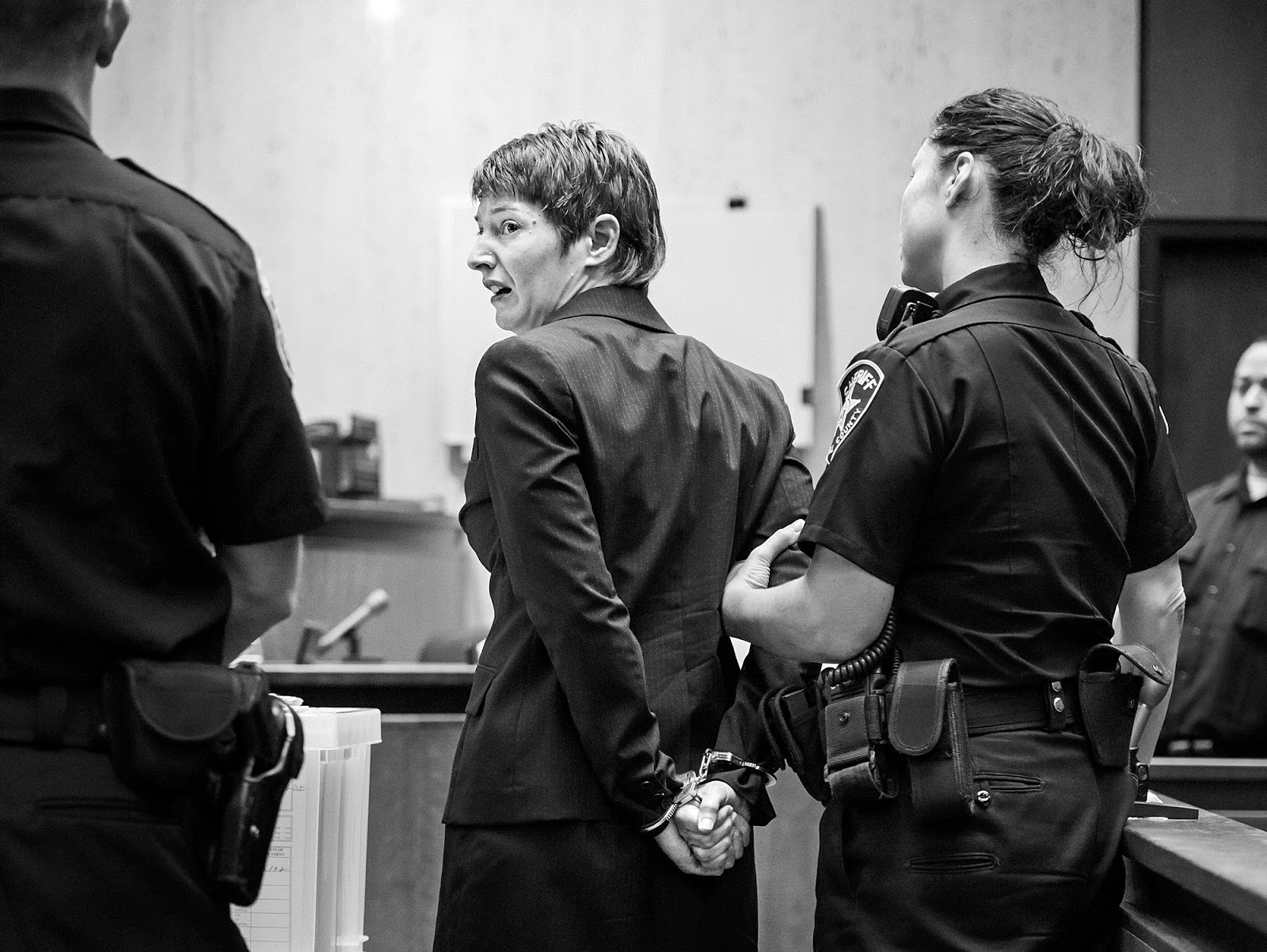
There is a fascinating and harrowing account in this weekend's New York Times Magazine about a relationship between a professor and a severely disabled man.
The man, known as D.J., has severe cerebral palsy, doesn't speak, and has been diagnosed with a significant intellectual disability.
The professor, Anna Stubblefield, was formerly chair of philosophy at Rutgers University. She'd been asked by D.J.'s family to help him communicate through a method known as "facilitated communication," where someone supports the arm of a person to enable them to type. Much controversy surrounds the use of assisted keyboarding and whether the messages are generated by the facilitator, or the person being supported.
Anna was charged with, and found guilty of, two counts of first-degree aggravated sexual assault and now faces up to 40 years in prison. She said they were in love.
By Susan Cosgrove
If you see us on the bus, I guarantee you’ll hear us too. You’ll want to look up from your phone or book or newspaper and watch the activity.
Because the fact is that we are a commotion—everywhere and anywhere we go. I probably look an awful lot like I’m okay with that, but sometimes my vulnerability is hard to hide. If you look a little closer you’ll understand why.
If you watch us, you can tell that I’m the mom. In fact, I’m a single mom to three very special kids. The big, noisy man-child is Liam. He’s 12 and has autism; he’s barging his way into adolescence at an awkwardly astounding pace that scares me, and confuses his delicate sense of self.
He’s the one who gets the funny looks because he loves to sing “The Wheels on the Bus,” ask the same questions over and over, and tell anyone who will listen why the Autobots can’t be friends with the Decepticons.
Liam understands very well that he is autistic and is often angry about that.
If you see him on a good day you might just turn the volume on your music a little louder and tune him out. But if you see him on a bad day, you may hit pause and watch. You may even chat with your fellow passengers about the big boy who’s crying because he forgot his iPad at home, or growling at a stranger who accidently bumped into him.
If you pass us in the aisle, you’ll wonder why I brought a big, bulky stroller that’s not at all appropriate for public transit. I may give you an apologetic look as you squeeze by.
Phoenix, my toddler, is the reason I take it everywhere. Phoenix is two, and, just like his big brother, he has autism. He is smart and cute and generally overwhelmed by the outside world.
You may hear him recite the bus number or even read some words from the signs and buttons on the bus. You’ll probably want to smile at him and maybe even try to touch his blond curls. But if you do, you’ll understand why I drag a great, big stroller wherever I go.
Chances are he’ll react to you with fear, screaming and banging his head repeatedly on the headrest of his stroller. Phoenix's habit of self-injury when he's overwhelmed is probably the hardest thing I've ever dealt with as a parent.
I will smile at you and let you know that you’ve done nothing wrong, but he has autism and it’s really best if you leave him alone. My hand will remain close to his sweet head, as a barrier between himself and his instinct for self-harm.
If you sit back and listen, without touching Phoenix, you may hear him say and do some pretty extraordinary things. And he probably won’t notice if you smile at me to let me know that you can see he’s kind of awesome (I wholeheartedly agree).
If you watch my family ride the bus, you’ll see how exciting life can be.
You may notice Kaya, their bright, eccentric 10-year-old sister. She’s the one with the funky haircut and metallic pink Doc Martins. Kaya is the middle child and the only one who doesn’t have autism. She does have a diagnosis that includes being gifted and having ADHD and a learning disability. When she grows up she wants to be a labour and delivery nurse or open a drag queen hair and esthetics salon. Either one is fine with me.
On the bus, Kaya’s probably chatting at a rapid pace, telling anyone who will listen about Minecraft and music.
But if we’re having a bad day, you may get a chance to see her as a young caregiver in action. How easily she forgets that she is 10, and slips into the role of helping me help the boys through our commute. She may be reading the toddler a book, or offering Liam her phone to play with in the hopes that he’ll settle down.
In her eyes you will see that she understands why her brothers draw so much attention and how much she loves and protects them. What you may not see is how many of the normal things in life she has sacrificed for her brothers and me, how often she ends up playing the caregiving role, and how graciously she accepts it.
If you watch how I interact with them, you may think that I look calm. That's because my demeanour can have an impact on the success or failure of our trip. We may be heading to the movies or to an appointment, but my goal is always just to arrive. You’ll notice how quiet I keep my voice in the hope that they will pick up on my signals and join me with some quiet of their own.
You’ll see me constantly glancing around and sending out smiles to my fellow passengers. Smiles that say “I know you’re looking at me and I understand why. I know you wanted a quiet ride, but today it won’t happen.”
By smiling I am asking you to take a moment and put yourself in my shoes. Riding the bus with these amazing kids is a journey that requires planning, and our success can be affected by our fellow travellers. And it’s not just the bus ride. Everywhere we go and everything we do is planned according to the needs of the boys. Spontaneity is not part of our lifestyle.
If you see us on the bus (or at the store, in the park, at the doctor’s office), you’ll know that we are a special family. There are many ways that you can honour our unique journey. Share a smile or a story with us, let us know you understand. If a quiet commute is what you prefer, we don't mind if you politely switch seats and distance yourself from our chaos.
Just remember that although he may be different, Liam is learning to understand himself.
So if he asks you “Please don’t touch me/talk to me/laugh at me because I’m autistic,” please respect that. Self-advocacy is a skill that he’s working hard to learn and I’ve taught him that if he’s honest with people, they’ll respect his difference. On a good day he may ask or tell you something a few times. Please feel free to chat with him. You may learn something new about the world.
If I see you on the bus and I can tell that your journey is like mine, that maybe we are travelling the same path, I promise I will smile. I will send you vibes of understanding, and just maybe, if our little ones are having a good day, we can even have a chat.
If I see you on the bus I promise to respect your journey, whatever that may be.
Susan Cosgrove is a family leader on Holland Bloorview's Research Family Engagement Committee.




 Posts
Posts


