Showing posts with label Developmental disabilities. Show all posts

Thursday, April 12, 2018

A brother unites a family and inspires research

By Louise Kinross

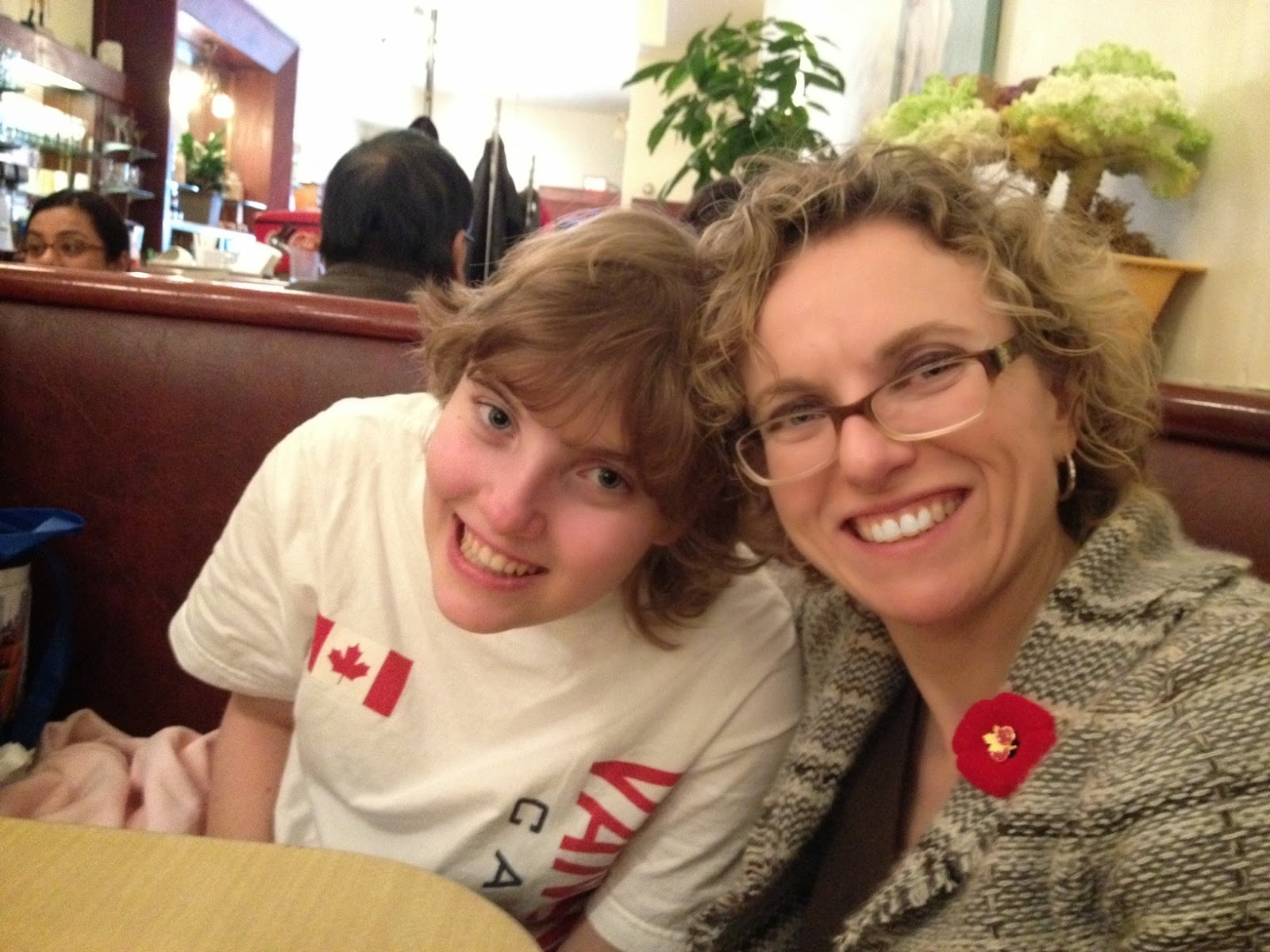
Five siblings have created research scholarships in occupational science and therapy at the University of Toronto in honour of their brother Peter Rappolt. Peter (bottom centre), the youngest in the family at 57, has a developmental disability and severe, chronic mental illness. His brothers and sisters have worked together for decades to advocate for him in the health system.

The Peter Rappolt Family Scholarships for Research in Occupational Performance and Wellbeing are aimed at improving the lives of people with complex, intractable conditions. Peter’s sister Marg sits on Holland Bloorview’s board and chairs its business and audit committee. BLOOM spoke with Peter’s sister Susan, who is chair of U of T’s Department of Occupational Science and Occupational Therapy, about her experiences as a sibling.

BLOOM: It’s quite unusual that there would be five siblings who are all able to support their brother. Where does Peter currently live, and how do the five of you stay in contact with Peter and each other?

Susan Rappolt:
Peter is the youngest of the six of us and lives in Cambridge in a long-term care facility with a very high level of care. We all live in southern Ontario and are in reasonably close proximity. My sisters Marg and Gail are power of attorney for care and finances, and they’re frontline contacts with the nursing and support staff. We’ve hired workers to come in and take Peter out when he’s well enough to go for a drive and do activities.

My siblings are retired or semi-retired, and I’m the only one working full-time, so I visit on the weekends. We all text and e-mail after a visit with Pete, to keep everyone up to date on any swings in his abilities or mood.

This morning Marg visited and because Pete really likes picnics, Marg took him for an indoor picnic, because it was snowing. He’s had a slump these past few weeks and been pretty frail and psychotic, and in pain, so it was nice to hear that he’s feeling better. Marg sent out a photo of him eating lemon meringue pie and smiling.

BLOOM: How does Peter's mental illness affect him on a daily basis?

Susan Rappolt:
Pete’s had probably every diagnosis you can imagine. He is paranoid and hallucinates and is fearful and very vulnerable to psychotic visual and auditory images when he’s not well. The intensity and frequency of his psychosis has increased over the past 10 years. More often than not, he’s engaging with people who are villainous and threatening him. They’ve tried every medication, and nothing has been successful. It’s really hard to see him suffering. Sometimes we go in and he’ll see us, and he can’t pull himself out of it, but if I give him a hug he’ll start crying on my shoulder.

BLOOM: When did his mental illness start?

Susan Rappolt:
As a teenager and young adult. His primary diagnosis was developmental delay. So he has a dual diagnosis.

Pete has many cognitive strengths. He gets and makes jokes, and he has an amazing sensitivity and insight into human dynamics. He’s way more perceptive than other people in the room about how you’re feeling, and about how what someone says may affect others. He loves sports. In better days, he knew the names of hockey players and teams and followed hockey and baseball. When our kids were little he liked to do stuff with them and we’d have family gatherings. We’d go to the local diamond and the kids and Uncle Pete would play baseball.

BLOOM: Was your decision to become an occupational therapist influenced by Peter?

Susan Rappolt:
Yes, it really was. When I was 11 or 12 and Peter was six, I recognized his potential to do stuff that wasn’t being realized because he was very much protected. And he was smart enough to milk it. It did influence my thinking, and when I learned about the discipline of occupational therapy, it seemed like an obvious fit.

BLOOM: I read a piece on the U of T website where you talked about having to advocate for Peter in hospital when he wasn’t getting appropriate care.

Susan Rappolt:
Yes, that particular incident was horrible and it was outstanding, because we hadn’t faced that kind of discrimination in the health system otherwise. Pete wasn’t doing well and had an incident that looked like a small stroke. We got a message that he was on the acute-care side of the hospital and was being monitored, and would need to be kept quiet for a couple of days.

My sister and I went in and there was a nurse sitting there recording something, which I thought was odd. I asked ‘Is Pete eating? Is he drinking? How are things working here?’ And she said ‘no’ and put her eyes down. ‘So where’s the IV?’ I said. She said ‘No, there’s no IV.’ I knew what was happening then. ‘Okay, you start the IV right now,’ I said. No one had given a do not resuscitate order.

I know that our situation is unique in that we siblings probably have close to 10 post-secondary degrees, and lots of skill sets, and we all speak English. It’s so different for a single mom living in poverty. We’ve very lucky that we have all of these skills and I work in health care. You have to know the system to ask the right questions to get the right care.

BLOOM: How do you cope with seeing Peter distraught, and not being able to find something to treat his mental illness?

Susan Rappolt:
It’s really hard to see him suffer. We’ve been very lucky with our experience of the nursing care he receives and the community care workers. They’re lovely people who are so talented and skilled in trying to support him and soothe him. It is heartbreaking. But it’s not a sudden tragedy. We’ve watched his decline over the last years, and are coming to terms with the doctor’s projection that he would see a physical decline and probably an early death.

Although it’s not a good situation, we have turned over many stones and pushed as hard—and in as many places—as we can, so we know there aren’t other answers. We’re really dealing with palliation now.

BLOOM: Why did you decide to fund the scholarships in Peter’s name?

Susan Rappolt:
As a family, we know we can’t make big changes to Pete’s quality of life because of his intractable mental health condition. So we’re focused on providing him with whatever pleasure and support we can.

The focus of the awards is research to promote quality of life in individuals who have chronic, declining and, often, very complex needs. How can we bring joy or alleviate pain in a life that is otherwise pretty miserable?

There’s nothing more medicine can do, but perhaps we can do compensatory things with assistive technology, or social interventions, or by modifying an activity so a person can participate. Often it takes an occupational lens to parse that out. How can we intervene with the person, the occupation or the environment to help someone reach their goals and be happier?

BLOOM: I understand the first gift will fund a scholarship for a PhD student at the Rehabilitation Sciences Institute?

Susan Rappolt: Yes. The PhD part is endowed, and our first student should receive that in September. Our scientists in the RSI will supervise that student in the doctoral stream. The second gift creates a research fund for projects by students doing a master of science in occupational therapy.  
BLOOM: What advice would you offer other siblings who perhaps live at home with their parents, but are concerned about how they may support their brother or sister in the future?

Susan Rappolt:
It’s a very challenging scenario, and I don’t know of any families that experience it differently. Especially if the person is still residing at home, the family caregivers need support, in the same way that we’ve developed caregiver protocols in palliative care and stroke. I don’t think the same kind of attention has been paid to family caregivers of individuals with a dual diagnosis, like Peter. I’d like to raise awareness of this issue.

Monday, February 5, 2018

New hub to address developmental disabilities, mental illness

By Louise Kinross

The Azrieli Foundation has given $10.4-million to the Centre for Addiction and Mental Health to create the first centre in Canada to support adults with disabilities like autism and Down syndrome who also have mental illness.

“A lot of us have anxiety and depression,” said autistic advocate Daniel Share-Strom at an announcement at CAMH today. “Why wouldn’t we?”

Daniel described his world growing up as one where the speed and volume of learning, combined with social demands, was too much to cope with for someone who had trouble reading social cues and managing sensory information. He was always being corrected, he said, which led to a “pervasive sense of being judged all the time’ and of feeling ‘broken’ and ‘not capable.’

Daniel noted there are few adult psychiatrists who are skilled in working with people with autism, and they’re almost impossible to access due to waitlists. As a result, his mother had to purchase private services for him, at an hourly rate six times her salary. “There’s no off switch to these challenges when you turn 18,” he said. “I have difficulty finding help on my own when I feel hopeless. We need strong advocates when we’re immobilized with doubt.”

According to research from CAMH and the Institute for Clinical Evaluative Sciences, 
45 per cent of about 65,000 adults with neurodevelopmental disabilities in Ontario have a mental illness, and six per cent have addiction. Due to a dearth of services, a study published in the Canadian Journal of Psychiatry found that almost half of hospital admissions for Canadian adults and teens with developmental disabilities were related to mental illness.

“There are no services that provide the continuous, comprehensive care necessary for this population,” said Naomi Azrieli, CEO of the Azrieli Foundation this morning. “This is the most vulnerable population in our healthcare system.”

The new Azrieli Centre for Adult Neurodevelopmental Disabilities and Mental Health will provide better care, research and training in the field. It is being directed by Dr. Yona Lunsky, a psychologist who leads the Health Care Access Research and Developmental Disabilities Program at CAMH. Yona has a sister with a developmental disability.

Yona has led a number of studies evaluating interventions for reducing depression and stress in parents of adults with developmental disabilities. Naomi said that families are the “first level of care” for adults with disabilities, and that they are not being supported. “The normality of constant worry and anxiety becomes a backdrop to everything,” she said at the CAMH announcement. Naomi has a brother with Fragile X syndrome and said the family's personal experience played a role in the decision to fund the new centre.

All of the speakers spoke to the need to better support adults with neurodevelopmental disabilities—and their families—at a much earlier stage.

Monday, December 4, 2017

Reporting on Illinois group home abuse wins award

Barbara Chyette holds a photo of her brother Lauren Braun, who choked to death on a hamburger on a supervised group home outing in 2014. He had no teeth and was unable to eat regular food unless it was cut into tiny pieces. Photo by John J. Kim/Chicago Tribune

By Louise Kinross


'Suffering in Secret,' a Chicago Tribune investigation into the abuse and neglect of disabled adults in 3,000 state-licensed group homes in Illinois, won first prize in the 2017 Katherine Schneider Journalism Award for Excellence in Reporting on Disability.

The international contest, by the National Center on Disability and Journalism at Arizona State University, is dedicated to recognizing excellence in covering disability issues.

Tribune reporters Michael J. Berens and Patricia Callahan identified over 1,300 cases of documented harm since 2011 in Illinois group homes, or their day programs, for adults with intellectual and developmental disabilities.

At least 42 deaths were linked to abuse or neglect. People who were only able to eat food that was pureed or cut into tiny pieces choked to death on regular food
including a hamburger and a marshmallow. Others died from untreated bed sores and undiagnosed illnesses. One resident, accused of stealing cookies, was beaten to death by a caregiver.

Berens and Callahan found a wide range of mistreatment: residents were mocked and intentionally provoked, bound with duct tape,
 barricaded in rooms, left in soiled clothing and denied food. They also looked at resident-on-resident assaults, in particular in homes where people with severe physical disabilities were mixed with those with histories of violence. 

Illinois officials told the reporters that the addresses of the 3,000 group homes, which house up to eight residents each, are secret, as are records of abuse or neglect causing death. The reporters filed more than 100 public records requests, but state files were so heavily redacted and unreliable they had to dig up information elsewhere.

Caregivers, often unlicensed and untrained, earn an average of US$9.35 an hour, the investigation noted. Ironically, the reporters found the state saves US$135,000 a year when it places a person in a group home, instead of an institution. 

Illinois' group homes are not bound by staffing standards and other rules regulating nursing homes.

Berens and Callahan are to be commended for shining a light on the personal stories of the victims and their families.

They talk about their work in this fascinating panel

Wednesday, November 15, 2017

Self-compassion may fuel parent resiliency

By Louise Kinross

Greater self-compassion was related to less stress and depression in parents of adults with developmental disabilities, according to a study in the Journal of Applied Research in Intellectual Disabilities.

The findings are based on self-report measures of 56 Toronto parents who attended one of two six-week groups as their children waited for services after leaving high 
school. One was a mindfulness group where they were taught to pay attention to their feelings and thoughts in an accepting, non-judgmental way. The other was a group providing information and support on getting services, many of which are wait-listed. One-quarter of the adult children didn't have anything to do weekdays.

The paper defines self-compassion as “being touched by and open to one’s own suffering, not avoiding or disconnecting from it,” and “generating the desire to alleviate one’s suffering and to heal oneself with kindness.”

The two parent groups didn’t focus specifically on self-compassion, but the mindfulness group included learning how to do a loving kindness meditation that begins with a focus on the self.

The current study found self-compassion was negatively correlated with depression and stress—even after controlling for parents’ perceived caregiving burden; for parents of children with autism, who sometimes have more stress and depression than parents of children with other developmental disabilities; and for neighbourhood income.

“Self-compassion is something that matters and that we need to pay more attention to,” says investigator Dr. Yona Lunsky, a senior scientist at CAMH who partnered with Developmental Services Ontario and Community Living Toronto to run the groups. “Parents are very compassionate when it comes to their own kids, but do they have that same compassion for themselves?

“Often, these parents feel inadequate. Why do they feel inadequate? Because of all of the things they’re supposed to be doing to make sure their child is okay. Sometimes those things work, and sometimes they don’t, and sometimes that’s hard on parents. They may experience inner psychic pain, or the pain of the child or spouse or other siblings.”

Parents’ first reaction may be to dismiss that discomfort. “We don’t have time and we’re scared to look at what’s going on in ourselves—that we are suffering. We think ‘If I’m going to be strong, I won’t pay attention to that, and I’ll keep going.’ But if we’re disconnecting and pretending it’s not there, we’ll never relieve that suffering, and our approach will eventually be harmful.”

Yona likens it to an athlete who continues running on an injured knee. “You have to notice what’s going on when you’re in pain, so you can treat it with gentleness and love and care.”

Parents often feel an automatic sense of compassion for their child, but don’t extend the same kindness to themselves. “Maybe instead of berating yourself because you did something wrong, you can forgive yourself, or notice how you’re experiencing it, or just be gentle. It’s about gentleness.”

Yona notes that there’s a body of literature on self-compassion in the general population, but work looking at its role in parenting children with disabilities is early and emerging.

“We had a sense of self-compassion's importance for parents from past research, but this is the first study to demonstrate its association with mental health for parents of adults with developmental disabilities," says Suzanne Robinson, a graduate student at York University who was lead author and analyzed the data for the study. Suzanne is doing her PhD in clinical developmental psychology and worked as a summer research student at Holland Bloorview in 2010.

Yona says future research could look at understanding why some parents of children with disabilities are more self-compassionate than others, and how to foster self-compassion in this population.

You can contact Yona at Yona.Lunsky@camh.ca.

Thursday, June 1, 2017

Mindfulness cuts parental stress, depression

By Louise Kinross

What would best support parents of adult children with developmental disabilities who’ve left school and fall into a black-hole of services to fill their day?

A six-week mindfulness group that taught parents to pay attention to their feelings and thoughts in an accepting, non-judgmental way, or a six-week group that gave parents information and support on how to get services for adults, many of which are wait-listed?

A fascinating study in the Journal of Autism and Developmental Disorders compared the two, and found parents in the mindfulness group reported significant drops in depression and stress, while parents in the information and support group did not.

“We forget that stress for these parents accumulates over time, and the demands become bigger as the child becomes an adult and service gaps are more extreme,” says lead investigator Dr. Yona Lunsky, a clinician scientist at CAMH who partnered with Developmental Services Ontario (DSO) and Community Living Toronto.

Yona worked with DSO to recruit parents who had applied for services into one of two randomized groups. The parents ranged from age 37 to 81. Their adult children were aged 16 to 40, with autism or other developmental disabilities. One-quarter of the adult children didn’t have anything to do weekdays during the study.

“The study looked at parents who came to DSO to access services, and who were focusing on their kids as opposed to themselves,” Yona says. “We wanted to see if we could teach a skill that doesn’t change the child’s situation, but changes how parents view and deal with it.”

Parents in both groups met weekly for two hours for six weeks. In the mindfulness group, they learned practices like the body scan—where they feel each body part, from toes to head—a three-minute breathing exercise, and a loving-kindness meditation. They also learned how to be more mindful with their child—for example, observing something about their child that brings them awe.

The goal was to teach practices that parents could use on the fly while juggling their many responsibilities. ”The demands in their day mean these parents are constantly pulled away from being aware of themselves,” Yona says. “We encourage them to use their senses to come back to themselves and pay attention to how they feel.”

It could be taking a moment before they get out of their car, or while sitting in a waiting room. “It’s just as important to notice ‘I’m upset, I’m tired, I’m exhausted’ as it is to notice ‘I feel good,” Yona says.

Self-compassion is a big part of the practice. Parents tend to have empathy for their children or the experience of other parents, “but they don’t take the time to have that same compassion for themselves,” Yona says.

“We’re teaching them how to be in the present moment, and how to be aware of a thought or a feeling without judging it. Perhaps today you notice some tightness in your chest or negative thoughts or feelings about your child: ‘I’m really frustrated.’ But if you’re not aware of that emotion, you can’t change your interactions or choices to help yourself. If you’re aware that you’re feeling frustrated, perhaps you pause, take a break, drink some water or do something else to take care of yourself. Maybe you ask someone to step in to help. It’s the idea of the parent putting on an oxygen mask in the airplane first, before putting it on their child.”

The parents who met in the information and support group listened to speakers on topics like adult day programs, residential care and mental-health services, person-directed planning and parent self-care.

Child care was provided for both groups and parents had a break for tea and a chat in the middle of each session.

Parents in both groups said the interventions were beneficial and they liked meeting parents in similar situations. Two years later, some parents from both groups continue to meet.

However, on a 14-item measure, parents in the mindfulness group reported significant reductions in depression and stress which weren’t seen in the information group parents. “Parents who did the mindfulness had an improvement from before to after, and they maintained that improvement 20 weeks later,” Yona says.

“We think it’s because they’re learning a skill that over time can help reduce stress and improve mood, and it’s not driven by success in your environment. If we feel happy because our child achieved ‘x,’ then our happiness depends on the child. But the issues these parents face—whether accessing a service or dealing with a behavioural or mental health problem in their child—don’t necessarily have immediate solutions.”

In the paper, the authors note that mindfulness “moves away from a focus on problem-solving to instead offer skills to cope with situations that are difficult and may not improve very quickly.”

Yona says next steps in the research include looking at virtual and other ways to deliver mindfulness training, what the best intensity of the intervention is, and how the makeup of the group influences outcomes.

You can contact Yona at Yona.Lunsky@camh.ca.

Tuesday, November 29, 2016

'A Matter of Dignity' wins 2016 disability reporting award

A Minneapolis Star Tribune investigation into how hundreds of adults with developmental disabilities are segregated and neglected in a Minnesota system of sheltered workshops has won first prize in the 2016 Katherine Schneider Journalism Award for Excellence on Reporting on Disability.

A Matter of Dignity tells the story of adults who spend their days collecting trash for $2 an hour and who have been sent against their will to live in remote, dangerous group homes that are described as prison-like.

Reporter Chris Serres accepted the award of $5,000 at the Cronkite School last night.

One of the judges, Jennifer Longdon, said the series was chosen for "its exhaustive chronicling of the experience of adults with disabilities in Minnesota, from the indignities of sheltered workshops to the hopeless years-long wait for vital services that never arrive. These memorable stories were masterfully told while preserving the dignity of the individuals profiled."

The Schneider Award is the only journalism awards competition devoted exclusively to disability reporting. It's administered at the National Center on Disability and Journalism at Arizona State University's Walter Cronkite School of Journalism and Mass Communication.

Friday, June 10, 2016

Confessions of a 'super sister'


By Helen Ries

For many of us, the sibling relationship is the longest and deepest relationship we experience in a lifetime.

This is certainly true for my brother and me. When he was born in 1972 he didn’t come home from the hospital right away. The doctors told my mother they needed to run some tests.

I can still remember my deep disappointment that the promise of a baby brother was taking so long to materialize. When he did finally come home, there was nothing better than dragging this baby around, dressing him up and pretending to feed him.

As we got older, he was my constant shadow. I made sure he was included as we played games with the other kids on our street. He was always there and under my constantly protective eye. I went away to university and then spent many years living in other cities trying to make my way in the world. Our bond faded, but didn’t weaken.

Recently we’ve become very close again.

Sadly, our parents both passed away unexpectedly within a short period of time. My brother came to live with me and my husband, and we became his primary caregivers. I had always known this day would come, but it was never really discussed as it was a painful and seemingly fictitious conversation that I wanted to avoid.

The change was shocking and difficult for all of us. Unlike me, my husband didn’t have a lifetime to anticipate becoming the primary caregiver of a person with Down syndrome.

Sibling caregiving is complex and very different from the parent-child relationship. My brother is his own decision maker. I am responsible but without authority.

As siblings, you are close because of circumstance, not necessarily choice. You are honouring family values and unspoken parental wishes but you also have your own to consider. You walk the grey line of ethical decision making every day and in everything that you do.

I wonder continually: “Is this decision about him, or about me?” 

These conditions are ripe for the emergence of the ‘super sister.' I am a super sister. I am not the only one. There are lots of us out there. Super brothers, too. As a super sister I have taken on this caregiving role with my whole heart and then some. It comes from a place of deep love.

I have shifted a lot of energy that was focused on my own life to my brother’s life. I organize, plan, arrange, boss and frankly dictate so much of my brother’s life. I feel I have to do it this way because I am new to this job and I don’t know how else to do it. If I throw everything I have into it, everything will be all right, right?

I have been a super sister for one-and-a-half years now and I’m thinking that it’s time to retire my cape. Or at the very least find a spot for it in my closet.

Over the last year I’ve learned that even the mightiest of us super sisters can’t make pain go away, do everything right or be wholly responsible for creating a good life for my brother.

When you love someone deeply and for a lifetime you want them to be happy. I think this is especially true when that person has a disability.

I know that the pain my brother has dealt with in a lifetime has superseded my own. I have not faced discrimination and prejudice daily. I have been able to make my own choices, accumulate assets, enjoy good health, have many friends and do so many other things I take for granted. My brother has watched all of this and wondered why life has been different for him. When our parents died, super sister was all over his pain, trying to scrub it off his life because that is what seemed fair.

I could articulate my pain, rationalize my grief, and express my feelings in a way that brought me relief. But my brother could not.

So instead, I provided an endless roster of tonics: from tubs of ice cream to a new cat, from singing childhood songs to taking him on an exotic trip. On a daily basis he got a speech about what our mother and father would have wanted for him, how he shouldn’t be sad, how he has so many good things in his life. One day he told me: “Leave me alone.” The shine fell off my super sister costume that day. After that, I tried to take a back seat.

One day recently someone was rude to my brother on the city bus. Actually it was beyond rude, it was harassment. I overheard it, because we were on the phone together at the time.

I cried and was lost in despair about it. How can people say those things? Don’t they know what he’s been through?

My brother yelled back at the offending passenger: “You are not very nice and you should watch your mouth.”

Later on, when the drama had subsided, I realized that being super sister had been all about me. He doesn’t need super sister. He just needs me. And only sometimes. This letting go is something I’m trying to figure out, and I don’t think I’ve quite got it yet.

It’s hard to accept as a super sister that you can’t erase pain. It’s hard to accept that you have to back off and let people be, let them travel their own path, and allow them to get there in their own time.

Even the deepest and longest relationship in a lifetime has its limits.

Helen Ries is a writer, community activist, and professional consultant, and is also in the role of primary caregiver of her brother, a person with an intellectual disability. Helen’s work aims to build caring communities, better programs and smarter social policies for a more inclusive society. You can connect with Helen on Twitter @helenries  or through her website greatriverconsulting.caOr visit The Sibling Network, a Facebook group Helen created to provide information and support to caregiving brothers and sisters.

Wednesday, November 25, 2015

A letter to my Bubbie

Laura Rosen Cohen has a teenaged son with a rare genetic disorder. This is a letter she wrote to her late grandmother, who was and remains a formative and towering figure in her life and who sadly passed away too soon.

By Laura Rosen Cohen

Hi Bubbie,

I started this letter to you a hundred times or more in my head, and each time, I started crying, so I had to stop, and try to focus on the positive until my breathing became more rhythmic, my limbs a little more heavy and relaxed, giving me a chance let my body and mind rest, and sleep away my worry for a blissful few hours while I have help at night.

When morning comes, and the sun returns to its rightful place on the new day’s horizon, my fears start creeping in again. I wake up, generally thankful and truly grateful for the new day and its blessings. But I confess, I look into the mirror and see a middle-aged woman looking back at me. That woman no longer has a special needs child, she has a special needs teenager, who will soon be her developmentally disabled adult child, a dependent adult different from other adult childrenalways. 

We had our first “transition” meeting, and I guess that has been sort of a trigger. The road from disabled child, to teen to adult is a bumpy one and I have to admit how scared I am to travel upon it. I’m driving into unchartered territory, toward the time in my life, to a destination called No Empty Nest, and will stay there for as long as my husband and I are well and able. I wish you could have met him, and my kids.

Even though I know you’re with me all the time, watching over me, I wish I had you here to talk to, really talk to. I wish I could hear your voice, really hear it out loud, and not just in my head saying “Laura, you are going to be OK, you can do this.” I wish you would make me a cup of sweet, milky tea in those white tea cups with the pretty purple flowers on them, and your banana bread, and we could sit in your kitchen, and let me feel your soft hands, and you would be humming old songs, and giving me more bits of wisdom that would carry me through my fears now as they did even then.

I guess what I’m saying, Bubbie, is that I’m scared. I’m scared of finding adult services and programs and doctors. I’m worried about how independent he will be even though I know worrying will not win any more independence than what he is actually destined to achieve. 

I’m concerned about making it as easy as possible for my other children to lead full and rich lives, with as much support as my husband and I can possibly generate to give them as much freedom and peace of mind as possible for when they start to navigate my son’s life on his behalf when we are no longer able.  

I’m worried about him having a meaningful life. And I’m sometimes tired, sometimes I grow weary from the constant need to project strength, to lead by example, to express a general sense of optimism and gratitude for what I have to others even when my reserves become low themselves or in the moments when I find myself momentarily and regretfully bitter, or even sadlyresentful. Yes it happens. These moments are fleeting, but they do happen. 

I wish I could sit back in your den and talk it out with you. If I close my eyes I can feel the fabric, and see the sun shining through the windows and hear a few notes on the organ, and hear you singing.

I know you know exactly what scares me before I go to sleep so I’ll be talking it out with you frequently, even if only in the peaceful no man’s land between consciousness and dreaming, when the line between your voice and mine converge into a dreamscape, as I try to retain and remember your sage advice and our conversations as dawn breaks and a new day begins.

Thursday, July 23, 2015

Team Bryson: Quiet but mighty in NYC parade

By Laura Williams

Last weekend, my family decided to take the ultimate road trip to New York City. The idea started about five months ago when Louise at BLOOM
wrote about the NYC Disability Pride Parade.

This parade was conceptualized by a father and famous jazz musician Mike LeDonne. He wanted to raise awareness and create community pride about disability to honour the pride he feels for his daughter Mary, who has Prader Willi Syndrome.

The disability community in New York City jumped in with both feet and members from the community led the charge—creating awareness about the event, getting permits, planning the route, and connecting with participants. It was an example of inclusivity in action.

Participating in this event was important to us. As a family, we have experienced amazing examples of inclusion, acceptance and kindness. Unfortunately, we have also experienced heartbreaking moments where we’ve not only been blocked access but asked to leave due to our son Bryson's vocalizations—he is non-verbal and makes sounds to express himself.

Walking side by side with others who have lived this kind of experience in New York was very powerful. What struck me was how quiet the march was. Parades are typically rowdy and loud and expressive.

At this parade many of the people around us were non-verbal. It was much quieter, but no less jubilant and meaningful. Voices that aren’t loud can be missed—but not when people come and walk together, making their presence undeniable.

This reminded me of how very important it will be to continue being visible in our community, looking for any opportunity to include our son in “everyday” activities even when it means we will have to face glares, stares and confusion. That is no longer my burden, it is theirs.

I was so very proud that day to be included in this community—one that demonstrates the elegance of quiet and the boldness of the human spirit. We have so much still to do to ensure all people have the opportunity to lead a dignified, fulfilling life—and I want to be part of that transformation!

Laura Williams is director of Client and Family Integrated Care at Holland Bloorview.


Tuesday, July 21, 2015

Why is Guy Mitchell's death receiving so little coverage?

By Louise Kinross

It's shameful that the death of Guy Mitchell (left), an adult with disabilities who drowned after falling into a cistern at an Ontario-funded group home in 2012, is only being reported locally in Hamilton, and not across Ontario and Canada.

Hamilton Spectator reporter Susan Clairmont is doing a top-notch job of recounting the horror story unraveling at a coroner's inquest in this series of articles. The Ancaster home was run by Choices, an agency that receives 87 per cent of its funding from the Ontario Ministry of Community and Social Services.

An 11-year-old girl with autism and two adults with developmental disabilities lived in the home, which veteran police who responded to the death described as the worst they'd ever seen: no heat, water or food and human waste everywhere.

For months, outsiders contacted all the right authorities to raise alarms about the residents wearing filthy clothes and having unexplained injuries, but no one did anything.

Two starving horses and a dogs were seized from the premises. 

But no one came for the human inhabitants. 

Until Guy Mitchell drowned.

Friday, July 10, 2015

School's out

By Louise Kinross

Hello peeps!

Quick update. My son had his surgery to remove two benign bone tumors two weeks ago. It went much better than planned and his incisions are healing nicely, though he still has some pain. We had very good care in the hospital.

My son is now out of the school system. We have been unable to access person-centred planning or an increase in our Passport funding since he left school. I am advocating for this now.

Today my son and I visited a day program. It's in an industrial warehouse so it's kind of isolated. The people were very friendly and we recognized some people. They were setting up for a barbecue. Unfortunately they don't do sign language at this program. I think it would be a nice social environment for my son, but I don't think he would be able to work on the job skills he was developing at co-op. Because he doesn't speak and wouldn't have anyone actively signing with him, I think he might get lost there. The program costs about $1,500 a month for Monday to Friday, 9-3. That adds up to a lot of money.

We have been on the Developmental Services Ontario wait list for community supports like day programs, case management and person-centred planning, and not received any service in the last three years. My son's support needs, as assessed by DSO, are greater than 70 per cent of those on the wait list, but apparently our family is not "at risk," even though my son is not able to stay on his own at home (which makes having two parents work a little difficult).

I will be sharing our journey as we try to find meaningful things for him to do. That could include work or activities in the community with a support person, or some kind of program. I wish I had the ingenuity and guts (and money) of some parents who have created businesses for their children. Would love to hear any stories from people here on the topic.

Today someone on Facebook told me about this program called CORE. I hadn't heard of it and will go on a tour later this month. Contrary to the web description, it is primarily targeted to adults with developmental disabilities. They too don't have sign language support.

Another parent suggested this program called SOAAR, but it's not close by and costs $100 a day.

We are also going to visit a program at the Bob Rumball Centre and an arts program at L'Arche. 

Does anyone know of any gardening or farm programs in the Toronto area? CORE did have a farm program but it sounds like it's been put on the back burner. 

My son went with some workers and other youth to Windreach Farm for a few days this week. That gave me a chance to see Kelly Taylor again. She used to work with us in Family and Community Relations at Holland Bloorview but now manages the Windreach volunteer program. Windreach also has an adult day program, but it's way too far for us to do the commute.

While at Windreach, Ben slipped away from the group to return to this goat (above) who he was determined to feed.

Stay tuned.

Monday, March 23, 2015

Letting go

By Madeleine Greey

“Okay ladies, here’s your homework. Figure out what you’re willing to let go of. Make a list. Then prioritize it over the first year of your daughter's independence.”

Gulp.

I looked over at Margaret and her jaw hung in awe.

I locked eyes with LIGHTS senior facilitator Laura Starret who had just dropped this bombshell. She returned my glare with a happy little smile that said “Good luck with this one!”

It’s that happy little smile that kept us going.

Margaret and I—two single moms—had signed on for a momentous task: assisting our adult daughters into supported independent living.

My daughter Krystal, 25 (above right), has Down syndrome. Her roommate Karen (above left) is 26 and has Kabuki syndrome. Both young ladies are bright, able, courageous and developmentally delayed. They knew they wanted to move out of home but couldn’t do it alone. Via LIGHTS—a program in partnership with Community Living Toronto
that supports innovative housing options for adults with intellectual disabilities—our two families connected and figured this out.

LIGHTS is dubbed a Match.com for parents planning independent living for their adult children and on a cold, winter evening last year, Karen and Margaret, Krystal and I, all found ourselves at a LIGHTS meeting facilitated by Laura. In fact, we collided on a bulletin board. Each of us had placed a neon-coloured stickie on the “ready to move out in six to 12 months” section.

Krystal and Karen had attended the same high school and while they weren’t really friends, those stickies got them wondering if they could be roommates. They wanted so many of the same things, like a downtown, east-end apartment with laundry facilities that was walking distance from the subway and grocery shopping. Plus, they wanted a third roommate who didn’t have an intellectual disability but was their peer—someone who could be a role model and mentor and was interested in getting free rent in exchange for about 10 hours of support every week.

How did they know this you might ask? The answer lies in umpteen LIGHTS meetings, incessant planning and lots of visualization. 

Pragmatic and impatient, I found this process maddening, but did manage to spot magical balloons of progress float and pop along the way. Laura knew just what to say to get both of our daughters talking—unleashing a torrent of ideas, fears and dreams that neither daughter would have felt comfortable sharing had Margaret or I piped in. We all learned to listen and wait, until that fateful day in June when it was time to start hunting for an apartment.

PadMapper.com became our best buddy. An aggregate search engine, PadMapper provides listings in the neighbourhood of your choice. We got to know the rental market quickly. Seeing the apartments made it less abstract for Krystal and Karen who were better able to say what they liked and didn’t when standing inside the real thing. The more we looked, the better we knew what we wanted.

Laura had warned us that the process would jump into second—if not third or fourth gear—once we started hunting for an apartment. Margaret and I were quickly overwhelmed with rental applications, negotiating leases, credit checks and securing tenant insurance. It was a steep learning curve that landed us a lease on September 13th for a three bedroom, renovated duplex apartment a block away from Woodbine subway station. It seemed only apt to call it KK House (in honour of Krystal and Karen).

But KK needed their third roommate before they could move in. We started an active email campaign posting our ad throughout the disability community, U of T Housing, plus colleges offering disability studies or support worker programs. CVs began to roll in and we conducted half-a-dozen interviews at the dining room table of the yet-to-be furnished KK House.

Maggie, our chosen mentor, is a York grad student with no background in disability. She's into theatre and English and is a dramaturge and playwright. She found out about the job through her church.

On Halloween, Krystal, Karen and Maggie moved in. They doled out trick or treat candies to their neighbourhood’s little goblins and started to get to know each other over dinner. Boxes were unpacked, milk and butter went in the refrigerator and posters went on the walls. Margaret and I had done our homework and knew what we were ready to let go of. Everything was planned out but nothing had been put into motion until that night.

Of course, things were bound to happen once the independent living began. The smoke alarm went off, the toilet handle broke and there were squabbles over what was shared and what was not in the kitchen. Both Krystal and Karen expressed freedom from “The Tyranny of Mother” in private and individual ways.

We all expected some bumps ahead.

But what we didn’t foresee was the power of dinner together. Maggie, Krystal and Karen had agreed to planning, shopping and making three budget-conscious meals together per week. While brainstorming over recipe ideas, delegating shopping errands and manning the stove, the three have become a family learning a lot more about each other than food preferences.

Two poster boards went up in the kitchen: a monthly calendar where everyone entered their commitments outside the house and a big white bulletin board announcing the week’s meals and menu, along with quick questions and reminders to one another.

Maggie deftly straddles the dual role of mentor roommate and contracted employee/tenant. She has learned to recognize and mentor Krystal and Karen’s varying needs without becoming a caregiver. In other words, she shares a home with them, offers guidance and leadership, but has her own busy, independent life too. Margaret and I meet with Maggie weekly or bi-weekly to review, plan and strategize. All of us have come to realize that regular and thorough communication is the oil that lubricates this machine. Whenever there’s a problem, we all try to talk about it, no matter how uncomfortable and while we don’t always find instant solutions, progress is usually made.

Back to the homework Laura assigned months ago, that business about “letting go.” It’s been the single most difficult part of this project, hurting more than any one of those airless, suffocating budget meetings or the packing up of Krystal’s childhood bedroom and putting it in a moving truck. The grief ran deep and terrified both of us, bringing up painful memories of her father’s death five years ago.

Parenting a child with a developmental disability is one hell of a job. We invest years of pain and joy in the process and letting go of it doesn’t just happen because you complete your parental homework—or not. Every time my daughter accomplishes another independent task, be it turning off the smoke alarm or taking pride in a meal she prepares, I can let that thread between us fall a little slack while knowing where the real bond lies.


Tuesday, February 10, 2015

Julia knows firsthand that every family is unique

Meet Julia Hanigsberg, the new president and CEO of Holland Bloorview (in photo with daughter Rachel). Julia comes to us from Ryerson University, where she was vice-president of administration and finance. Here she tells us more about her own family's experience with disability and how she's learning about the hospital "from the ground up."
BLOOM: What does your experience as a parent of a child with disability add to your role here?
Julia Hanigsberg: I think it gives me a perspective on the complexity of the lives of our clients and families and a real appreciation of how every child—and every family circumstance—is unique. I think that’s even more the case in childhood disability than in other medical settings. Our client population has so many different vulnerabilities and exceptionalities and I have a real sense of that and of what families go through in trying to achieve the best opportunities for their kids.

BLOOM: Can you tell us a bit about your daughter?

Julia Hanigsberg: Rachel is 18 and we’ve been through a journey of diagnoses with her. She was born prematurely at 29 weeks and has global developmental delay. Then 15 years later there was a new diagnosis of autism. She also has some associated mental health issues like anxiety. I know that the diagnostic world for our kids is often longer and not so straightforward. There are layers, and things emerge over time as our children change. The world in which we operate is not a ‘one-size-fits-all’ world.

Rachel is in high school and she’s a very typical teenager who loves YouTube and her music—very loud music—and her privacy and space and wants to be independent. Her school is a great fit and she’s very enthusiastic about starting co-op because she’s excited about the world of work. She loves to shop, so she thinks working in stores will be lots of fun.

BLOOM: What’s been the greatest challenge parenting Rachel?

Julia Hanigsberg: Two things. One is navigating the system and knowing what to do when. Knowing that you’ve explored all the possibilities, you haven’t left any stones unturned. It’s a two-edged sword because when they’re little, and even now, you don’t always know what the possibilities are. The nice thing about having a teenager is that they have their own ideas about what they want to do.

The other challenge is moving into the adult system and that transition point is a very serious concern. Rachel’s 18 now so we are right in the heart of that—thinking of what the long-term future holds. School will end and that will be an enormous point of transition for her. As long as your kid is in school you know that they’re well taken care of for a good chunk of the day. The path for my daughter after school is less clear.

I’m conscious of the fact that my experience as a parent is just one parent’s experience. For example, our experience is very different from a parent who has a child with an acquired brain injury—where in a moment everything changes for their typically developing child. I gave birth at 29 weeks and we had a long time to move into the world we were in.

I’m also very well aware of the privileges I have. English is my first language and I don’t have a job where taking half a day off for my daughter’s medical appointment isn’t an option.

BLOOM: Can you tell us about your background?

Julia Hanigsberg: I’m a lawyer by background. I think that’s a fantastic educational background for being a problem solver. You come out with a structured way of thinking about problems. Very little of my career has been spent as a traditional lawyer. I spent 10 years in the provincial government, mostly with the Ministry of the Attorney General and in the Cabinet Office doing policy and legislation-focused work. I was chief of staff to a cabinet minister so I have a broad view of the workings of government from a civil service, policy and political perspective.

Then I went to Ryerson and spent five years as the general counsel and secretary of the board and five years as vice-president of administration and finance. It gave me time to understand how big organizations work and how you make difficult decisions within the context of large organizations. One thing I took from my time as a trustee of the board at Holland Bloorview and applied at Ryerson was related to client- and family-centred care. Family leaders here are involved whenever there’s a big procurement decision. At Ryerson, we never would have involved students in that kind of decision. So when Ryerson put out a request for proposal for a new food management company I suggested we have two students on the selection committee. It was fantastic.

BLOOM: Why do you believe that social media is important in your role?

Julia Hanigsberg: Two reasons. One is giving people an opportunity to get to know me as Julia and as the CEO of Holland Bloorview and demystifying the role. People who follow me on social media and talk to me in the halls will see there isn’t a big disconnect. As much as I’m trying to meet every person, it’s hard to do that, so I want to find other ways to expand how I connect with the team that works here and with clients and families. The other is to be part of the ecosystem of sharing of quality Holland Bloorview information that I can disseminate out to the world. My experience with social media is that you frequently make connections online that result in incredibly valuable personal and professional connections. There is a richness there that not everyone appreciates.

BLOOM: Research shows that parents of kids with disabilities are at greater risk of depression and anxiety and physical problems. What strategies have you used in your own life to take care of yourself?

Julia Hanigsberg: It’s a struggle that every parent has, period, and our parents have much more complex families. The other area we read about is resilience—in our children but also in ourselves. Building up capacity for resilience is like building up a muscle. I think that’s quite inspiring and something to be really thoughtful about.

A lot of what we do personally is the normal stuff—eating well and exercise—because you know you’re going to have to absorb and do more. We’re very lucky in that we have a lot of family around us. Respite is so important. We do a lot of that here at Holland Bloorview for our clients and families. In my family, we have nephews and nieces and grandparents who are really involved. So my husband and I can go away for a weekend, pretty infrequently, but we can do that. The support of family also means we can spend time with our other kids. I have 14-year-old twins. So it’s building resilience for the whole family.

BLOOM: How can the hospital best support parents so they feel able to advocate for their child?

Julia Hanigsberg: I’ve been really impressed with our Family Leadership Program. I think the hospital’s investment in the leadership of families is extraordinary and they can take that into the rest of their lives. When I joined the board of trustees the family advisory used to meet in the boardroom but now they meet in the conference centre because they can’t fit in the boardroom. We’ve trained over 100 family leaders. There are also more informal ways like our Parent Talk groups where parents can create networks that help them learn.

BLOOM: What would you like our parents to know about your plans for the hospital?

Julia Hanigsberg: It’s too early to talk about plans for the hospital. Right now I’m learning and listening and focusing on having experiences as the way I learn. People have been incredibly generous in sharing clients and families with me, encouraging me to participate in clinical team meetings and huddles, to help me better understand how the hospital works from the perspective of families and our extraordinary team of staff. My orientation is to learn the place from the ground up, not from sitting in this office.

BLOOM: What do you see as the hospital’s greatest challenge? Greatest strength? 

Julia Hanigsberg: I don’t think it would surprise anyone to know we’re challenged financially, and, but for money, there’s more we would do. Space is an emerging challenge. We’re not there yet, but at a certain point we’ll want to do things and be limited by the lack of space. I think the hospital has made smart, economical and efficient use of its resources.

Everyone in the place has huge ambition and that’s an enormous strength. Everywhere I go, people want to do more and better and I think my role is to find the path that allows them to achieve their ambitions for Holland Bloorview. I don’t need to set out the ambitions. Talk to anyone who works here and they’re excited about what they do and have a huge vision for what that could be.


For a window into Julia's first weeks at the hospital follow her on her blog or on Twitter @Hanigsberg.

Thursday, December 4, 2014

A mother's dream for inclusive, arts-based housing takes shape

By Louise Kinross

A community garden and farmer’s market, arts programs, yoga and a café are part of a Toronto housing community Skye Gross (above left) envisions will bring adults with disabilities and artists together to live and work.

“This is a radical departure from anything we’ve seen before,” says Skye, whose daughter Rachael, 18, has complex medical and developmental needs. “The current housing, recreation and job opportunities for people like my daughter are minimal, expensive, isolating and stigmatizing. I don’t want that for her, so I decided to build something better.”

Skye joined with Jan MacKie (right) and Karin Farkashidy (centre) to create the non-profit
Triluma Living Collaborative, which aims to develop this new model of housing. The three women have a long history as leaders in Holland Bloorview’s Spiral Garden and Centre for the Arts.

“We’re looking to create a holistic community that will be completely inclusive, not just of people with developmental challenges, but of artists, wellness practitioners, families and community organizers,” Skye says.

The project will incorporate housing as well as commercial ventures that draw the public in.

Triluma is a response to the current housing crisis for adults with developmental disabilities in Ontario.

Earlier this year, a report from the Select Committee on Developmental Services said there were 12,000 Ontario adults on a list for group homes with a wait of 20 years. The report also noted that 2,300 families of adults are waiting for respite in a province with only 225 available respite beds.

Since then, the Ontario Ministry of Community and Social Services has partnered with MaRS—the medical research and social innovation hub in Toronto—to develop and test new housing models.

In April, MaRS issued a Challenge Brief with this question: “What would homes and communities need to look like for citizens with developmental disabilities to achieve citizenship: to live in the communities they choose, to grow and lead full lives?”

Skye hopes Triluma will be chosen as a MaRS incubator project to receive pilot money.

“No matter how lovely I make our beautiful, accessible home, eventually I’m not going to be here anymore and I don’t want my daughter being thrust into a strange environment with people she doesn’t know,” Skye says. “People want affordability, an end to isolation, and this notion of meaningful livelihood—as opposed to killing time watching TV. Our model addresses those elements.”

Skye hopes that a Triluma community will be operational in five years. “To start with we’ll need government support, but we won’t rely on ongoing government funding. Our financial model will allow residents to pay a reasonable rent in exchange for contributing their time to building and sustaining the community.”

That could mean growing food in the garden and selling it at a weekly market, or working in the café or in an arts program.

To launch their inclusive community building model, Triluma is offering
Welcoming Back the Light workshops on Sunday Dec. 7 and 14 from 2-4:30 p.m. at Evergreen Brick Works.

Bring your kids and learn how to build lanterns and work with light and shadows in preparation for a Winter Solstice celebration on Dec. 21 at 5:30 p.m. All are welcome!

Tuesday, November 11, 2014

Community Living looks beyond adult 'group homes'

By Louise Kinross

Several years ago Chris Beesley wrote a BLOOM piece about how raising his son Mitchell, who has Fragile X and autism, had changed his life and career aspirations.

I met Chris last week in his new role as CEO of Community Living Ontario. I wanted to talk about options for housing for adults with intellectual disabilities.

Next week 100 of Community Living’s executive directors are coming to Toronto to brainstorm ideas that move beyond the traditional group home. The group will hear updates from an Ontario Developmental Services Capacity-Building Task Force on Housing, the federal program My House, My Choice, and a partnership between the Ontario Ministry of Community and Social Services and MaRS research hub, which issued a challenge brief to develop creative housing solutions for people with developmental disabilities.

Earlier this year an interim report from the Select Committee on Developmental Services noted there were 12,000 Ontario adults on a list for group homes with a wait of 20 years. TWENTY years.

So with my son now 20—as is Chris’s son—I wanted to hear about possibilities for change.

BLOOM: What is Community Living Ontario?

Chris Beesley: We support individuals and families in creating full citizenship for people with developmental disabilities. That means living where and with whom they want to live, inclusive education, work—either paid or volunteer—and recreational and social connections. Everyone needs to have friends.

BLOOM: Can you update us on new provincial funding for developmental services as a whole?

Chris Beesley: In the provincial budget $810 million dollars over the next three years was put into developmental services. The Ministry of Community and Social Services currently has a budget of about $1.7 billion. When this is rolled out in its entirety, it will bring the ministry's budget to a little over $2 billion per year. The net result is that there will be an extra $372 million annually in the system.

BLOOM: It sounds like a lot of money, but given the needs, it isn’t.

Chris Beesley: The money will be used to eliminate the wait list for Special Services at Home and Passport funding, and to cover new people coming into the system. They’ve also committed to 1,400 residential spaces.

BLOOM: But if 12,000 people are on a wait list, 1,400 spaces is just scratching the surface. What kind of residential spaces?

Chris Beesley: Some will be group homes, some will be individuals living with a family, like a foster situation, and some will be supported independent living. Our goal is to see government support individuals in their residence of choice in a flexible way. Eventually, we’d like to see residential dollars flow through Passport funding. Passport is individualized funding, but it’s currently capped at $25,000 and can only be used in the community, not for overnight support. Right now there are individuals who receive hundreds of thousands of dollars for residential support a year, but it flows through agencies. We’d like the option, where appropriate, to unbundle that from the agency and give it to the individual, so the individual is in control of where they live and who supports them.

BLOOM: What’s an example of out-of-the-box thinking?

Chris Beesley: Twenty five years ago 10 families came together to create an intentional community in Pickering. They accessed federal and provincial funding to construct a housing co-op with 115 units, seven of which would be occupied by their sons and daughters. They pooled the support funding their children received. 

BLOOM: How has it worked out?

Chris Beesley: It’s worked very well. But the parents have had to do a lot of the heavy lifting. Those parents are now in their 70s and wondering how they’re going to keep this up. We’d like to see better coordination and planning across government ministries, municipalities and agencies, so parents aren’t the ones trying to make all the connections.

BLOOM: What are you discussing at your housing conference?

Chris Beesley: We want to hear from our executive directors about what they’ve done, or seen, in their communities, that’s promising. What’s working, what isn’t, what are the barriers and the opportunities? We want to get a lay of the land so we can look at moving beyond group homes. We want to identify practices and models that the government may want to invest in.

BLOOM: Is there anything new you can share with us?

Chris Beesley: I just learned about how Community Living London has been successful in finding investors who want to buy houses, so that the agency’s money doesn’t get locked up in the bricks and mortar. They have 30 homes and 21 of them are owned by investors.

BLOOM: Do these investors have a connection to disability?

Chris Beesley: No, not necessarily. They’re people who want to buy a house as an investment and they want a reliable tenant who won’t skip out, and we’re able to provide reliable tenants. Community Living London has become known as a facilitator for matching great tenants and investors.

BLOOM: How can parents learn about what comes out of your conference?

Chris Beesley: Once we’ve had the event we’ll write a report that we’ll post on our website There's good stuff going on, but our challenge is to create the space for this conversation and to bring all of the parties together.

BLOOM: What ideas are you thinking about in terms of Mitchell moving out?

Chris Beesley: We’ve thought about selling our house and buying two townhouses, so we're close: one for Mitchell and one for my wife Lori and I. Maybe we'll move near a college or university so we can find a student who can live with Mitchell for cheap rent, and in return would agree to be there every night and morning.  Of course we'll need be part of the support, but this is a model that works for others so it's definitely something we'll explore.