Tuesday, August 8, 2017

A cousin's memory fuels this Kenyan trainee

By Louise Kinross

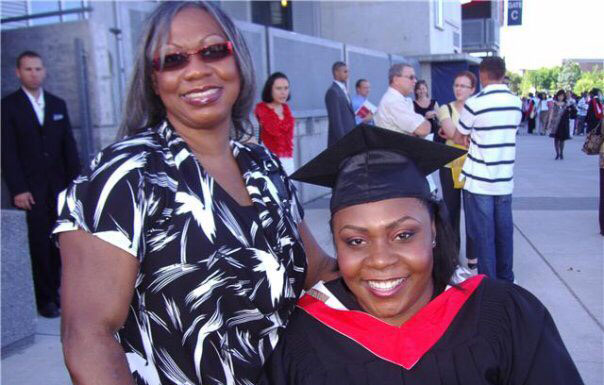
Susan Wamithi grew up in Nairobi, Kenya. But her medical studies have taken her from Alabama to Grenada to England to Nairobi to Toronto. She’s now in her second year of a developmental pediatrics fellowship at Holland Bloorview. She plans to take what she learns back to Nairobi to develop the first program in developmental pediatrics—caring for children with a variety of physical and developmental disabilities—at Aga Khan University Hospital. 

BLOOM: What drew you into developmental pediatrics?

Susan Wamithi: I grew up with a cousin who had cerebral palsy. She passed away when she was 12. She had spastic quadriplegia and my aunt used to bring her over and carry her up the stairs into our house. She was always smiling and she had really nice hair, so I would braid her hair. Now that I’m learning more about pain in cerebral palsy, I wonder ‘When was she in pain?’ And how did my aunt manoeuvre the transport system, because she didn’t have a wheelchair? We weren’t made to feel she was different from us, and we accepted her disability.

I also had an interest in medicine. When I was eight I was in a road traffic accident and I was hospitalized. I was curious and I loved science, and there was a nurse who explained everything she was doing and that got me interested.

BLOOM: How did you decide to work with children?


Susan Wamithi: I had a neurology professor who motivated me to pursue a career in developmental pediatrics. He talked about the great work that parents in Kenya were doing for their kids with disabilities. Mothers rallied together to have walks where they raised funds for different therapies. Our system is both private and public, but you still have to pay a certain amount in the public system. When I expressed interest in developmental pediatrics, I learned that the dean of medicine at Aga Khan is a Canadian. I met with him and he told me about this program.

BLOOM: Why did you choose Holland Bloorview?

Susan Wamithi: The fact that it’s family-centred. When I looked at the website, it’s seeing the children with their families and seeing the type of support families get. Seeing the funding families get for adapted equipment. That tied in with what happened with my cousin. I kept wondering whether those resources weren’t available to my aunt. I’ve never asked. I wanted to see what those supports looked like. I’m always thinking about how I can take what I’m learning here back home to help our families, where we don’t have enough resources.

BLOOM: Are there many developmental pediatricians in Kenya?

Susan Wamithi: There are only two that I know of. I’m being sponsored by Aga Khan University.

BLOOM: What is a typical day like here?

Susan Wamithi: We’re on blocks of rotations in different clinics. So I may be in the neuromotor or child development clinics.

BLOOM: Do you meet with the families on your own?

Susan Wamithi: Yes, we see clients on our own and then we go back with the staff and present our work. It’s a training program, so if you forgot to ask something, the staff will teach you. You have objectives and you’re taught how to manage different disabilities and the resources that are available here and elsewhere. We provide very individualized care based on a child’s needs.

BLOOM: What is most challenging?


Susan Wamithi: Delivering bad news to parents. I’m a parent myself, and you can’t imagine the type of grief that they go through. I want to be able to give some hope, and find ways to support families so they continue to see their child’s strengths. Some parents will cry the whole time, and others will ask questions and accept that ‘This is it, what’s next?’ If we’re using an interpreter, I always hope that what I’m saying is being interpreted in a sensitive manner. You kind of share their grief. What’s been hard for me is coming from my work as a general pediatrician, where a child has a sore throat, I give them an antibiotic and they come back and say ‘My throat is fine.’ There’s nothing I’m going to write here that’s going to change what happened to the brain in a child I see, and the consequences we’re seeing. That’s emotionally draining.

BLOOM: Do you do anything that helps you cope?


Susan Wamithi:
I’m spiritual. I had to come to terms with the fact that I don’t know why this happened to this child, but at least there’s some support I can give them. I ask God to give me the wisdom to know what words to say to this parent. I feel this is such a pivotal point for them, and I don’t want them to change how they see their child. My biggest fear is that the parent will just see what the child can’t do. Or that the parent won’t believe what I’m saying about the diagnosis, and the child won’t be linked up with the right resources. I have to be creative to find a way to take a parent through this journey. From the first time we sit down, I need to gain their trust, and make them see I’m on their side as an advocate for their child. When I give the diagnosis, it’s not me against them, but us helping the child.

BLOOM: What do you love about your work?


Susan Wamithi:
I love being able to support families to see their children differently. That’s what I’m passionate about. That comes from my background with my aunt, who was always cheerful. She’d come and bake with us and her daughter was right there and included. I love seeing children light up when I ask them what they’re doing for the summer, because we’re allowing them to be children and go to camps and enjoy their life. I love finding out about resources for families.

BLOOM: Have your thoughts on disability changed since you came here?

Susan Wamithi:
Back home I was a pediatrician. So if I suspected a child had autism, I would refer them to a clinic, but I never knew what resources were available in the community. What I’ve learned here is how to support families in finding different funding agencies. In Kenya, we have organizations that raise funds for cerebral palsy and autism. When I go back, I want to work with these organizations to make sure newly-diagnosed patients are connected with them.

BLOOM: If you could change one thing about the health system, what would it be?


Susan Wamithi:
The waiting times. Imagine the parent whose pediatrician says ‘I think your child has autism,’ and then you have to wait six months to get a confirmation from me. I worry about how that parent is sleeping at night, and how it impacts how they interact with their child. Do they become depressed?


Like this interview? Sign up to receive our monthly BLOOM e-letter in your inbox.

Thursday, August 3, 2017

Are you a kid? Cliff wants to talk to you

By Louise Kinross

Cliff Lee first came to Holland Bloorview as a seven-year-old, when he was hospitalized for a brain injury following a school-yard accident.

Nineteen years later he’s back as the hospital’s kids’ feedback specialist, here to interview children and youth about the care they’ve received.

“What’s important about what we’re doing now is that we’re giving kids a voice,” says Cliff, who works as a medical secretary and studied psychology at the University of Toronto. “Growing up, at my appointments, the doctors and clinicians always talked to my parents a lot and I felt like I didn’t have a say in my own health decisions.”

Cliff is actively seeking inpatients and outpatients to participate in a 30-minute survey that asks questions like “How safe do you feel at the hospital?,” “Does your care team speak directly to you?” and “Is the care you’re getting helping you meet your goals?”

Cliff says he wants to interview a range of clients, including children who don’t communicate in conventional ways and those who need an interpreter. Parents are able to sit in on interviews.

Cliff hopes to do 50 interviews this summer, and another 50 in the fall. To participate, kids or parents can e-mail Cliff at kidsfeedback@hollandbloorview.ca to set a time.

In addition to being a client, Cliff has volunteered in recreation therapy with our inpatients, acts as a youth mentor and also participated in our Youth To Work program. “Holland Bloorview feels like home,” he says.

When Cliff was an inpatient, he says his primary emotion was one of frustration. “I wanted to go outside and do everything other kids were doing, but I was confined to a hospital bed, then I progressed to a wheelchair and then a walker. I had a bit of cognitive delay that made things like math difficult later on.”

At the time, Cliff says he wanted “to be normal, like other kids.”

Now, he sees his differences as part of who he is. “I need to learn to adapt to what I’m good at and to the things I might struggle with physically or cognitively. But everyone has strengths and weaknesses.”

As a former client, he’s “excited to help give kids here a voice in terms of how we’re doing and, most important, how we can improve.”

Cliff can be reached at kidsfeedback@hollandbloorview.ca or, if you see him in the halls with his iPad, introduce yourself.

'We laugh, we encourage each other, and there's no judging'

Photos by Chelsea Dee

By Louise Kinross


In 2013, BLOOM covered a unique sewing project in Maai Mahiu, northwest of Nairobi, that was changing the lives of Kenyan mothers of children with disabilities. The program—then called Malaika Mums—is still flourishing and is now called Ubuntu Made. Ubuntu is an African philosophy meaning “I am because we are.” Mothers in the program make cotton bags, reusable coffee sleeves and beaded bracelets that are sold to provide them with income and support their children in an onsite school. We recently brought you an update. Now we interview Teresia Mugure (photo above, with son James, who is nine). James has attended the school for six years.

BLOOM: Tell us about your child.

Teresia Mugure: Jimmy, as he is fondly called by everyone, is a very joyful, happy, [active] and a very playful boy. He has intellectual disability and hyperactivity and is partially deaf. He also had delayed milestones like walking. He enjoys playing with other children.

BLOOM: How does Jimmy communicate?

Teresia Mugure: He communicates with sign language—by pointing to things or taking your hand and showing you what he wants—body language and facial expressions. Hearing aids help him hear at a high pitch.

BLOOM: How is disability viewed in Kenya?

Teresia Mugure: The common myth is that disability is a curse because the mother, or another family member, did something bad.

BLOOM: How did you feel when you learned Jimmy had disabilities?


Teresia Mugure: Sad, confused and lost.

BLOOM: What impact did Jimmy’s disabilities have on your family?

Teresia Mugure: Initially it had a negative impact, especially from family and friends. They didn’t know anything about disability, so it was a shocker for most of them. Then there were the myths associated with disability.

But right now, we are well informed about his condition and how to manage it. Now they all love Jimmy and have learned that disability is not a curse. I have accepted my child as he is and am happy to have him. I enjoy spending time with him. He keeps me alert and I’ve learned so much about life just by having him.

BLOOM: What would have happened if you weren’t able to get work at Ubuntu Made, and for Jimmy to go to their special needs school?

Teresia Mugure: I just don’t know. Maybe I could have been homeless. But God is faithful and I have a job. When Jimmy joined at age three, he was not able to walk or do anything for himself. Without Ubuntu, my child would have never learned how to walk, and maybe his condition would have gotten worse.

BLOOM: I understand some fathers there are unable to accept their child’s disability. Is Jimmy’s father involved in his life?

Teresia Mugure: Yes, his name is Solomon and he is very supportive to the family and tries his best to support me to raise our two children. I also have another son who is 17 years old and completed his secondary education last year.

BLOOM: Do you like working with other mothers who also have children with disabilities?


Teresia Mugure: Yes. We understand each other better and through psychosocial support sessions we laugh, we encourage one another and there's no judging.

BLOOM: What is your favourite part of your job?

Teresia Mugure: Sewing. I like being on the machine and stitching. When I see the end product I’m always proud of myself. At times I cry when I have a flashback and see where we started, and where we are now. All I can say is ‘Thank you Lord.’

BLOOM: How has having a job changed things for your family?

Teresia Mugure: Working at Ubuntu Made has been positive. I’m able to take care of Jimmy and provide the best care possible. I can provide food, shelter, education and clothing. I’m a proud mother. I’ve earned respect in the community, among relatives and the general public.

BLOOM: What have you learned since being part of the program?


Teresia Mugure: I’ve learned to appreciate life and the importance of working as a team, family values, and caring for and loving my child.

BLOOM: How is Jimmy doing in the Ubuntu kids’ program?

Teresia Mugure:
I have seen a total transformation in my boy. When he joined, he was not able to walk or do anything for himself. Right now he is the most active child in the program.

I am forever grateful and thankful to the staff who have journeyed with me. I’m at a loss for words. I will never be able to repay them for the services received.

BLOOM: What advice would you give to other mothers who live in places where disabled children are not accepted?

Teresia Mugure: Disability is not a life sentence and it is very manageable. I would ask organizations working in the field to try to reach and educate as many mothers as possible. There are a lot of false myths associated with disability in Kenya and Africa in general.

BLOOM: What are your dreams for the future?


Teresia Mugure: My dreams? Grow in my job, invest and be able to take care of my family. I’m too old to go back to school, but I have gained skills since I jointed Ubuntu. I’d like to talk to other mothers raising children with special needs.

Monday, July 17, 2017

Foundation helps disabled students 'just like me'

By Louise Kinross

After a skiing accident that injured her spine and shoulder, Tamara (Tammy) Gordon had to learn to write with her opposite hand and get around in a wheelchair.

While studying at York University, her mom Marcia attended class with her to take notes.

That’s where the pair noticed how hard it was for other students with disabilities to manage the extra expenses they had at school.

“Some of them were in school for years, because they had to take breaks between courses because they didn’t have enough funding,” Tammy says. “Others had to drop out because of the costs of taxis, tutoring or special equipment that would put them on an even playing field with other students. My mom and I thought ‘Why not start a foundation in my name to help other students just like me?’”

In 2013, The Tamara Gordon Foundation received charitable status. Each year it offers grants from $750 to $3,000 to university or college students with physical disabilities in Ontario.

“My advice to students with disabilities is don’t give up and continue your education because that’s the key to life,” Tammy says. “Work hard, get your high school credits and pursue post-secondary education.”

That’s what Tammy, now 31, did.

At 16, she was an elite basketball player who was being scouted by American universities. Then she became partially paralyzed as a result of a skiing accident.

She lived as in inpatient at Lyndhurst for five months. “It was very long and very hard,” she says. “Before my accident I was left-handed, but I sustained a brachial plexus injury to my left shoulder and lost the use of my dominant hand. So I had to learn how to use my right hand.
”

Tammy continued with school onsite and her mom decorated her room “so it looked just like my room at my house,” she says. “I had teddy bears and cards from classmates and teammates, and I even used my own special blanket from home on the bed.”

Daily pain was the biggest challenge, she says. “I definitely wasn’t used to that. Pain medication didn’t really help me, so I’d just try to fight through the pain. After a 12-hour surgery, I had to wear a special back brace for a good while that was very uncomfortable. The process of learning to sit up again and transfer to a chair was long and tedious.”

Something that helped Tammy adapt was talking to other patients who were further on in their rehab journey. “I definitely think it changed me as a person,” she says. “Although I played sports before the accident, I was really shy. The accident really brought me out of my shell. Although I wasn’t among people my age, I was able to talk to the other inpatients at Lyndhurst and learn from their experiences. Later on I got into motivational speaking where I talk about my experiences and encourage others, no matter what they face in life, don’t give up. Even if something like this happens to you, you can still achieve your dreams.”

After her rehab, Tammy tried to return to her old high school, but it didn’t have an elevator large enough to fit her wheelchair “and being around my old friends was tough. It was too hard for them to see me in a wheelchair. Some of them almost took pity on me and felt sorry for me. And others couldn’t make eye contact with me. That was even worse.”

She transferred to an accessible school but then became ill and had to finish her high school through a home program. “I still managed to finish on time with my graduating class.”

Today Tammy works at her foundation as well as being a customer relations coordinator for TD Bank. “I love working at TD because I’m treated like everyone else,” she says. “ Yes, I do need some accommodations in regards to my work station and personal assistance. TD is an awesome company to work for and I’ve been there 11 years.

Tammy says recipients of her foundation’s grants are chosen based on community service and grades. The foundation is holding its first fundraising gala on July 29.

She says her mom played a big role in her recovery after her accident. “Parents, be strong, because we feed off your energy,” she says. “Stay positive and be encouraging. Whatever dreams your child has, let them know it’s possible to achieve. It might take longer or be a harder struggle, but they can get there with the right support and encouragement.”

Tuesday, July 11, 2017

Don't let feeding tube get in the way of fun

By Louise Kinross

Over the last year Jennifer Choi Han made 10 videos about family life with a child with severe disabilities who is fed real, blended food through a g-tube. The videos feature Andrew, 7, who has cerebral palsy, and his twin Eleanor, their sister Jane, 5, and brother Mikey, 3.

In the videos, the family, who live in Long Island, go to The Nutcracker ballet, visit a fall festival, spend a day at the beach, check out a candy store, go to a barbecue and meet Santa Claus. The videos show Andrew eating the family’s breakfast, after it’s blended, at home before leaving, and the meals his family feeds him while out, wherever they happen to be. The music is upbeat, the kids are happy, and Andrew is integrated into everything they do.

It wasn’t always this way. Back in 2012, Jennifer wrote a piece for BLOOM about how miserable life was when they were feeding Andrew formula prescribed by doctors. It exacerbated his reflux, and Andrew spent his days retching, vomiting, not sleeping and losing weight. He even stopped smiling. “He was so unhappy because he was so hungry and wasn’t sleeping and had many, many seizures,” Jennifer says. “I never expected to take him out in public places, to actually go out and enjoy being out. Our vacations were disasters.”

BLOOM interviewed Jennifer about her video series A Day In The Life with Cerebral Palsy and a G-tube and how much their life has changed since they switched Andrew to a diet of real, blended food.

BLOOM: Tell us a bit about Andrew.

Jennifer Choi Han: He has spastic quadriplegia and controlled epilepsy. He’s also blind and doesn’t speak. But we know when he’s happy and sad and when you’re around him, you learn his language. He’s a very giggly boy and he responds to touch and sound. He loves music and he loves people. When people talk to him he responds with moans, and the conversation goes back and forth like that. If he’s bored he’ll sigh. We go to church every Sunday and he always sighs in the middle of the service. His siblings play with him and sing with him. Right now the kids love the Troll soundtrack from Disney. It makes Andrew freak out in happiness and he’ll sing along and laugh and kick. Andrew loves school because he recognizes voices and is very sociable. He’s the happiest of our four children.

BLOOM: Why did you start your video series?

Jennifer Choi Han: For a very practical and utilitarian reason: I wanted to raise awareness that there’s something called a blenderized diet and I have a strong belief it should be a treatment option for severe reflux. It’s also a healthy way of living with a feeding tube. In my mind, it saved Andrew’s life. After the BLOOM article I received lots of comments on my blog and I knew people were going to the site because they wanted to do the blenderized diet. I had it tucked in my mind that one day I would make videos about how we did it. Recently I was ready because my kids were older and Andrew had been medically stable for a few years. I wanted to make videos that have a very warm and cheerful vibe.

BLOOM: They are fun and upbeat and full of happiness.


Jennifer Choi Han: Learning about Andrew’s brain damage was completely devastating. In my mind, it was the worst thing that could happen to a family. In his first years, Andrew was sad and miserable. I scoured online forums looking for stories of families and trying to predict what his future held. I watched three videos on YouTube and I cried my eyes out. One was of a little girl who was in a diaper prone on a mat, moaning, and people were watching her. Another was parents talking and sad music in the background.

What started off as practical videos shifted to ‘a day in the life’ videos that offer a narrative of hope about a child who’s happy and out and about, enjoying the world and seen by others.

BLOOM: Many of your videos are in New York City. Isn’t that a challenge for accessibility?

Jennifer Choi Han: It’s not super accessible, but it’s doable. When we go to the city we always make sure to drive and avoid crowded places. We go to big, spacious places. Touristy places tend to be more accessible. For example, Central Park is fairly accessible. We took Andrew to the ballet and he really enjoyed it because he loves music. We take Andrew to the pool regularly because kids with cerebral palsy are happiest in the water. Usually I research stuff like crazy before we go.

BLOOM: In one video you’re on the subway.

Jennifer Choi Han: That’s the recently built Second Avenue Subway line. It’s outrageously accessible with ramps and elevators and even a wheelchair boarding area by the conductor’s window. Unfortunately, the other lines aren't stroller or wheelchair friendly. When Andrew was younger I would check online to plan ahead, but even stations that were supposed to be accessible weren’t because elevators were broken or something hadn’t been updated. So we stopped using the subway.

BLOOM: You said you rarely see other people with disabilities when you go out.


Jennifer Choi Han: I suspect that’s because of the whole bathroom situation. There are not a lot of accessible bathrooms—unless you’re okay putting your loved one on the floor. We’re lucky at this point because Andrew is very small. We can change him in the car. Sometimes we carry a sheet and change him on a park bench while my husband or his siblings hold up the sheet for privacy. As Andrew gets older, the bathroom thing will become a big issue because I need to preserve his dignity.

BLOOM: In the videos, you feed Andrew in public, wherever you happen to be. Is that intentional?

Jennifer Choi Han: Yes. I feel very strongly that people with disabilities need to be seen. Disability is part of the human experience. I never see disabled people out and about, and I feel in order for the world to be more open and inclusive, and to not fear disability, everyone needs to see each other. When Andrew was young, I was very self-conscious about stares and about what I was doing, but now I’m not at all. I own this role we’ve taken on and I see the benefits.

We talk about the ‘Andrew effect.’ When we go out with Andrew, children come up and stare and ask questions like ‘What’s wrong with him?’ I love when they ask questions because I can help answer them. I’ll say ‘You know how you or I drink or eat with our mouth, and then it goes down our throat and into our belly? Well, Andrew’s mouth doesn’t work well, so his food and drink goes straight into his belly.’ If they ask why, I say ‘Andrew has a boo boo on his brain, so he’s not able to use his mouth as well.’ It makes so much sense to a little kid. There are also lots of kid-friendly parts of feeding Andrew, so I’ll ask ‘Do you want to help?’ They can put in the water or hold something for me.

My youngest child, Mikey, is a ham and he’s very perceptive of other people’s reactions. If strangers stare, he’ll go up and hold Andrew’s hand, cuddle with him or kiss him and sing songs.

BLOOM: Feeding Andrew looks easy in the videos. But isn’t there a lot of planning? How do you make sure the food doesn’t go bad?

Jennifer Choi Han:
The crazy thing is how easy it is. I hate cooking. My three-year-old could tell you how to feed Andrew. When I first started out, I was taking home-made blends out, and that requires bringing ice packs and keeping the food cold. But now that there are pre-made, blended products on the market, we don’t need to pack ice or worry about food spoiling. These products are shelf stable for two years.

So if we’re at the beach, I’ll open a pre-blended package that might have salmon, oats and squash in it. The only supplies you need are a syringe, extension tube and a plunger to push the food through. I take a zip lock bag and put one meal plus all of the supplies, including bottled water, to flush and clean with. If we’re out for the entire day I’ll have four meals bags. It’s not onerous at all. In fact, it’s much more onerous getting snacks for my other children.

The two premade products I use are called Real Food Blends and Functional Formularies.

BLOOM: How have people reacted to the videos?

Jennifer Choi Han: When I made my first two-minute video, which was about how I bolus real food through a feeding tube, I expected maybe 100 views. Within the first week there were 1,000 views. Now there are over 6,000 on that video. People started to private message me to thank me, ask me questions and tell me how life-changing the diet had been for their child, which was very gratifying. My first 'day in the life' video has over 11,000 views. Who would have thought a video about cerebral palsy and feeding tubes would be viewed over 11,000 times? But the focus has moved from feeding tubes to a well-lived life.

BLOOM: You always look relaxed and energetic in the videos. Isn’t it physically exhausting managing Andrew’s needs and your other children’s needs
?

Jennifer Choi Han: There are two reasons I look quite refreshed: Andrew is happy and stable and I have a lot of resources. My mother lives with us and I consider her a primary caregiver as well. We also have a full-time nanny on top of that, and my husband is super hands-on and helpful. I work full-time as a teacher and my workplace is a two-minute drive from home. My husband is a physician, so with our two incomes, we have a lot of options.

It takes a village, and I have a village. A lot of parents, especially in the United States, don’t have a village. They don’t have resources, and that’s where things fall apart. When I strike people as refreshed and cheerful, I’m quick to tell them it’s because I have time to myself. My situation is not available to a lot of families. With our new administration, I’ve been taking part in a postcard campaign and making calls to legislators about health care.

I never could have imagined we would be at this place during those hard, early years. I really like my life now. I really like being Andrew’s mom and I love Andrew to pieces. It’s very therapeutic for me to make these videos and to view them.


Friday, July 7, 2017

'He takes the time to hear me'

By Louise Kinross

John Kooy (left) is an orthotist at Holland Bloorview known affectionately as “Dr. John” to some of his patients. Here’s how a couple of Holland Bloorview families describe him:

“Dr. John is always so nice to Lucas. He always has toys for Lucas to play with and shows great patience with him. He's always polite and asks Lucas if he can look at his leg and foot before holding Lucas’s foot. He really puts Lucas at ease. He's one [professional] that Lucas isn't scared of!” And from eight-year-old Jillian (centre above, with Dr. Mark Camp right): “He's amazing! He takes the time to hear me and make amazing ankle-foot orthoses!”

John is the team lead for orthotics at Holland Bloorview and collaborative practice leader for orthotics and prosthetics. He’s been with us for 16 years.

BLOOM: How did you get into this field?

John Kooy: I went to York University with the intention of getting a bachelor’s in physed and going into sports medicine. But it wasn’t what I thought it was. So I dropped out of university and worked with a private swim school. I’d been a swim instructor and life guard since I was 16 on the lake where my family had a cottage. At the same time, I started looking through school calendars at other programs and came across the prosthetic and orthotic program at George Brown College. I did a two-year technical program, a two-year clinical program and then a two-year residency. You learn prosthetics and orthotics in the program, but I chose orthotics because that’s where I got a job.

BLOOM: What is an orthotic?

John Kooy:
It’s an external support commonly referred to as a brace. It’s used for improving function, correcting a deformity, or stabilizing or protecting a part of the body.

BLOOM: What’s the most common kind?

John Kooy: Ankle-foot orthoses (AFOs). They’re used by kids who have neuromuscular or musculoskeletal conditions like cerebral palsy, spina bifida, muscular dystrophy or arthrogryposis.

BLOOM: So you started out at West Park working with adults. What was it like to come here and focus on kids?

John Kooy:
It was a big change, but I’d spent many summers running swimming lessons when I was younger.

BLOOM: What do you like about working with kids?

John Kooy: It’s the challenge, the passion, the fun.

BLOOM: What do you do as collaborative practice leader?


John Kooy: Help to put structures and mechanisms in place to create a collaborative environment. An example is the centralization of the electronic medical record. Prior to going with that, all of our documentation in orthotics and prosthetics was separate and hand-written.

BLOOM: How does the electronic health record improve collaboration?

John Kooy:
It improves transparency and communication because you can easily refer to other clinicians’ notes and access reports from SickKids. One of the big ways it improves timely care is when a child gets admitted post-operatively from SickKids. We have easy access to the physician’s orders, so we can plan for what they need and when.

BLOOM: How many children would you see in a day?


John Kooy: Between three and five. I also see adults, so I see them through the life span.

BLOOM: How do you create orthotics?


John Kooy: It starts with an evaluation and watching them walk.

BLOOM: Then you do casting?

John Kooy: We call it shape capture now. So the client either steps onto a foam impression or we use special tape that’s wrapped around the limb and held in place until it cures. That gives us a negative impression of the limb and then we turn it into a plaster positive model.

BLOOM: That’s what you do in the white room, which is like a workshop?

John Kooy: Yes, the white messy room. We work with the model of the limb to sculpt or shape our final orthotic or prosthetic.


BLOOM: Is the white residue in the air from the plaster?

John Kooy: It's predominantly plaster. We sculpt the plaster models with various rasps and carving tools. We add and remove plaster as needed from the model to ensure proper support without putting too much pressure on bony areas, as well as defining the final shape. We then use sanding paper and screen to smooth the final finish.

BLOOM: What’s the benefit of making them on-site?

John Kooy: We can better control the process for quality and when clients need adjustments, it’s easier to do it in house.

BLOOM: What’s the greatest challenge of your work?


John Kooy: One of the greater challenges is you can’t expect a typical day. Something always happens outside our schedule—whether it’s a child in a clinic that needs to be seen for an evaluation while they’re here, or a new inpatient that’s having problems with a post-operative cast. These are things that aren’t in the schedule.

BLOOM: Are there other challenges?

John Kooy: Maintaining clear communication and understanding and inviting everyone’s perspective. Not looking at everything as a cookie-cutter scenario, but realizing that everybody has different opinions and goals and needs and wants. We may hear the opinion of the therapist or physician and then meet with the family and client and they have a different idea. So we might have to circle back and ask the therapist ‘What do you think about x?’

BLOOM: Isn’t the experience of getting fitted for orthotics frightening for some kids?

John Kooy: Anxiety is definitely a challenge.

BLOOM: What do you do to manage that?

John Kooy: Everything from getting down to their level to finding ways to engage them in the process and make things fun. For example, if I’m shape capturing with the tape, I’ll give them a pair of gloves to put on as well. We get to know them and ask about what happens outside—at school, on the weekend, or when they go on vacation. We see them over decades, easily four to five times a year, so we get to know them very well.

BLOOM: You’re very calm.

John Kooy:
Calmness is something I am recognized for. Not too many things get me wound up. I’ve always said that I'd never give up my clinical work because it’s stimulating, it’s engaging and there’s value in having that perspective of being on the frontline when you’re a leader.

BLOOM: What do you love about your job?

John Kooy: The energy. The stimulation of watching the kids change as they reach various goals. They’re excited to tell you about it. Just now as I came through the second floor waiting room to come downstairs one of my families was waiting for a clinic. The client told me how great school is and his plans for the summer, and the mom said how much of an improvement she and the teachers in the school have seen in his overall function for walking, balance and movement.

BLOOM: What skills do you need to be good at making orthotics?


John Kooy:
Creativity. You have to be open to ideas. Empathy. A good listener. You need to be able to visualize in 3-D. You need to be able to see that end product before it’s there.

BLOOM: Is it an art?

John Kooy:
There’s definitely an art and hand skills in the fabrication side of things. I do some fabrication, but for most of it I rely on the technical team behind the scenes.

BLOOM: What’s the biggest change in orthotics since you came here?


John Kooy: How we customize the orthotics with pictures and patterns. That’s huge. The kids get to select a pattern or image. It could be a sports team or a character from movie or TV. A couple of kids who are keen artists have provided me with an image of their art work that we’ve transferred onto the orthotic.

It’s gone from ‘This is what you get, and we can put a blue pad or a pink pad in it,’ to ‘The sky is the limit, let your imagination run wild.’ My team has rarely come up with something they can’t do.

BLOOM: Why is personalizing orthotics important?

John Kooy:
It allows children to express their identity. We’ll often hear kids in the school comparing what they have on their orthotics: ‘What did you put on yours?’ We did have one problem with a child who chose a skull and crossbones, which his school felt was inappropriate. We had to change that one.

BLOOM: That’s funny. Have your thoughts on disability changed over the years?

John Kooy: I don’t know that they’ve necessarily changed. I think there’s still a lot that needs to be done with access and what happens outside of here. Looking at the [physical] environment, and looking at the transition to adulthood. We see the adult population in our area, so that puts us in a unique position. As we’re evaluating change in terms of the hospital’s transition strategy, we need to be part of that conversation.

BLOOM: What happens to clients when they graduate?

John Kooy: They’re living in the real world where they can’t find a care team to really understand what they’re looking for. I wish they could be connected with someone who has the same level of understanding of their condition that they find here.

Some will advocate more for themselves, and others will drift back into that black hole and say ‘that’s the way it is.’

BLOOM: And then they develop secondary health problems. It must be frustrating for you after working with them for so long.

John Kooy: Yes. In talking about disability, it’s not what needs to happen in here. It’s ‘Wow, what more could be done beyond here?’ I try to be a listener, and help adults work through their thoughts and ideas.

We play an important social role in their life. That’s how typical days turn out not to be typical days.

BLOOM: If you could change one thing about the health system, what would it be?


John Kooy: Better funding for technology. Right now AFOs are covered under Ontario’s Assistive Devices Program, but shoe modifications, in-the-shoe orthotics and some other orthotics aren’t.


BLOOM: I know how expensive those are, and they’re often not covered under a parent’s health insurance at work. If you need a lift on your shoe because one leg is shorter than the other, or in-shoe orthotics because you walk on your ankles, those are medical, functional needs.

John Kooy: The other thing I’d like to see is a change in recognizing the types of disabilities that can receive technology. For example, autism isn’t a recognized disability to receive a custom protective helmet.

BLOOM: Is it just kids with seizures who are approved for that?


John Kooy: Yes. If we need to create a custom protective helmet for a child who self-harms, the entire process costs from $300 to over $2,000.


BLOOM: What emotions come with this job?

John Kooy: I don't think there isn't an emotion. Happiness, laughter. Sadness when you feel it's been a stressful day for a family or a child is in pain. Some of the treatments are going to elicit pain or discomfort or anxiety. A lot of the times you have to block that out, knowing that a treatment is needed and that we'll work through it together. In the end, we'll find a way, maybe not at that appointment, but at the next, to laugh about something.

BLOOM: Do you do anything to help you cope?

John Kooy: I enjoy outdoor activities like skiing, sailing, biking and hiking. I like to travel. Also, Holland Bloorview is such a great family environment among teams and across the hospital that there are always opportunities to share a story or a laugh.

Like this story? Sign up to receive our monthly BLOOM e-letter in your inbox.

Wednesday, July 5, 2017

Mom seeks to light the way for others


Photos by Storey Wilkins

By Louise Kinross

Narges Karbasi
can only think of one medical interaction that wasn’t helpful when she learned her daughter Lilly had a rare genetic condition called 1p36 deletion syndrome.

“At her first birthday the neurologist gave us the results of a microarray test,” Narges says. “He said ‘This is the name of the syndrome, go and google it.’ He didn’t tell us about it. We googled it and we were in shock, because you always see the worst things [online]: she’s going to die, she’s going to have heart problems. It was the worst experience.”

But soon after, Narges spoke with clinicians, other families and even acquaintances that gave her back a sense of hope.

“We took her to the pediatrician and I was crying. I said ‘Did you see the report? She may not walk, she may not talk.’ The doctor said ‘Yes, she may not walk and she may not talk. But she can love.’ I thought yes, Lilly wants me, she loves me. These are the words that helped me a lot.”

After getting Lilly’s diagnosis, Narges and her husband Farhad initially kept the news to themselves. “It was like a grieving,” she says. “Before telling the world, we cried with each other and we screamed and shouted and said ‘why?’ When we told people, we wanted to talk about it in a very normal, happy way, because we thought if we cry or are sad, people will always look at her and think ‘poor baby.’ At first it was so difficult to talk about. I practised on people I don’t know. In the street, in the park. That helped me get used to the words so I could tell close family.”

Narges searched online and found a Facebook group for families of children with 1p36. “The moms there are amazingly supportive,” she says. “They have children from newborn to 40 years old. I can say that each is a doctor, a geneticist, because of all they know. You can ask any question and within a couple of hours you have hundreds of people responding with their experience. The other thing that helped me was seeing that there were so many parents who had adopted kids with the same syndrome. It’s one thing when this is my kid. But for parents to adopt not one, but two children, with this syndrome, and they have a happy life.”

One day Lilly was out in a stroller with a babysitter. A neighbor who was driving by stopped to ask the babysitter if Lilly was walking yet. She wasn’t, as her motor skills were delayed. The neighbor wrote a note for the sitter to give to Narges with the name and phone number of a physiotherapist who did Medek and had helped her daughter. “At first I didn’t like it when I got the note,” Narges says. “I thought why is she doing this? Then my husband said give her a call, maybe this is a sign.”

Lilly, who turns five next month, began walking last year, and Narges attributes it to the Medek therapy. “She couldn’t even roll or sit from lying when she started,” she says. “We are so excited for this summer because it’s the first summer she can walk. Lilly is a happy girl who loves to be independent. She fights for what she wants and she gets what she wants—it doesn’t matter if you understand her, or if she can’t say it, she will get it. She enjoys being outside and we’re so excited about having her first birthday party outdoors.”

Through the physiotherapist, Narges learned about the babies group offered through Holland Bloorview’s Play and Learn. Parents and babies attend weekly for sensory and motor play and live music. “Seeing so many moms like me and kids like Lilly was a great first step into this new world,” Narges says.

Every month an infant development specialist came to visit Lilly at home. “That service is so helpful. They come into your home and see how you live, and help me with specific things. For example, Lilly is very sensitive with what she eats, so the person made an appointment to come at her snack time so she could help with snack.”

Lilly then spent two years at Play and Learn nursery school. “It’s amazing. It’s like her home and she likes everybody. They plan for each kid and they love their jobs. The teachers even check on me, too. They’ll say: ‘How are you doing? Why are you not smiling today?’”

Lilly uses sign language and pictures to communicate and is attending kindergarten in our integrated education and therapy program in September.

Narges says she’s learned to live in the moment. “I stopped thinking of the future. If today Lilly is waving or pointing, a point is a word you can live a life with. I enjoy that moment without worrying about what should be next. There is no ‘what if’ in my mind anymore.”

Narges, who moved to Canada from Tehran, Iran with Farhad in 2009, says Lilly’s syndrome has brought the couple closer. “Our bond and love is way stronger. When you know you have a shoulder to lean on and someone who is always there to talk to, it helps. Being a believer in God has also helped me a lot. I said “If that’s what God wants for me, I should be on board.”

Narges says she prefers not to use the terms disability or special needs. “What I like to call it is unique, because I learn that every person is unique in his or her own way.”

Lilly has an older brother Dylan, and Narges says it’s important for him that the family “fights to be happy and to have as close to a normal life as possible. Disability minimizes the thing you can do, but as a family we never accept no for an answer. We never say, ‘okay, that’s not for us.’ Everything is for us. We always try to find a way. For example, we like to ski as a family, and through searching everything my husband found something Lilly can sit on and we can still ski together. Travelling isn’t easy, but we should do it. We don’t want Dylan to think ‘we can’t do this like my other friends because of my sister.’ We didn’t want his life to be on pause. We say this is the life we have and we try. If we can, we can. When he was younger, Dylan questioned why Lilly wasn’t walking or talking. That was a challenge not to minimize his feelings.”

Narges believes Dylan has developed many positive attributes because of his relationship with Lilly. “These siblings are going to be different kids. They’re going to be caring. I see how Dylan cares about his friends, how he sees people equally. He never points at someone who has a disability because he learns that that is who that person is.”

Narges likes to pair times when she takes Lilly to therapy with an activity Farhad does with Dylan. “So I will say ‘If you are playing football, Lilly will have speech therapy.’ She has a program and he has a program.”

Narges is a big believer in self-care for parents. “We need to do something we really like, even if it’s just for one hour a day. When Lilly went to Play and Learn each morning, I’d make a joke that the only thing I didn’t do is go to Tehran and see the family. I shop, I hang out with friends, I go to the coffee shop, I walk or go to the gym. Those two hours are mine. They become the best time of the day. We should find a time for ourselves, even doing nothing, but being on our own.”

Narges says next year when Lilly is in school full day, she’d like to volunteer at Holland Bloorview to help other parents. “They need to see one mother or father or family and say ‘they are happy, they have a happy life.’ That’s the most helpful thing. When you see a mother in real life who is laughing, dancing, having her life—it doesn’t matter how her kid is doing—she is happy and you think ‘Oh, maybe one day I can be that person.’”


Like this story? Sign up to receive our monthly BLOOM e-letter in your inbox.